bowing - Master This Word
Master this word with our 5-step learning method – Learn English in English
Train English Through Brain Routes, Not Translation.
This page helps you stop memorizing isolated translations and start understanding a word through its shared mental image, native-style thinking, and practical training steps.
Master this word with our 5-step learning method – Learn English in English
Example sentences are the start of understanding. Don't rush to memorize. First feel how the word works in a sentence.
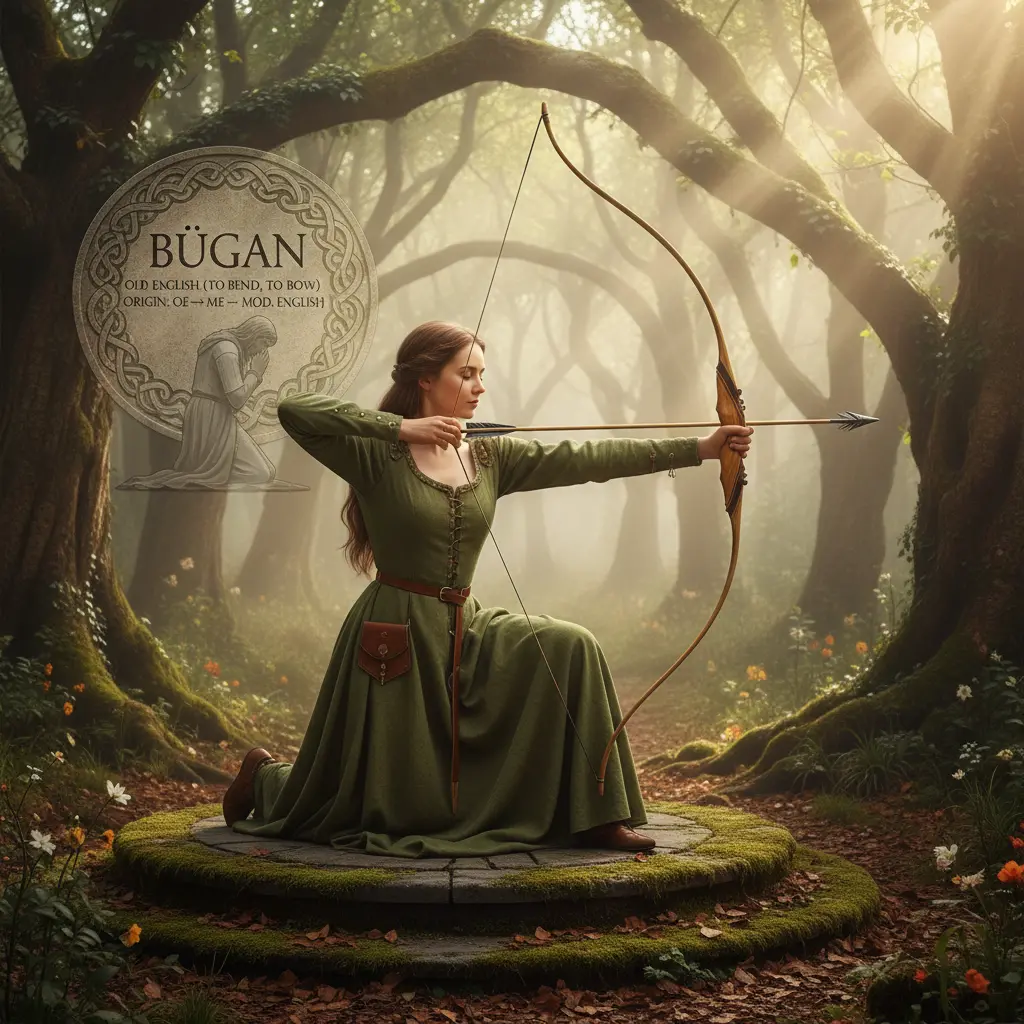
The root 'bow' comes from Old English 'būgan' meaning 'to bend' or 'to bow'. Origin: Old English → Middle English → Modern English. Imagine a graceful archer bending a bow to shoot an arrow, connecting the action of bending with respect or reverence.
Note 1: These definitions and etymologies are not standard dictionary definitions, but extended explanations provided to help with memorization and understanding of the actual application of words. Through this background information, we strive to make words more vivid and easier to understand, and help you remember their meanings in real life.
Note 2: LexiTalk designs the learning flow around the linguistics principle of “Comprehensible Input.” When learners encounter material that is slightly above their level but still understandable from context, the brain naturally absorbs the language. That’s why we keep every word inside authentic contexts, using examples and associations to help you understand it and use it flexibly.
Read the FAQ explanation of Comprehensible InputStand tall and move your shoulders to set the pace. I pull a ribbon between my fingers, adjust the ends, and watch a small bow begin to form as the tension changes. I tilt my head and hold the posture a moment, feeling how the move communicates respect without words. In daily use, this controlled bow extends to greeting, to tying a gift, or to a quiet moment of polite attention.
Bow is a versatile word with two main verb senses and several noun senses. As a verb, to bow means to incline the upper body forward or to lower the head slightly, usually as a polite gesture of respect or greeting. As a noun, bow can refer to a decorative knot tied from ribbon or string, often called a bow or a bow knot, or to the curved front part of a ship or the curved end of a weapon (the archery bow). In everyday conversation you might bow when meeting royalty, tie a bow on a gift, or draw a bow for archery. The etymology traces to Old English būgan meaning to bend, linking the action and reverence.
In English, bow is a cultural sign of respect, with precise contexts (greetings, gifts) and distinct pronunciations for different senses; learners often mix up noun vs verb meanings and mispronounce the bow knot as a weapon-related term.
English Learning Listening Content
Listen NowDownload LexiTalk app for personalized learning experience
Download AppCookies
We use cookies for essential site functions, analytics, and ads. You can accept, reject, or manage preferences. Privacy Policy