optimist 单词的含义
- 对未来持乐观态度的人
- 相信事情会向好方向发展的人
- 能从积极角度看待事物的人
optimist 英文例句
例句是你认识词义的开始,不急着背诵,先感受它在句子中的用法。
optimist 音标与发音
英式
/ˈɒp.tɪ.mɪst/
美式
/ˈɑːp.tɪ.mɪst/
optimist 单词的词源
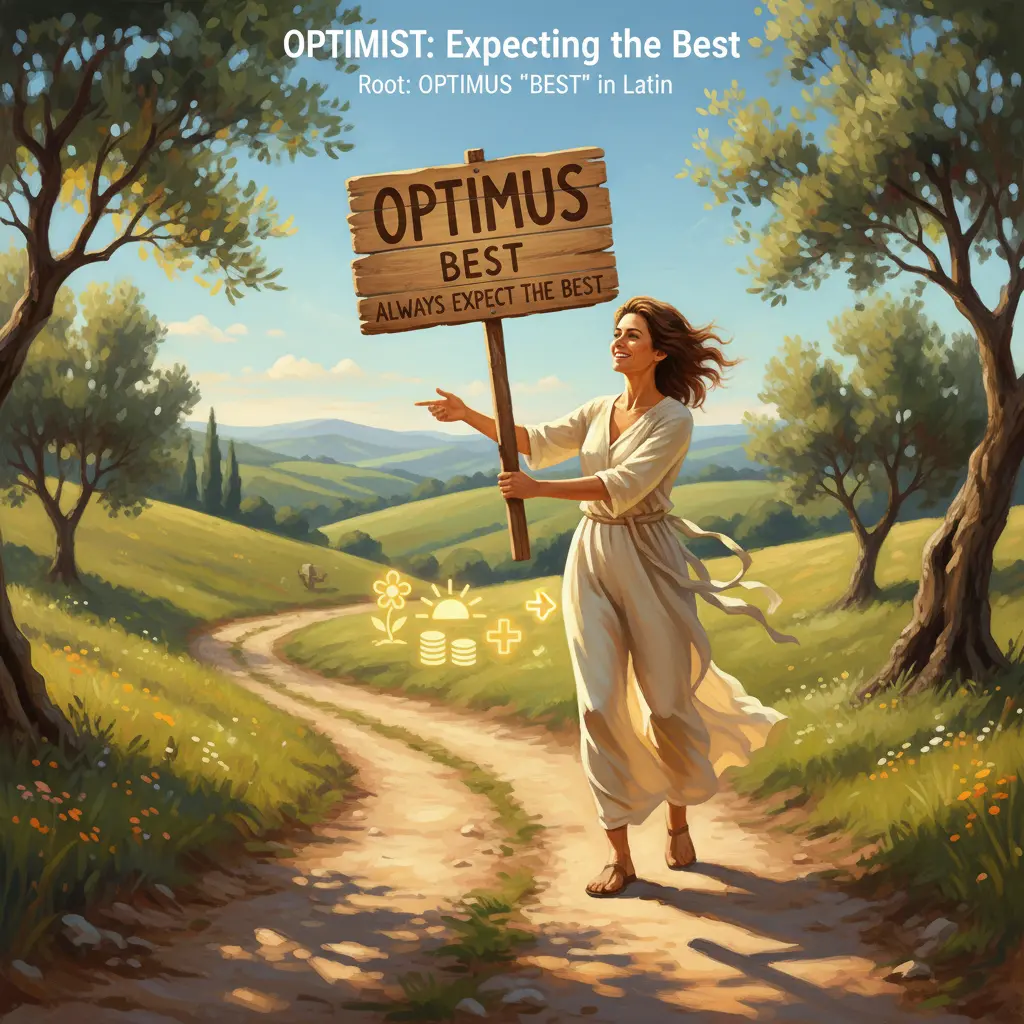
根部分解:词根 optim- + 后缀 -ist,词根来自拉丁语 optimus '最好'。历史起源:来自拉丁语 optimus '最好',经由古法语 optimiste 传入英语。记忆意象:想象一个人站在阳光大道上,手举着写着‘最好’的牌子,总是对未来充满信心。
注一:这些释义和词源并非传统字典中的标准定义,而是为了帮助记忆和理解单词的实际应用而提供的扩展解释。通过这些背景信息,我们力求让单词更加生动、易于理解,并帮助你记住它们在实际生活中的含义。
注二:LexiTalk 在设计学习流程时,遵循语言学中的“可理解输入”原则。当学习者接触略高于自己水平但能从语境中理解的内容时,大脑会自然吸收语言。这就是为什么我们让每个单词都出现在真实语境中,通过例句和联想帮助你理解并灵活使用。
查看 FAQ:什么是可理解输入?
真实语境解释
乐观主义者通常对未来持积极希望,看到事物的光明面,倾向于相信事情最终会好转。他们关注机会多于困难,遇到挫折也愿意保持信心,并用积极的语言鼓励自己和他人。与悲观者相比,乐观者可能会忽视风险,需要与现实保持平衡。日常用语常说“困难只是暂时的”,乐观者往往是会这样说的人。
用法提醒
- - 将其用作名词:一个乐观主义者。
- - 不用作形容词(形容词是 optimistic)。
- - 常见搭配:be an optimist/about、stay hopeful。
- - 与 pessimist 对照,表达对未来的看法。
- - 注意语气:乐观不等于天真。
常见误解
- 乐观主义者等同于天真无知。
- 乐观的人总是回避问题、从不做计划。
- 乐观并不等于完全不现实。
- 乐观就是期望每次都完美无缺。
- 这个词只指性格,不指某次情绪。
语言思维差异
对简体中文学习者而言,乐观主义者这个词常带有积极的含义,但若语气过度,会让人觉得不切实际。需注意语境与语气,才能准确传达“积极但有度量”的态度。
学习提示
- 通过对比乐观与悲观来学习细微差别。
- 注意 optimist 指的是人而不是情绪。
- 可搭配 about:be an optimist about the outcome。
- 与 realistic 对比,理解平衡关系。
- 观察搭配:optimistic about、expected success。
- 不要用 optimist 描述情景,用来指人。
五步学习法,用英语来学习英语
步骤1:含义
What does 'optimist' mean?
B.a person who studies the stars and planets
C.a person who expects the best or sees the positive side of things
D.a person who collects stamps as a hobby
步骤2:使用
Which sentence uses the word 'optimist' correctly?
A.Even after the team lost their lead, Miguel remained an optimist, encouraging teammates to keep trying because he believed they could come back.
B.As an optimist, Sarah always plans for the worst and prepares for failure.
C.The scientist called the experiment optimist because it showed promising preliminary results.
D.She wore an optimist to the party.
步骤3:同义词
Which word is most similar in meaning to 'optimist'?
A.sanguine
B.pessimist
C.cynic
D.realist
步骤4:反义词
Which word is the opposite of 'optimist'?
A.sanguine
B.pessimist
C.hopeful
D.enthusiast
步骤5:掌握
Can you think of a real-life scenario that fits the meaning of the word without using the word itself?
A.When the project failed, he said it was predictable and that he had warned everyone it would happen.
B.He refused to leave the house during a flood because he believed nothing bad could ever happen.
C.After several rejections, she kept submitting her book to publishers, confident that one would accept it eventually.
D.She saved every penny because she expected the economy to collapse and wanted to be prepared.
想要练习更多单词吗?
下载 LexiTalk 应用,获得个性化学习体验
下载应用