
The LexiTalk Listening-Speaking Loop
A method for turning language input into automatic speech.
Overview
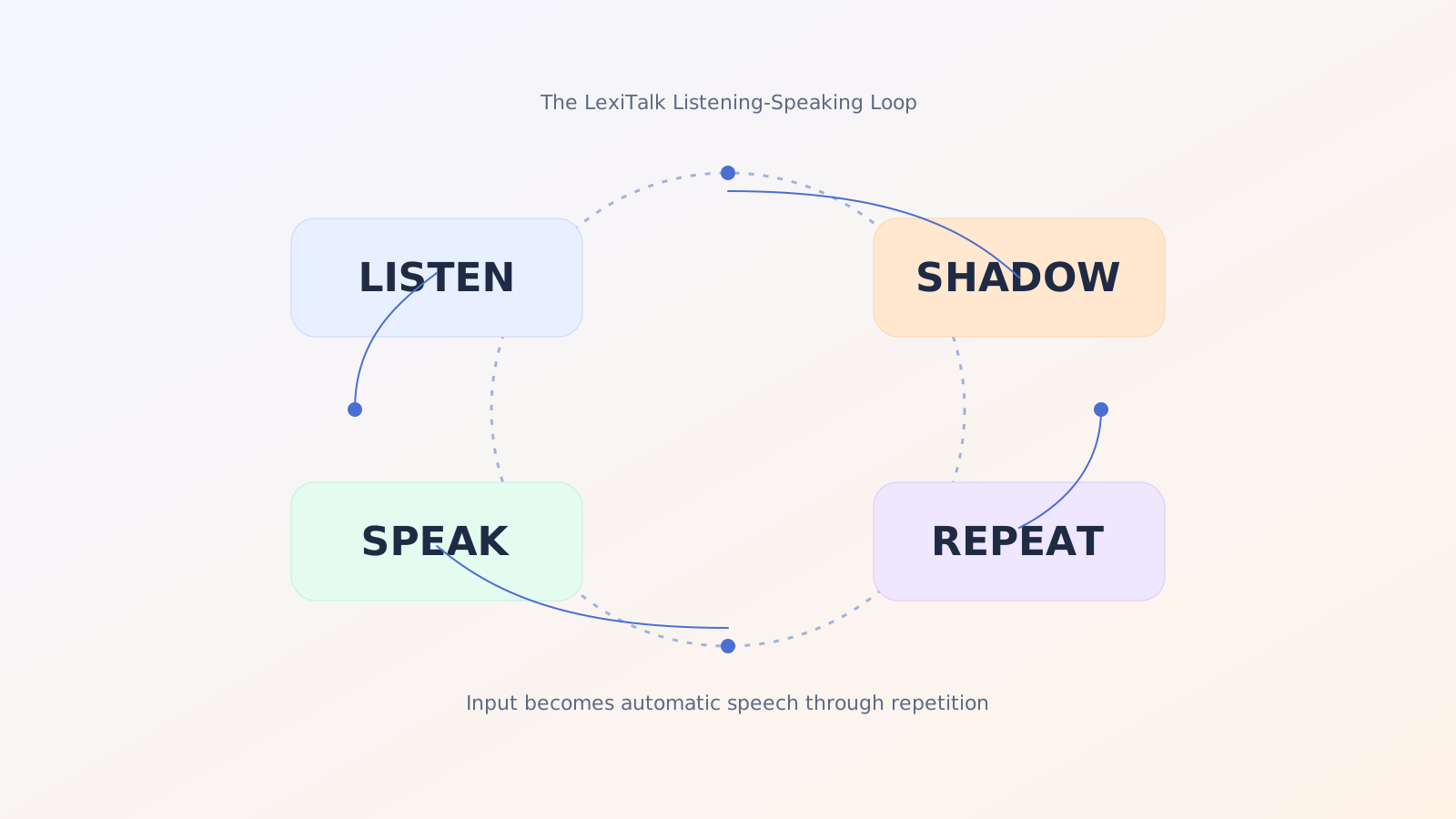
The LexiTalk Listening-Speaking Loop is a structured training method designed to transform English from conscious knowledge into automatic, usable speech. It focuses on building fast, stable listening and speaking responses through controlled repetition and contextual reinforcement.
Many learners reach a plateau where reading and test performance improve, while real conversation remains slow and effortful. This gap does not reflect insufficient vocabulary or grammar knowledge. It reflects a missing training loop between input and output. The LexiTalk Listening-Speaking Loop closes that gap.
What You Will Learn
- How to turn listening input into speaking output
- Why frequency beats volume in fluency training
- How to use partial understanding to build automaticity
- How to measure progress through speed and smoothness
- How to keep listening and speaking tied to the same material
The Loop Steps
1) High-frequency listening within a stable context
Learners are exposed to a limited set of high-quality audio materials repeatedly, allowing the brain to recognize patterns in rhythm, stress, and structure. Frequency, rather than volume, drives neurological adaptation.
2) Listening precedes precise understanding
During early cycles, complete comprehension is not required. Partial understanding is sufficient to establish sound-meaning associations. This allows learners to internalize natural speech flow without overloading conscious analysis.
3) Guided speaking transforms input into output
Through imitation, shadowing, and controlled repetition, learners actively reproduce the same language they hear. This stage engages auditory memory, pronunciation control, and sentence formation simultaneously.
4) Fluency becomes the primary feedback signal
Progress is measured through smoother delivery, shorter pauses, and faster response time. As the loop repeats, hesitation decreases and speech becomes increasingly automatic.
How LexiTalk Implements It
- Context-based podcasts provide consistent and realistic listening input.
- Vocabulary-driven content generation ensures training aligns with each learner's real needs.
- AI-assisted speaking feedback reinforces accuracy and fluency during output.
Listening and speaking are no longer isolated exercises. They form a closed loop around the same language material, repeated across time and contexts. As the loop continues, language shifts from something that must be recalled to something that responds instinctively.
Fluency Signals
- Shorter pauses after familiar prompts
- Smoother transitions between phrases
- More stable rhythm and stress patterns
- Less translation in the head before speaking
Mini Practice
1) Shadowing ladder
Listen to one short sentence three times. Then repeat with the audio. Then repeat without the audio.
Goal: match rhythm first, accuracy second.
2) Response timer
Hear a prompt and answer in under two seconds. Do five rounds.
Goal: reduce hesitation, not perfection.
3) Same content, new voice
Replay the same podcast segment with a different speaker, then repeat it aloud.
Goal: keep meaning stable while adapting to new input.
Curated Entry Words
Explore the Word SearchFAQ
Why does listening alone not create fluent speech?
Listening builds recognition, but fluent speech requires converting the same input into repeated output through guided speaking.
Do I need to understand everything before shadowing?
No. Partial understanding is enough to build sound-meaning links. Comprehension grows as the loop repeats.
What is the main goal of the loop?
The goal is automatic response. Familiar expressions should surface without translation or hesitation.
Final Thought
The goal of the LexiTalk Listening-Speaking Loop is not to complete a fixed number of repetitions. The goal is automatic response. When familiar expressions reappear, there is no translation step. The language is already there.