
Why Translation Often Fails in Vocabulary Learning
Translation feels efficient, but it often blocks the mental imagery that makes words usable.
Why translation feels efficient
Many English learners approach new words through translation. A word is learned by matching it to a word in another language. The process feels efficient, yet over time it creates invisible barriers.
Example: cup
Learners often associate cup with a single object: a drinking cup. In real English usage, the word points to something more fundamental. It describes a shape and the way the hand interacts with that shape. A cupped hand, a measuring cup, a trophy, or a container holding liquid all share the same core idea.
When cup is learned only as “a cup,” the mental image becomes fixed. The word loses its flexibility, and its appearance in new contexts starts to feel confusing rather than natural.
Example: cap
Cap is often introduced as “a hat.” In practice, it expresses the idea of covering, closing, or limiting from the top. A bottle cap, a price cap, or placing a cap on growth all follow the same spatial logic. The meaning grows out of a visual relationship, not a category label.
What translation removes
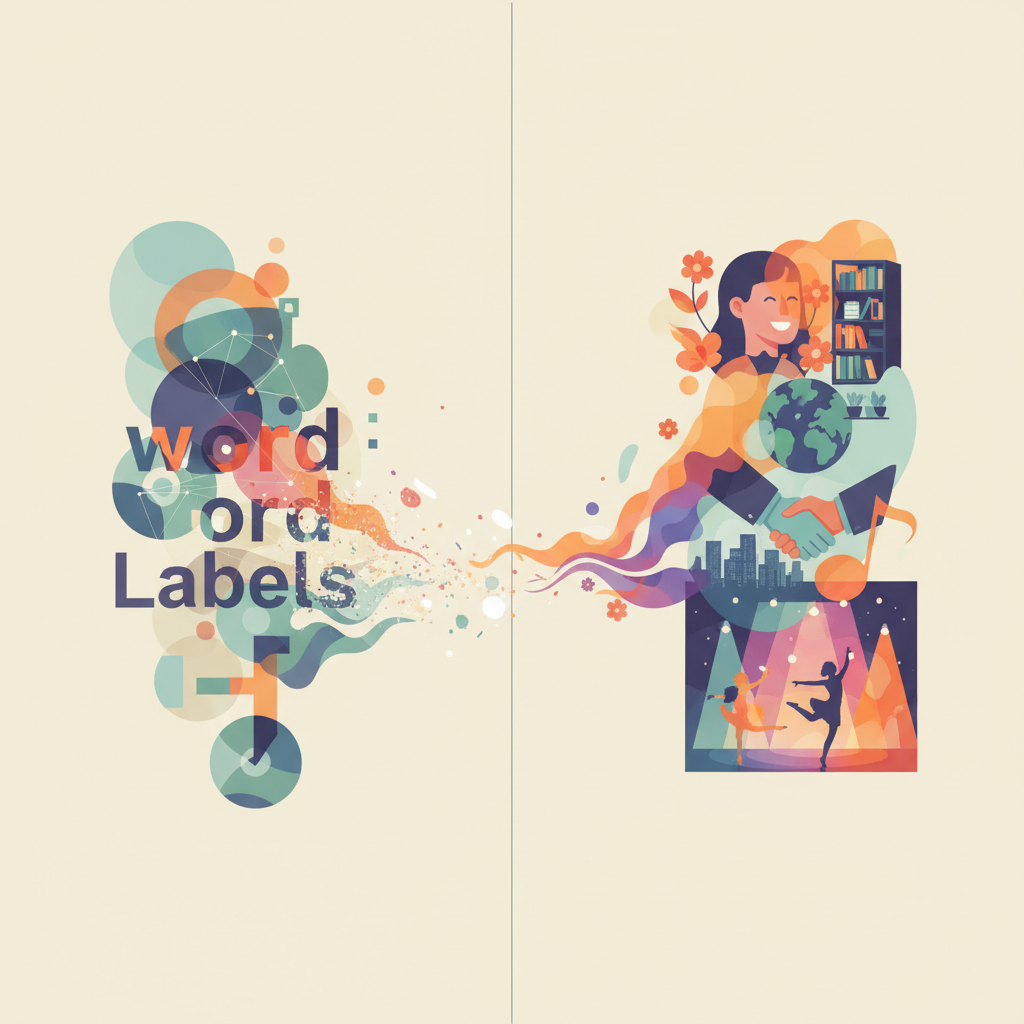
Many languages prioritize classification. Words function as labels for concepts. English, especially at the core vocabulary level, relies heavily on perception. Words describe shapes, actions, boundaries, and how humans physically interact with the world. Meaning emerges from use, movement, and context.
When learners rely on translation as the starting point, this perceptual layer disappears. Words become static definitions rather than usable tools. Memorization replaces understanding, and recall depends on effort instead of intuition.
This explains a common frustration: a learner may recognize many words while reading, yet hesitate when listening or speaking. The vocabulary exists, but it has never been grounded in experience. The word was learned as text, not as a mental image.
Imagery before translation
In effective vocabulary learning, imagery comes before explanation. You see the form. You understand how it is used. Only then does translation serve as confirmation. This order matters. Translation is helpful when it verifies understanding. It becomes limiting when it replaces understanding.
How LexiTalk teaches vocabulary
At LexiTalk, vocabulary learning begins with meaning that can be visualized and used. Words are introduced through real context, listening, and active application. Translation supports clarity, but it does not define the word.
Closing thought
A word truly becomes part of your language when you no longer search for its equivalent. You recognize it by the picture it creates. That moment is where real learning starts.