
adaptation - Master This Word
Master this word with our 5-step learning method – Learn English in English
Train English Through Brain Routes, Not Translation.
This page helps you stop memorizing isolated translations and start understanding a word through its shared mental image, native-style thinking, and practical training steps.
Master this word with our 5-step learning method – Learn English in English
Example sentences are the start of understanding. Don't rush to memorize. First feel how the word works in a sentence.
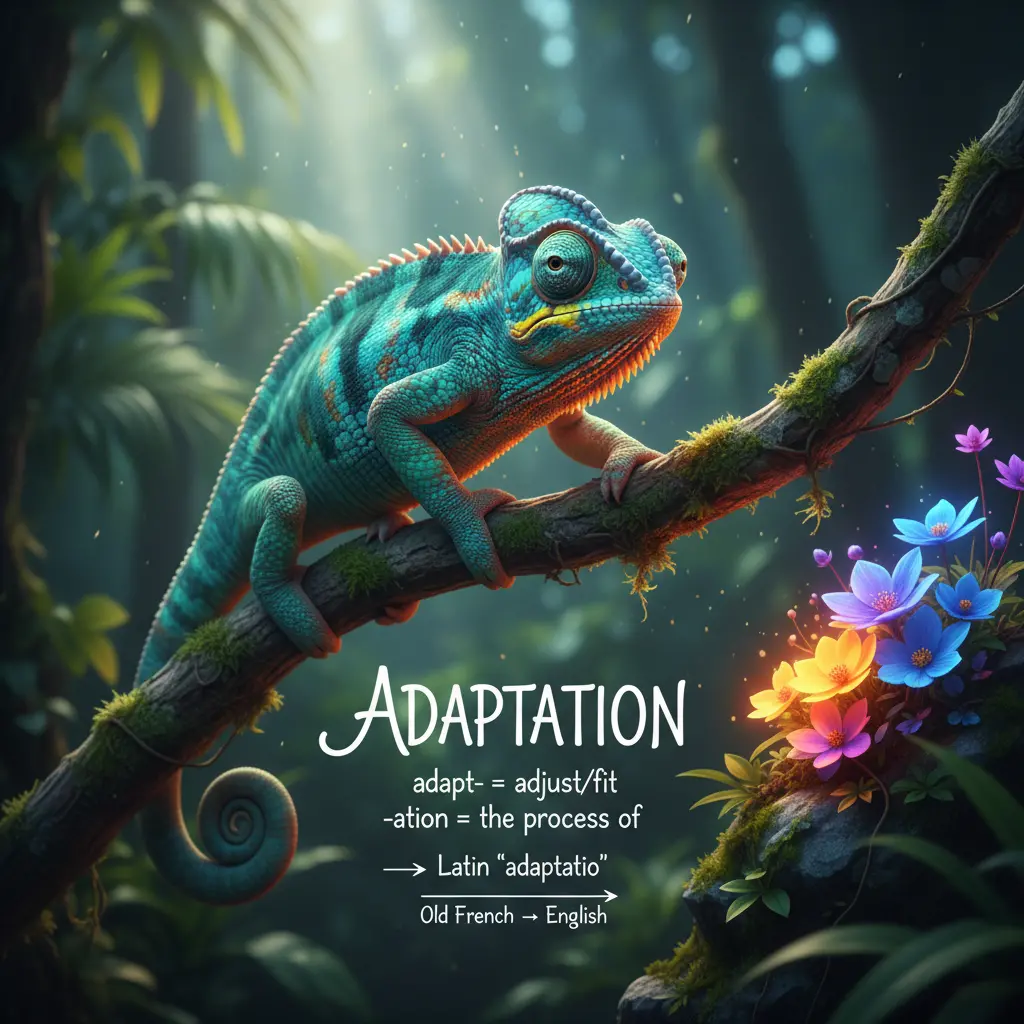
Root decomposition: adapt- = adjust/fit + -ation = the process of. Historical origin: Latin 'adaptatio' → Old French 'adaptation' → English. Memory image: Picture a chameleon changing colors to fit into its surroundings, symbolizing the continuous process of adaptation to thrive.
Note 1: These definitions and etymologies are not standard dictionary definitions, but extended explanations provided to help with memorization and understanding of the actual application of words. Through this background information, we strive to make words more vivid and easier to understand, and help you remember their meanings in real life.
Note 2: LexiTalk designs the learning flow around the linguistics principle of “Comprehensible Input.” When learners encounter material that is slightly above their level but still understandable from context, the brain naturally absorbs the language. That’s why we keep every word inside authentic contexts, using examples and associations to help you understand it and use it flexibly.
Read the FAQ explanation of Comprehensible InputI place my hand on the chair and push up, testing my balance. I move my shoulders, turn toward the window, and adjust the light as the room shows a change. The effort feels steady, a small push and pull as I keep control. This adaptation grows from trying one way after another, until the space fits my pace.
Adaptation is the ongoing process of becoming better suited to new conditions. It encompasses both natural changes, such as a species evolving to survive in a changing climate, and deliberate adjustments, like updating a product, a plan, or a hobby to fit a different environment. In everyday life, adaptation involves recognizing what is different, learning new skills, and testing approaches until something works. The term carries a sense of flexibility and resilience: you modify practices, expectations, or tools so they function effectively despite unknowns or challenges. People often talk about cultural adaptation when moving to a new country, or technological adaptation when software is repurposed for a different user base.
In English, adaptation is often seen as a flexible, ongoing process; learners may overgeneralize to imply constant personal growth or confuse it with a one-off change. Emphasize contexts (nature, culture, technology) and the accompanying verbs (adapt, adapt to, adaptive).
What is the meaning of the word 'adaptation'?
Which sentence uses 'adaptation' correctly?
Which word is most similar to 'adaptation'?
What is the opposite of 'adaptation'?
Can you give an example of a real-life scenario of 'adaptation'?
Download LexiTalk app for personalized learning experience
Download AppCookies
We use cookies for essential site functions, analytics, and ads. You can accept, reject, or manage preferences. Privacy Policy