agriculture - Master This Word
Master this word with our 5-step learning method – Learn English in English
Train English Through Brain Routes, Not Translation.
This page helps you stop memorizing isolated translations and start understanding a word through its shared mental image, native-style thinking, and practical training steps.
Master this word with our 5-step learning method – Learn English in English
Example sentences are the start of understanding. Don't rush to memorize. First feel how the word works in a sentence.
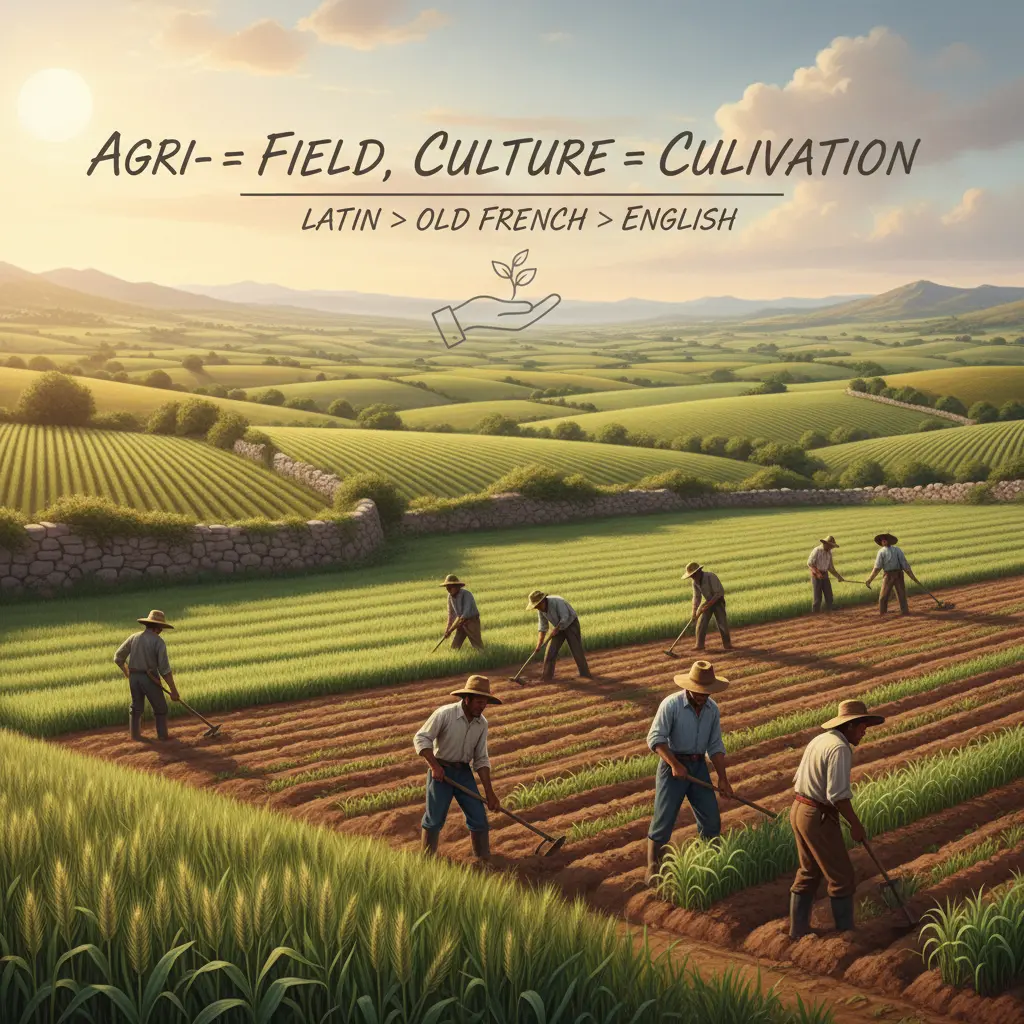
Root: agri- = field, culture = cultivation. Origin: Latin > Old French > English. Memory image: Imagine vast fields of crops growing under the sun, tended by farmers who cultivate the land, representing the relationship between humans and nature in food production.
Note 1: These definitions and etymologies are not standard dictionary definitions, but extended explanations provided to help with memorization and understanding of the actual application of words. Through this background information, we strive to make words more vivid and easier to understand, and help you remember their meanings in real life.
Note 2: LexiTalk designs the learning flow around the linguistics principle of “Comprehensible Input.” When learners encounter material that is slightly above their level but still understandable from context, the brain naturally absorbs the language. That’s why we keep every word inside authentic contexts, using examples and associations to help you understand it and use it flexibly.
Read the FAQ explanation of Comprehensible InputI push the wheelbarrow along the furrow and I shift the soil with a measured swing. I place seeds in neat pockets and adjust their depth, keeping the rows straight as I go. The sun makes the work steady and the effort feels real, a slow push here and there. Soon the field seems to wake up, a simple routine that points toward harvest.
Agriculture is the broad science and practice of cultivating the land, growing crops, and raising animals for food, fiber, and other products. It includes soil management, irrigation, plant breeding, pest control, and farm economics, along with policies that shape rural life. In everyday contexts, agriculture describes the sector rather than a single farm, covering everything from small family plots to large commercial operations. The term emphasizes the relationship between humans and the land, technology and tradition, and the long timeline of food production from seed to table. Learners should distinguish agriculture from horticulture, which tends to focus on cultivated plants in specific settings.
English tends to treat agriculture as both a science and a sector with policy and economy implications, so learners should map it to similar terms like agronomy, agribusiness, and rural development. Common mistakes include treating agriculture as only farming on a single plot or confusing it with gardening.
What is the meaning of the word 'agriculture'?
Which sentence uses 'agriculture' correctly?
What is a synonym for 'agriculture'?
What is an antonym for 'agriculture'?
How is 'agriculture' important in today's world?
Download LexiTalk app for personalized learning experience
Download AppCookies
We use cookies for essential site functions, analytics, and ads. You can accept, reject, or manage preferences. Privacy Policy