LexiTalk LexiTalk

Train English Through Brain Routes, Not Translation.

This page helps you stop memorizing isolated translations and start understanding a word through its shared mental image, native-style thinking, and practical training steps.

🎙️ Daily Listening📚 Example Sentences & Scenarios🧠 Vocabulary Learning

allergies - Master This Word

Master this word with our 5-step learning method – Learn English in English
allergies Word Meanings

  • a condition in which the immune system reacts abnormally to a foreign substance
  • a strong reaction to something that is usually harmless
  • a specific sensitivity to certain foods, pollen, or medications
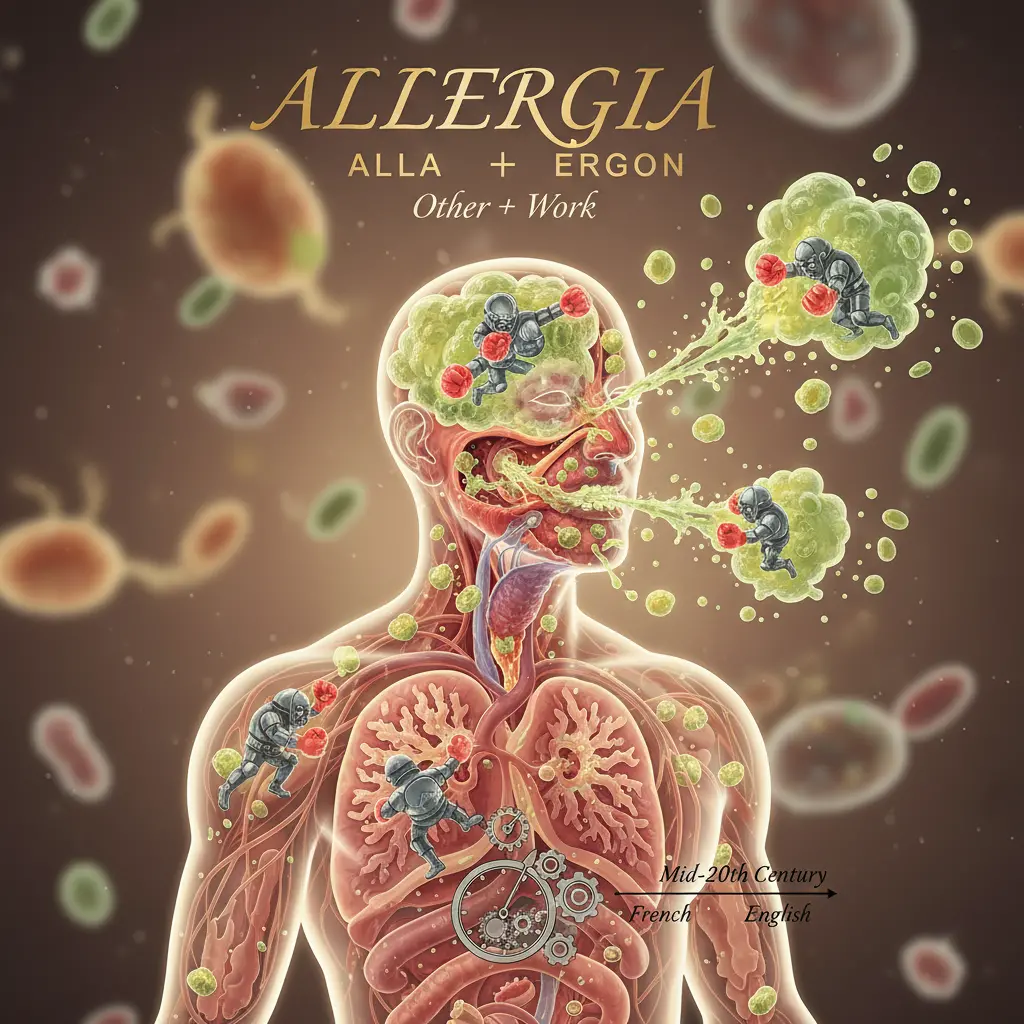
Illustration for this word

allergies Example Sentences

Example sentences are the start of understanding. Don't rush to memorize. First feel how the word works in a sentence.

allergies Phonetic & Pronunciation

Pronunciation
UK /ˈæl.ə.dʒi/
US /ˈæl.ər.dʒi/
Syllables
allergy

allergies Word Etymology

allergy is from 'alla' (other) + 'ergon' (work). Latin 'allergia' via French into English in the mid-20th century. Picture a body working hard against a harmless pollen, showcasing the struggle.

Note 1: These definitions and etymologies are not standard dictionary definitions, but extended explanations provided to help with memorization and understanding of the actual application of words. Through this background information, we strive to make words more vivid and easier to understand, and help you remember their meanings in real life.

Note 2: LexiTalk designs the learning flow around the linguistics principle of “Comprehensible Input.” When learners encounter material that is slightly above their level but still understandable from context, the brain naturally absorbs the language. That’s why we keep every word inside authentic contexts, using examples and associations to help you understand it and use it flexibly.

Read the FAQ explanation of Comprehensible Input

Real Context

An allergy is a condition in which the immune system overreacts to a substance that is typically harmless, such as pollen, peanuts, or pet dander. When someone with an allergy encounters the trigger, symptoms can range from sneezing and itching to hives, swelling, or an asthma attack. Allergies are diagnosed by doctors and managed with avoidance, medications, or, in some cases, shots or tablets that train the body to react less strongly. In everyday English, people often say 'I have an allergy to X' or 'I'm allergic to X.' Be careful not to confuse allergy with intolerance, which does not involve the immune system.

Usage Reminders

  • • Allergy is a countable noun. Use 'an allergy to' or 'the allergy.'
  • • Say 'I have an allergy to X' or 'I’m allergic to X.'
  • • Distinguish allergy from intolerance (no immune system involvement).
  • • Common triggers include foods, pollen, and stings.
  • • Treatments include avoidance, medicines, or immunotherapy where appropriate.

Common Misconceptions

  • Allergies and intolerances are the same thing.
  • All allergies are life-threatening all the time.
  • Only foods can cause allergies.
  • Allergy means you cannot enjoy the food forever.
  • If you are not itchy or wheezy, you do not have an allergy.

Thinking Differences

Explain to an English speaker that allergy is a specific medical noun describing immune-system reactions to harmless substances; learners often confuse 'allergic to' (adjective) with 'has an allergy to' (noun phrase).

Learning Tips

  • Watch for context clues to decide if allergy refers to a medical condition.
  • Differentiate 'allergy' (noun) from 'allergic' (adjective).
  • Learn common triggers: foods, pollen, insect stings.
  • Pair phrases with articles: 'an allergy to peanuts' vs 'the peanut allergy'.
  • Practice short chat responses: 'I have an allergy to X.'
  • Note gradual vs immediate reactions for accuracy.

5-Step Learning Method - Learn English in English

Step 1: Meaning

What does the word 'allergies' mean?

A.An expression of deep emotion
B.A type of weather phenomenon
C.A reaction by the immune system to a substance
D.A type of food item
Step 2: Usage

Choose the correct sentence that uses 'allergies' appropriately.

A.He enjoys playing video games with no allergies.
B.Allergies are a great way to spend the summer.
C.She has allergies to pollen in the spring.
D.They decided to have allergies for dinner.
Step 3: Similar Words

Which word is most similar to 'allergies'?

A.Reaction
B.Illness
C.Medication
D.Virus
Step 4: Opposite Words

What is the opposite of 'allergies'?

A.Health
B.Sickness
C.Diagnosis
D.Treatment
Step 5: Mastery

Can you think of a real-life context involving 'allergies'?

A.Someone avoids eating nuts due to their allergies.
B.A person visits a doctor for a check-up.
C.A child plays outside in the rain.
D.An individual goes for a swim in the ocean.

Related Listening

🌱 Lite (Beginner)

🌱 Lite
Pharmacy Visit

At the Pharmacy

2026.05.14 · 0:35 · A2 · Dialogue
Listen Now
🌱 Lite
Order at a resort restaurant

Restaurant Order

2026.03.20 · 0:33 · A1 · Dialogue
Listen Now
🌱 Lite
Pharmacy Visit for Fever

At the Pharmacy

2025.12.10 · 0:25 · A2 · Dialogue
Listen Now

🔥 Advanced

🔥 Advanced
Ordering at a Neighbourhood Restaurant

Restaurant Ordering

2026.03.04 · 1:25 · A2 · IELTS · Dialogue
Listen Now
🔥 Advanced
Dining Experience and Allergies

English Learning Listening Content

2025.09.05 · 1:02 · B2 · Dialogue
Listen Now

Want to practice more words?

Download LexiTalk app for personalized learning experience

Download App

Cookies

We use cookies for essential site functions, analytics, and ads. You can accept, reject, or manage preferences. Privacy Policy


Support