
altruism - Master This Word
Master this word with our 5-step learning method – Learn English in English
Train English Through Brain Routes, Not Translation.
This page helps you stop memorizing isolated translations and start understanding a word through its shared mental image, native-style thinking, and practical training steps.
Master this word with our 5-step learning method – Learn English in English
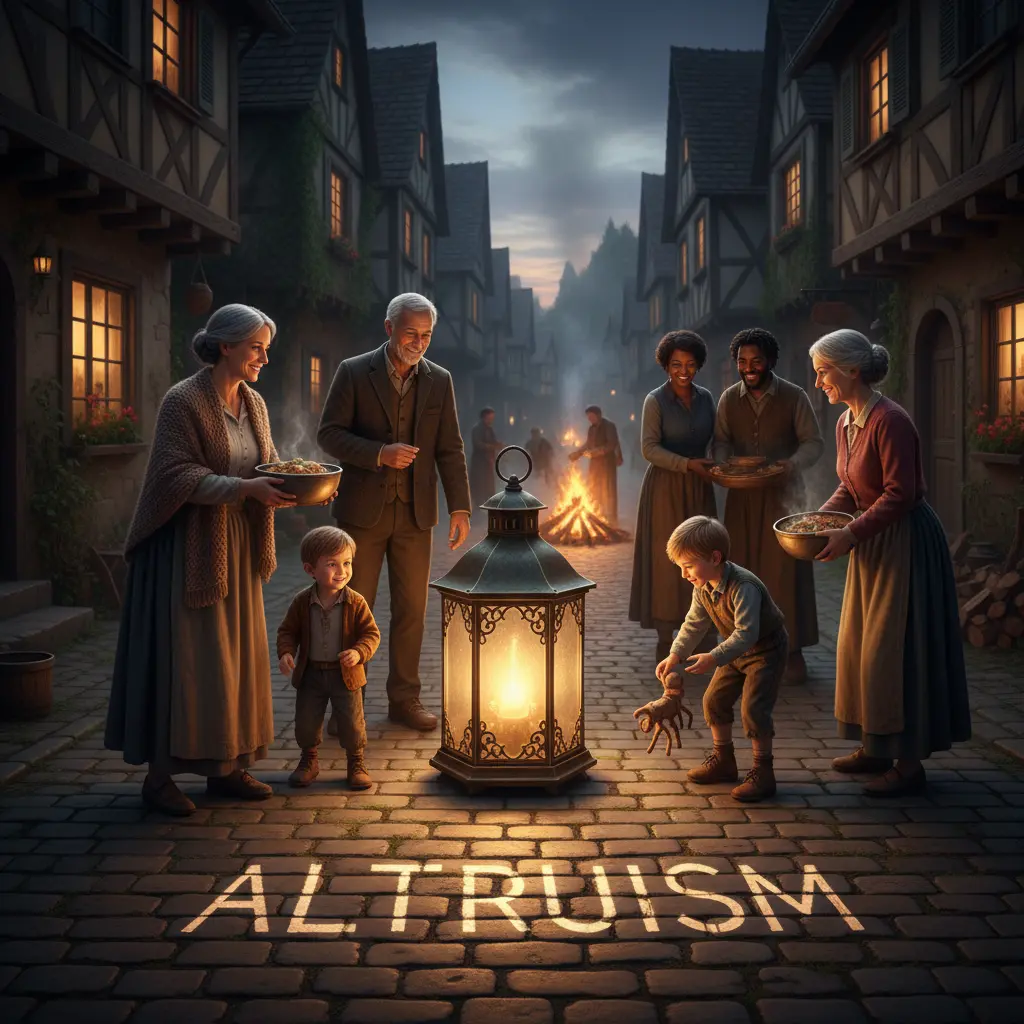
Example sentences are the start of understanding. Don't rush to memorize. First feel how the word works in a sentence.
Root decomposition: altru- derives from Latin alter meaning other, combined with the noun suffix -ism to form a doctrine. Historical origin: the word was coined in the 19th century by Auguste Comte, from French altruisme and Italian altruismo, ultimately from Latin alter. Memory image: imagine a lantern lit for others, guiding neighbors to share food and help one another, making the street glow with care.
Note 1: These definitions and etymologies are not standard dictionary definitions, but extended explanations provided to help with memorization and understanding of the actual application of words. Through this background information, we strive to make words more vivid and easier to understand, and help you remember their meanings in real life.
Note 2: LexiTalk designs the learning flow around the linguistics principle of “Comprehensible Input.” When learners encounter material that is slightly above their level but still understandable from context, the brain naturally absorbs the language. That’s why we keep every word inside authentic contexts, using examples and associations to help you understand it and use it flexibly.
Read the FAQ explanation of Comprehensible InputAltruism refers to a genuine concern for other people’s well-being that goes beyond self-interest. It can be a spontaneous act of kindness or a long-term commitment to helping others, even at personal cost. In philosophical terms, it is contrasted with egoism, yet many cultures celebrate acts of altruism as essential social glue. The word is often linked to the French altruisme and Italian altruismo, ultimately tracing back to Latin alter meaning other. In everyday usage, you might describe a neighbor who shares meals, a volunteer who stays late to assist strangers, or a donor who sacrifices comfort for a cause. Remember the memory image: a lantern lit for others guiding a community toward care.
Explain to an English speaker: English tends to separate altruism from simple kindness and often highlights the cost to the giver; learners may miss implicit costs or motives in real scenarios.
What does 'altruism' mean?
Choose the correct sentence using 'altruism'.
Which of the following words is most similar to 'altruism'?
What is the opposite of 'altruism'?
Can you think of a real-life context where altruism is demonstrated?
Download LexiTalk app for personalized learning experience
Download AppCookies
We use cookies for essential site functions, analytics, and ads. You can accept, reject, or manage preferences. Privacy Policy