anxiety - Master This Word
Master this word with our 5-step learning method – Learn English in English
Train English Through Brain Routes, Not Translation.
This page helps you stop memorizing isolated translations and start understanding a word through its shared mental image, native-style thinking, and practical training steps.
Master this word with our 5-step learning method – Learn English in English
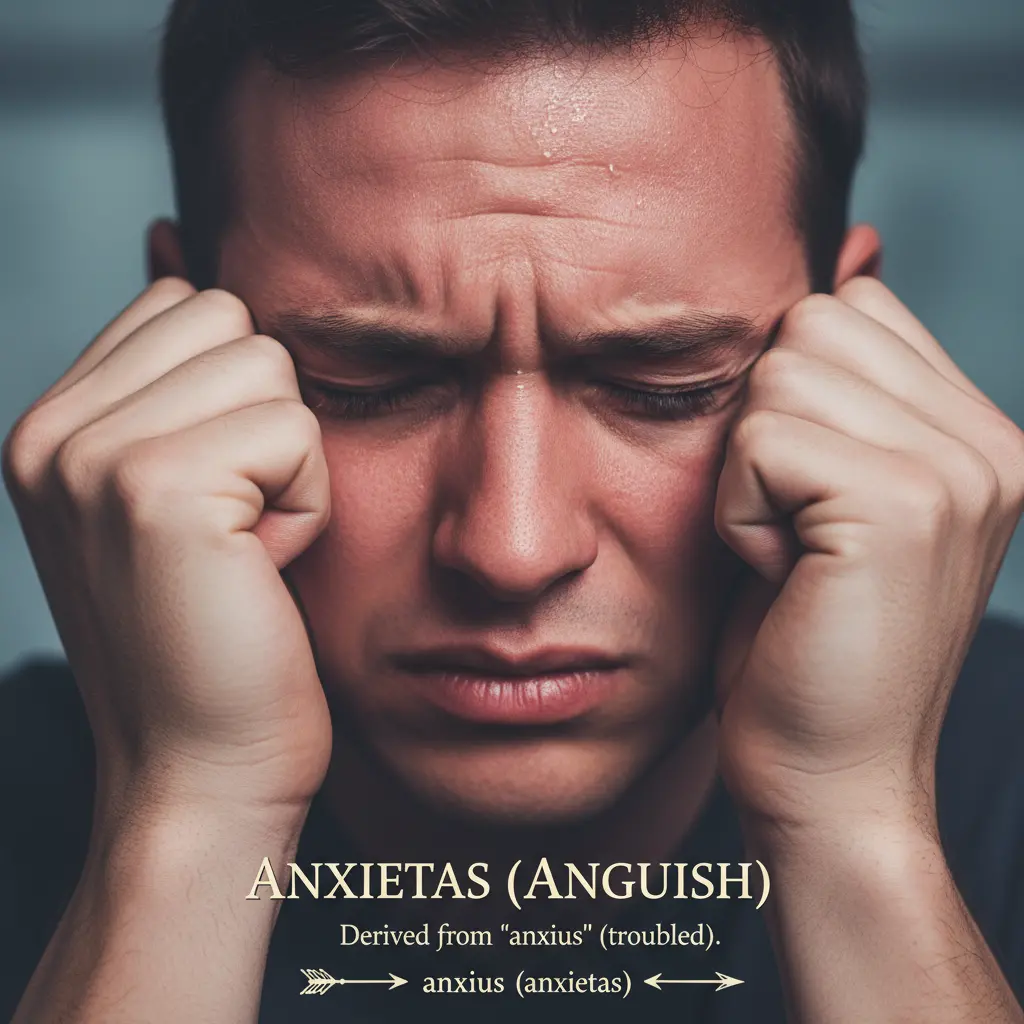
Example sentences are the start of understanding. Don't rush to memorize. First feel how the word works in a sentence.
From Latin 'anxietas' (anguish) derived from 'anxius' (troubled). Picture someone clenching their fists and furrowing their brow, embodying the struggle of anxiety.
Note 1: These definitions and etymologies are not standard dictionary definitions, but extended explanations provided to help with memorization and understanding of the actual application of words. Through this background information, we strive to make words more vivid and easier to understand, and help you remember their meanings in real life.
Note 2: LexiTalk designs the learning flow around the linguistics principle of “Comprehensible Input.” When learners encounter material that is slightly above their level but still understandable from context, the brain naturally absorbs the language. That’s why we keep every word inside authentic contexts, using examples and associations to help you understand it and use it flexibly.
Read the FAQ explanation of Comprehensible InputI grip the steering wheel and start to move my attention from the outside noise to a small inner rhythm. A tight thread of worry tightens in my chest, I pull a slow breath, and I adjust my posture to feel steadier. Each click of the clock makes the ache change its tempo, and I decide which thought to hold and which to let go. The room settles as I keep a steady pace, and the edge of fear shifts toward something that I can manage.
Anxiety is a general feeling of worry, nervousness, or unease about something with an uncertain outcome. It can show up in everyday moments, like waiting for test results or giving a presentation, or as a more persistent state that interferes with daily life. In English, anxiety is a noun but often described with adjectives like persistent, mild, or severe. People distinguish it from stress or fear by its lasting impact and physical symptoms such as a racing heart or tense muscles. Learners should note common collocations, such as anxiety about, or have anxiety, and the medical term anxiety disorder for clinical contexts.
Explain to an English speaker: English distinguishes anxiety as a general mood/state (vs transient worry) and uses many collocations to express degree and focus, plus a clinical term; learners often confuse it with stress or fear or misuse with ordinary worries.
What is the meaning of the word 'anxiety'?
In which of the following sentences is 'anxiety' used correctly?
Which word is similar to 'anxiety'?
Which word is the opposite of 'anxiety'?
In what real-life situation might someone experience anxiety?
English Learning Listening Content
Listen NowDownload LexiTalk app for personalized learning experience
Download AppCookies
We use cookies for essential site functions, analytics, and ads. You can accept, reject, or manage preferences. Privacy Policy