
aqueducts - Master This Word
Master this word with our 5-step learning method – Learn English in English
Train English Through Brain Routes, Not Translation.
This page helps you stop memorizing isolated translations and start understanding a word through its shared mental image, native-style thinking, and practical training steps.
Master this word with our 5-step learning method – Learn English in English
Example sentences are the start of understanding. Don't rush to memorize. First feel how the word works in a sentence.
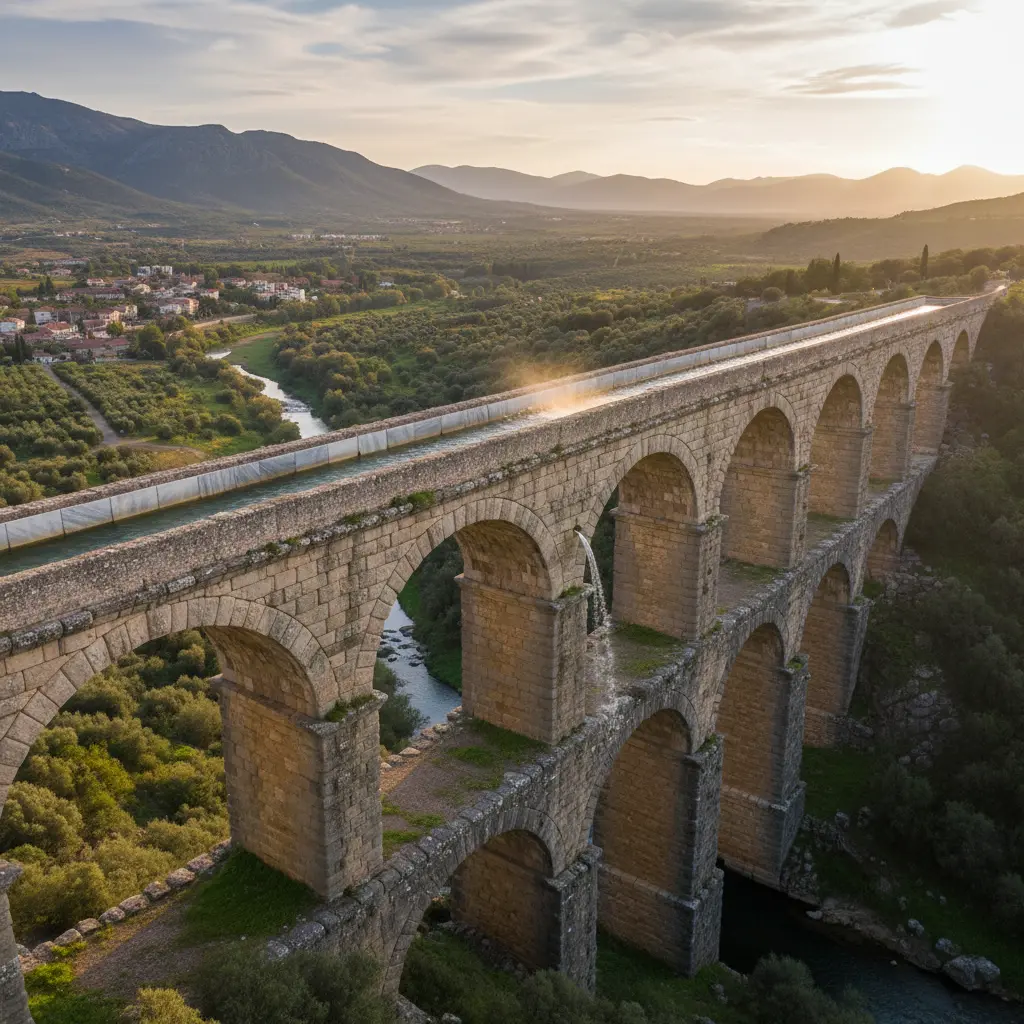
Root: aqua (water) + ductus (to lead). Origin: Latin (aqua + ductus) -> Old French -> English. Memory image: envision a grand arch carrying a stream of crystal-clear water flowing gracefully over it, suggesting the pathway to life sustenance.
Note 1: These definitions and etymologies are not standard dictionary definitions, but extended explanations provided to help with memorization and understanding of the actual application of words. Through this background information, we strive to make words more vivid and easier to understand, and help you remember their meanings in real life.
Note 2: LexiTalk designs the learning flow around the linguistics principle of “Comprehensible Input.” When learners encounter material that is slightly above their level but still understandable from context, the brain naturally absorbs the language. That’s why we keep every word inside authentic contexts, using examples and associations to help you understand it and use it flexibly.
Read the FAQ explanation of Comprehensible InputAn aqueduct is a water-delivery system that uses gravity to transport fresh water from a distant source to towns, farms, and baths. The word comes from Latin aqua (water) and ductus (to lead), entering English through Old French. In classical engineering, aqueducts are often long, elevated channels that span valleys, supported by arches, and carrying a trough or conduit. In modern usage, the term can also describe any channel or pipe system that distributes water, even if it isn’t a historic bridge. A memorable image is a grand stone arch carrying a stream of crystal-clear water across a landscape, signaling life-sustaining flow and urban planning. Knowing the roots helps learners distinguish aqueduct from a simple canal or bridge.
Explain to an English speaker: Aqueducts evoke grand, gravity-driven engineering from the past; learners should focus on the concept of transporting water, not a modern pipe or a bridge for people. Don’t assume all water channels are aqueducts; the term carries historical and technical nuance.
Download LexiTalk app for personalized learning experience
Download AppCookies
We use cookies for essential site functions, analytics, and ads. You can accept, reject, or manage preferences. Privacy Policy