archaeology - Master This Word
Master this word with our 5-step learning method – Learn English in English
Train English Through Brain Routes, Not Translation.
This page helps you stop memorizing isolated translations and start understanding a word through its shared mental image, native-style thinking, and practical training steps.
Master this word with our 5-step learning method – Learn English in English
Example sentences are the start of understanding. Don't rush to memorize. First feel how the word works in a sentence.
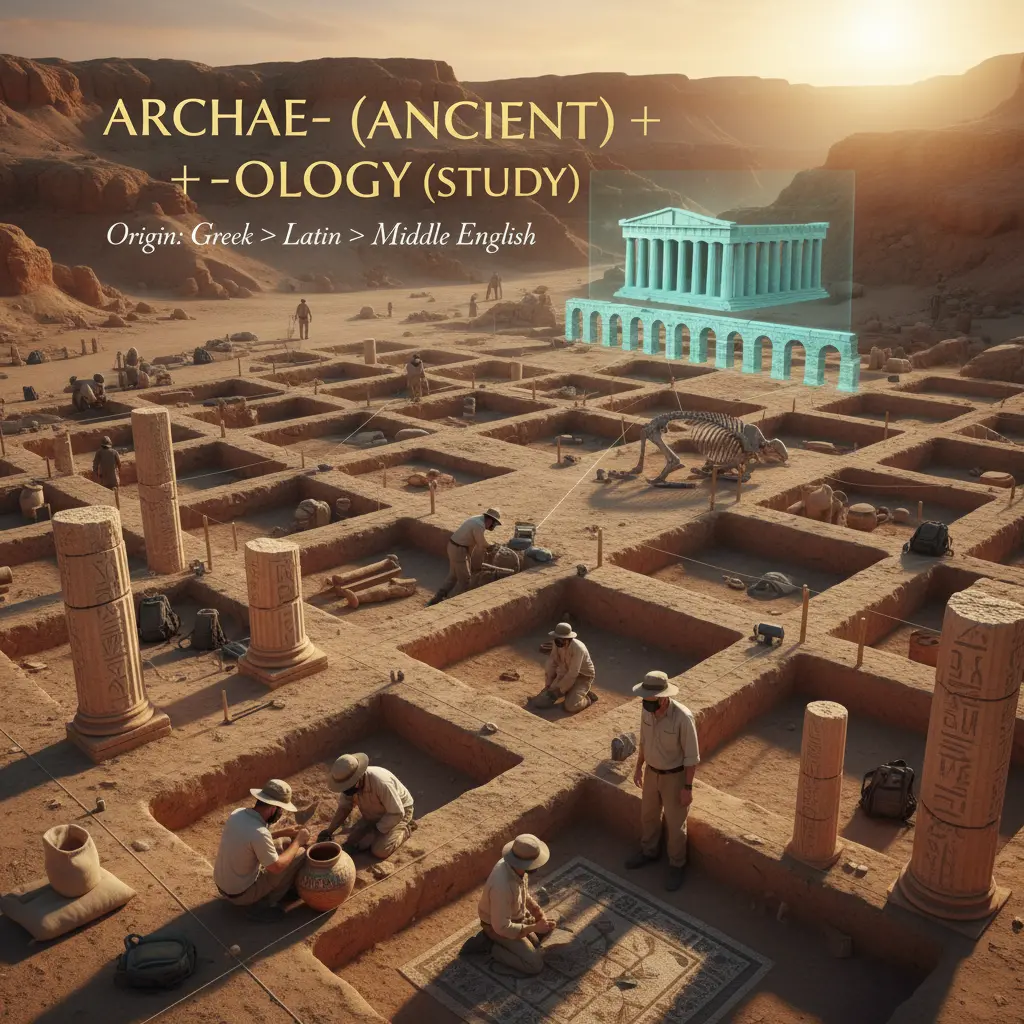
archaeology = archae- (ancient) + -ology (study). Origin: Greek -> Latin -> Middle English. Memory image: Imagine a dusty excavation site, where ancient artifacts tell the story of civilizations long past, connecting the present with historical roots.
Note 1: These definitions and etymologies are not standard dictionary definitions, but extended explanations provided to help with memorization and understanding of the actual application of words. Through this background information, we strive to make words more vivid and easier to understand, and help you remember their meanings in real life.
Note 2: LexiTalk designs the learning flow around the linguistics principle of “Comprehensible Input.” When learners encounter material that is slightly above their level but still understandable from context, the brain naturally absorbs the language. That’s why we keep every word inside authentic contexts, using examples and associations to help you understand it and use it flexibly.
Read the FAQ explanation of Comprehensible InputArchaeology is the study of human history through digging up artifacts, sites, and material culture. It combines scientific methods with careful interpretation to reconstruct past lives, economies, and social structures. Archaeologists document layers of occupation, discover tools, pottery, bones, and architecture, and date them using radiocarbon, stratigraphy, and pottery styles. The field invites patience, collaboration with local communities, and respect for heritage. It asks questions about how people lived, traded, fought, and adapted to changing environments. By placing artifacts in context, archaeology helps us understand long-term human behavior and the connections between ancient cultures and present-day societies.
English speakers often frame archaeology as museums, ruins, and grand discoveries; learners may focus on artifacts rather than processes, and worry about perfect pronunciation before understanding terminology.
What is the meaning of the word 'archaeology'?
In which of the following sentences is 'archaeology' used correctly?
Which of the following is a synonym for 'archaeology'?
Which of the following is an antonym for 'archaeology'?
How does 'archaeology' apply in real-life contexts?
Download LexiTalk app for personalized learning experience
Download AppCookies
We use cookies for essential site functions, analytics, and ads. You can accept, reject, or manage preferences. Privacy Policy