ash - Master This Word
Master this word with our 5-step learning method – Learn English in English
Train English Through Brain Routes, Not Translation.
This page helps you stop memorizing isolated translations and start understanding a word through its shared mental image, native-style thinking, and practical training steps.
Master this word with our 5-step learning method – Learn English in English
Example sentences are the start of understanding. Don't rush to memorize. First feel how the word works in a sentence.
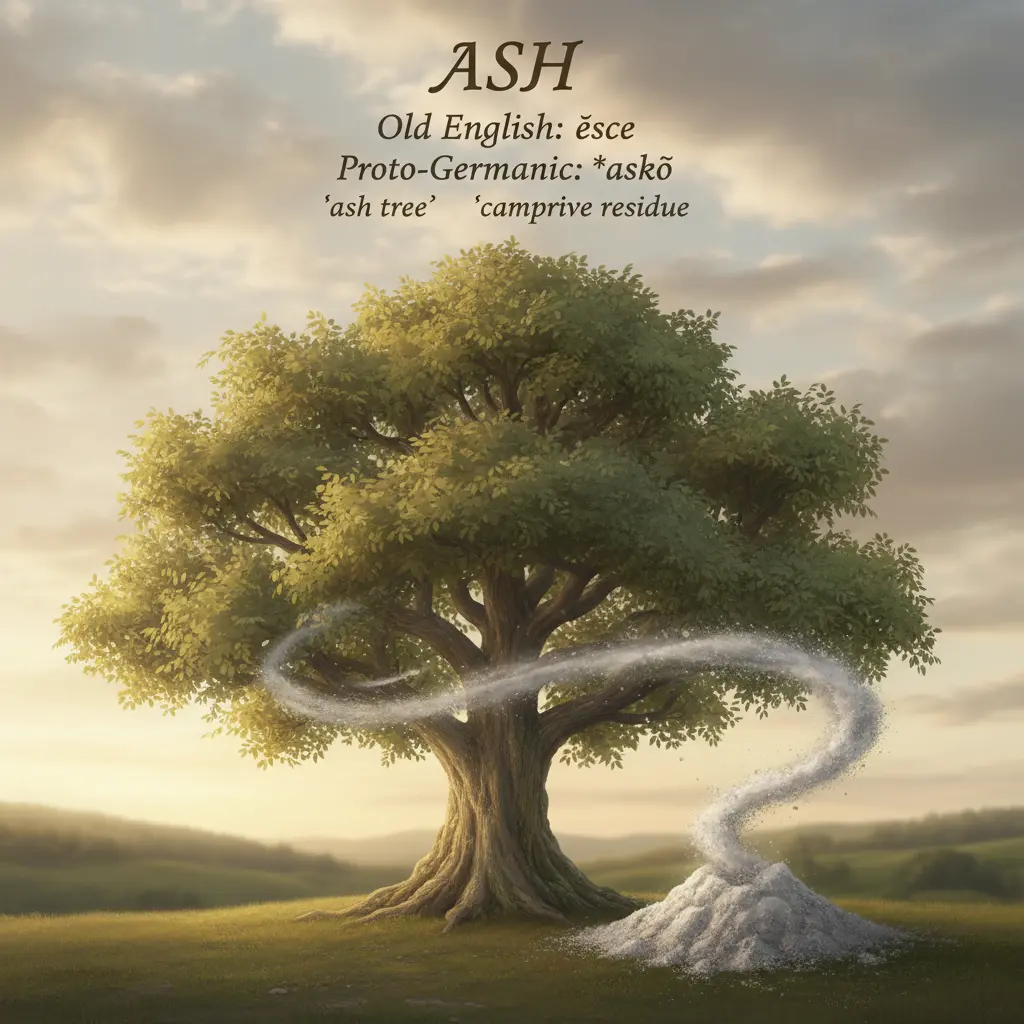
Root: "ash" is derived from Old English "æsce," meaning 'ash tree'. Historical origin: From Proto-Germanic *askō, which is connected to the name of the tree in various languages. Memory image: Imagine a large ash tree, its leaves fluttering softly, and envision the gray residue of wood after a warm campfire, gently blowing in the wind.
Note 1: These definitions and etymologies are not standard dictionary definitions, but extended explanations provided to help with memorization and understanding of the actual application of words. Through this background information, we strive to make words more vivid and easier to understand, and help you remember their meanings in real life.
Note 2: LexiTalk designs the learning flow around the linguistics principle of “Comprehensible Input.” When learners encounter material that is slightly above their level but still understandable from context, the brain naturally absorbs the language. That’s why we keep every word inside authentic contexts, using examples and associations to help you understand it and use it flexibly.
Read the FAQ explanation of Comprehensible InputI hold a small tray and gently move the ash with a soft brush, watching the pale dust shift. With each careful adjustment, the pile settles and I keep the line neat. I turn the brush and feel the grit give a little under pressure, a memory of heat settling in my fingertips. In that quiet motion, ash becomes more than dust: it reminds me of what burned away and of an ash tree that shares the name.
Ash has two common senses in English: the gray powder left after burning, and the name of a tree in the Fraxinus genus. This dual usage can confuse learners who hear 'ash' in a sentence about a campfire and wonder whether the word refers to the color, the residue, or the tree. In everyday speech, 'ash' as residue appears in phrases like ash falls, ash cloud, and ash gray as a color term. The etymology links to the old English name for the tree and its ancient wood, but both senses are now pervasive in modern life, science, and literature.
English often separates color terms from material senses clearly (ash gray vs ash as residue). Learners should note that the tree sense uses a root historically tied to wood, not color. Mistakes often include using the tree sense when talking about smoke or residue, or assuming color meaning from a tree context.
What is the meaning of the word 'ash'?
In which sentence is the word 'ash' used correctly?
Which word is a synonym of 'ash'?
What is the opposite of 'ash'?
In what real-life context would you find 'ash'?
Download LexiTalk app for personalized learning experience
Download AppCookies
We use cookies for essential site functions, analytics, and ads. You can accept, reject, or manage preferences. Privacy Policy