bacteria - Master This Word
Master this word with our 5-step learning method – Learn English in English
Train English Through Brain Routes, Not Translation.
This page helps you stop memorizing isolated translations and start understanding a word through its shared mental image, native-style thinking, and practical training steps.
Master this word with our 5-step learning method – Learn English in English
Example sentences are the start of understanding. Don't rush to memorize. First feel how the word works in a sentence.
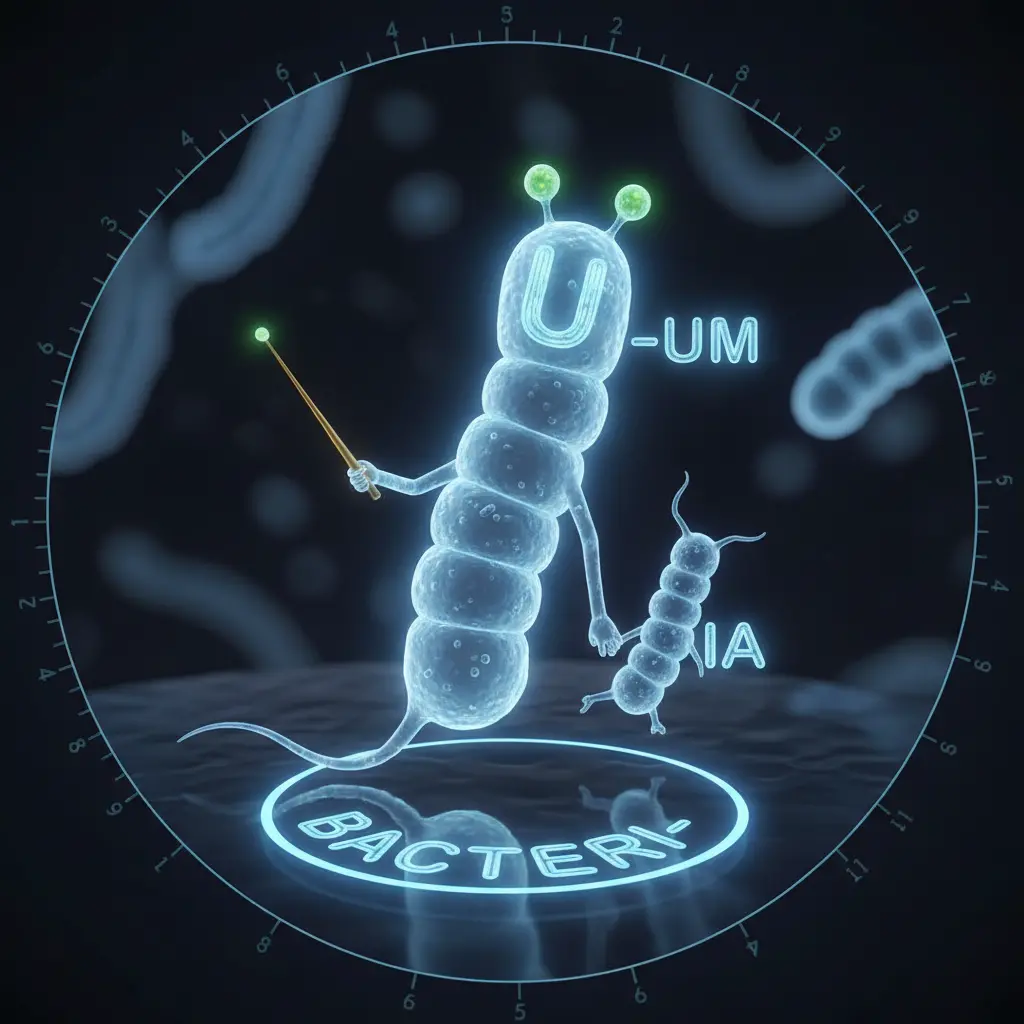
Root decomposition: the base is bacteri- plus the Latin suffix -um to form bacterium; the plural is formed with -ia to give bacteria. Historical origin: from Greek baktérion (little staff) via Latin bacterium, into English in the 19th century. Memory image: imagine a tiny rod-shaped creature under a microscope holding a baton to remember the root and suffix.
Note 1: These definitions and etymologies are not standard dictionary definitions, but extended explanations provided to help with memorization and understanding of the actual application of words. Through this background information, we strive to make words more vivid and easier to understand, and help you remember their meanings in real life.
Note 2: LexiTalk designs the learning flow around the linguistics principle of “Comprehensible Input.” When learners encounter material that is slightly above their level but still understandable from context, the brain naturally absorbs the language. That’s why we keep every word inside authentic contexts, using examples and associations to help you understand it and use it flexibly.
Read the FAQ explanation of Comprehensible InputI turn the faucet and move my hands under the stream, rubbing soap across every edge of my palm. I hold the towel, pull it over, and adjust my grip as the warm water slicks and then cleans. The idea of something tiny and unseen—bacteria—nudges into my thoughts, since you can’t see it with the naked eye. I set the scene at the sink, keep that attention, and let the notion settle as part of daily care.
Bacteria are tiny, single-celled organisms you cannot see with the naked eye. They form a broad group of prokaryotes, meaning their cells lack a true nucleus. Some bacteria cause disease in humans, animals, or plants, while others are harmless or beneficial, for example certain gut bacteria help digest food and synthesize vitamins. In everyday speech, bacteria is often used to mean germs or microbes in general. Note that bacterium is the singular form and bacteria is the plural. The word comes from Greek baktérion (little staff) via Latin bacterium and entered English in the 19th century. A memory cue: imagine a tiny rod-shaped creature under a microscope holding a baton.
For English speakers, the challenge is mainly singular/plural handling and technical nuance between bacteria as a group vs bacterium as a single member. Learners often mis-treat it as a countable noun like other items, or confuse it with virus terminology. Emphasize that bacteria is plural, bacterium is singular, and that everyday use may broaden to mean germs.
What is the meaning of the word 'bacteria'?
In which of the following sentences is 'bacteria' used correctly?
Which word is a synonym for 'bacteria'?
Which word is an opposite for 'bacteria'?
Where would you commonly find 'bacteria' in real-life?
Download LexiTalk app for personalized learning experience
Download AppCookies
We use cookies for essential site functions, analytics, and ads. You can accept, reject, or manage preferences. Privacy Policy