bail - Master This Word
Master this word with our 5-step learning method – Learn English in English
Train English Through Brain Routes, Not Translation.
This page helps you stop memorizing isolated translations and start understanding a word through its shared mental image, native-style thinking, and practical training steps.
Master this word with our 5-step learning method – Learn English in English
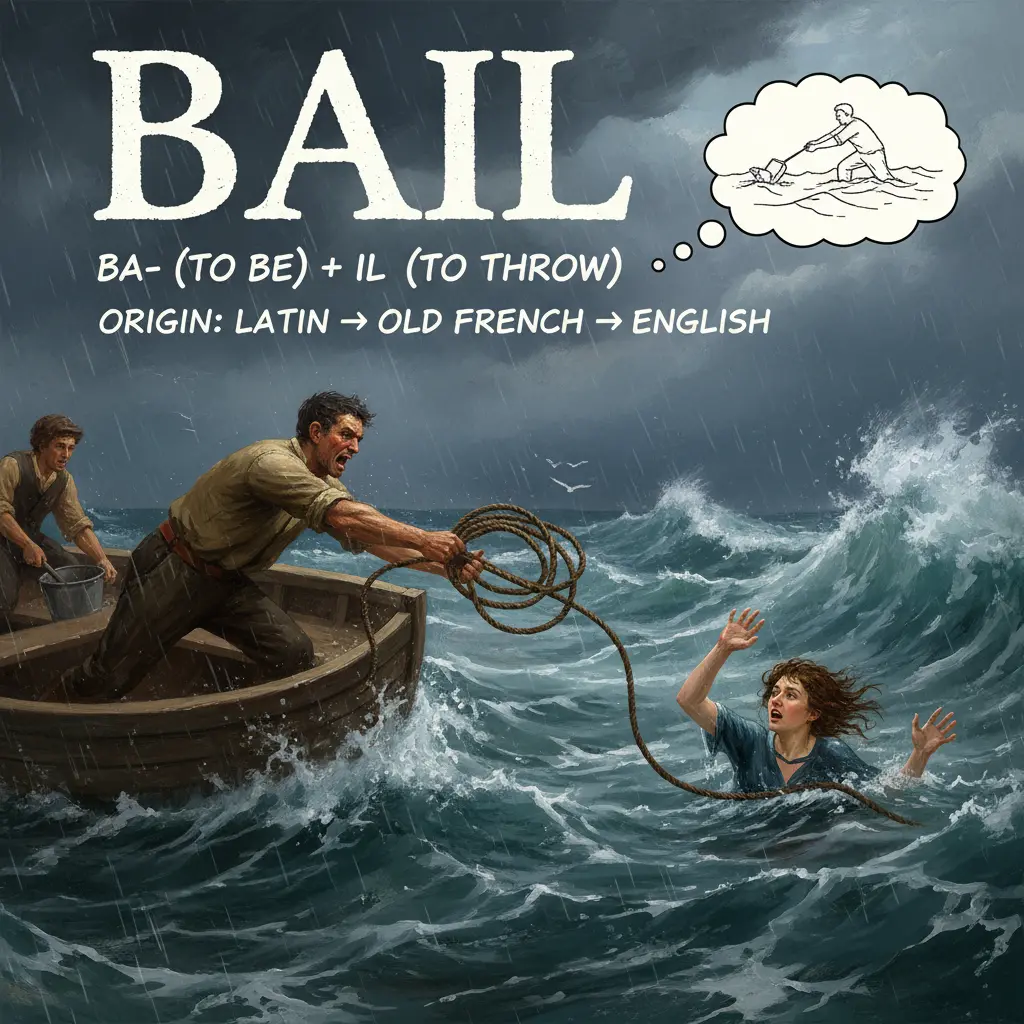
Example sentences are the start of understanding. Don't rush to memorize. First feel how the word works in a sentence.
bail = ba- (to be) + il (to throw). Origin: Latin → Old French → English. Imagine throwing a rope to a person in water to pull them to safety, like bailing out a boat.
Note 1: These definitions and etymologies are not standard dictionary definitions, but extended explanations provided to help with memorization and understanding of the actual application of words. Through this background information, we strive to make words more vivid and easier to understand, and help you remember their meanings in real life.
Note 2: LexiTalk designs the learning flow around the linguistics principle of “Comprehensible Input.” When learners encounter material that is slightly above their level but still understandable from context, the brain naturally absorbs the language. That’s why we keep every word inside authentic contexts, using examples and associations to help you understand it and use it flexibly.
Read the FAQ explanation of Comprehensible InputI slide a thin bill across the counter, feeling the weight of the plan in my grip. I push the form forward, adjust my stance, and keep my eyes steady as the clerk nods. The idea of bail settles in the air like a decision finally made, and a door loosens as someone steps toward freedom. I breathe out and the tension shifts to relief, as if the room itself has learned to loosen.
Bail has two main senses in English: releasing a person from custody after paying money (bail) and removing water from a boat (bailing). The term also refers to a temporary release from custody under conditions, or the money posted to guarantee appearance in court. In everyday speech, bail out can mean helping someone out of trouble or stepping away from a project in an emergency. The noun bail often appears in phrases like bail bond, bail hearing, or bail jumping. Its etymology evokes the image of throwing a rope to pull someone to safety, like saving a person from danger on a vessel.
English speakers commonly treat bail as a dual concept (legal release and boat water management); learners may assume both senses map to single nonliteral equivalents in their language and miss nautical usage.
What does the word 'bail' mean?
In which of the following sentences is the word 'bail' used correctly?
What is a synonym for 'bail'?
What is an antonym for 'bail'?
In what situation would someone need to post bail?
English Learning Listening Content
Listen NowDownload LexiTalk app for personalized learning experience
Download AppCookies
We use cookies for essential site functions, analytics, and ads. You can accept, reject, or manage preferences. Privacy Policy