birds - Master This Word
Master this word with our 5-step learning method – Learn English in English
Train English Through Brain Routes, Not Translation.
This page helps you stop memorizing isolated translations and start understanding a word through its shared mental image, native-style thinking, and practical training steps.
Master this word with our 5-step learning method – Learn English in English
Example sentences are the start of understanding. Don't rush to memorize. First feel how the word works in a sentence.
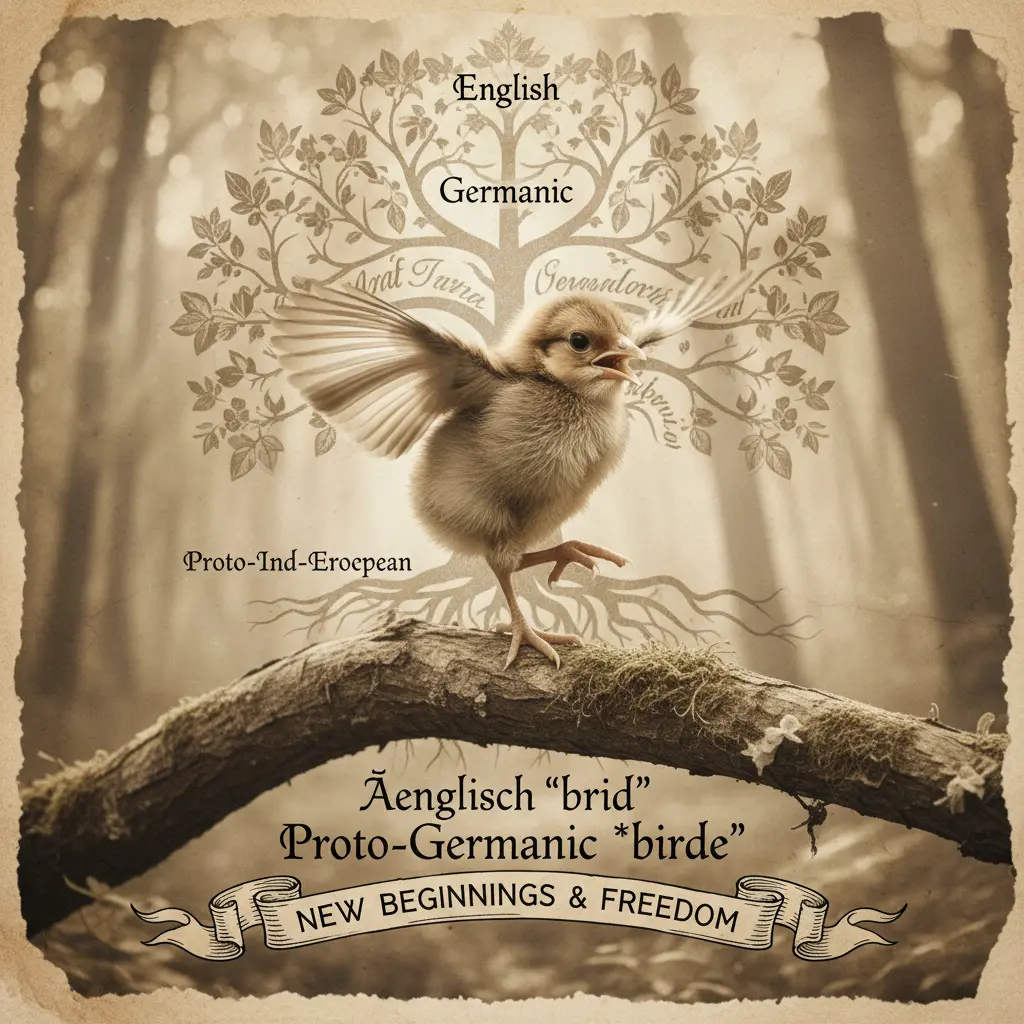
Old English 'brid' (young bird) + Proto-Germanic '*birde' (young animal). Historical origin: Proto-Indo-European → Germanic → English. Memory image: Imagine a baby bird stretching its wings for the first time, symbolizing new beginnings and freedom.
Note 1: These definitions and etymologies are not standard dictionary definitions, but extended explanations provided to help with memorization and understanding of the actual application of words. Through this background information, we strive to make words more vivid and easier to understand, and help you remember their meanings in real life.
Note 2: LexiTalk designs the learning flow around the linguistics principle of “Comprehensible Input.” When learners encounter material that is slightly above their level but still understandable from context, the brain naturally absorbs the language. That’s why we keep every word inside authentic contexts, using examples and associations to help you understand it and use it flexibly.
Read the FAQ explanation of Comprehensible InputStart with a breath and a slow gaze upward toward the branch, then move your gaze as if tracing a tiny bird in the air. You watch the fluttering figure, feathers catching light, and your focus shifts with each beat. The feeling is light and alert, a little push and pull between seeing and naming, a tiny turn in attention as you hold the moment steady. When you actually use the word, you look and point or think about the sky, letting the sense emerge and the word become a bridge to freedom.
Bird is a general term for a feathered, winged vertebrate that most of us recognize by its ability to fly. In everyday English, the word covers a huge variety of species from tiny songbirds to large raptors, and it also appears in many idioms such as free as a bird or a bird in the hand. The idea of bird is tied to nature, movement, and freedom, which can influence learners to think of birds as exotic or purely decorative. Remember that bird is a countable noun: you can say a bird, two birds, and so on, and you can describe color, size, or song with precise adjectives.
For English learners, bird evokes a broad animal category with many idioms. English treats it as a countable noun and uses it in a wide range of collocations (fly, sing, perch). Some learners overgeneralize to all feathered animals or confuse bird with poultry when talking about farms or food.
What is the meaning of the word 'birds'?
Which sentence uses 'birds' correctly?
Which word is most similar to 'birds'?
What is the opposite of 'birds'?
Can you think of a real-life context involving 'birds'?
Download LexiTalk app for personalized learning experience
Download AppCookies
We use cookies for essential site functions, analytics, and ads. You can accept, reject, or manage preferences. Privacy Policy