blighted - Master This Word
Master this word with our 5-step learning method – Learn English in English
Train English Through Brain Routes, Not Translation.
This page helps you stop memorizing isolated translations and start understanding a word through its shared mental image, native-style thinking, and practical training steps.
Master this word with our 5-step learning method – Learn English in English
Example sentences are the start of understanding. Don't rush to memorize. First feel how the word works in a sentence.
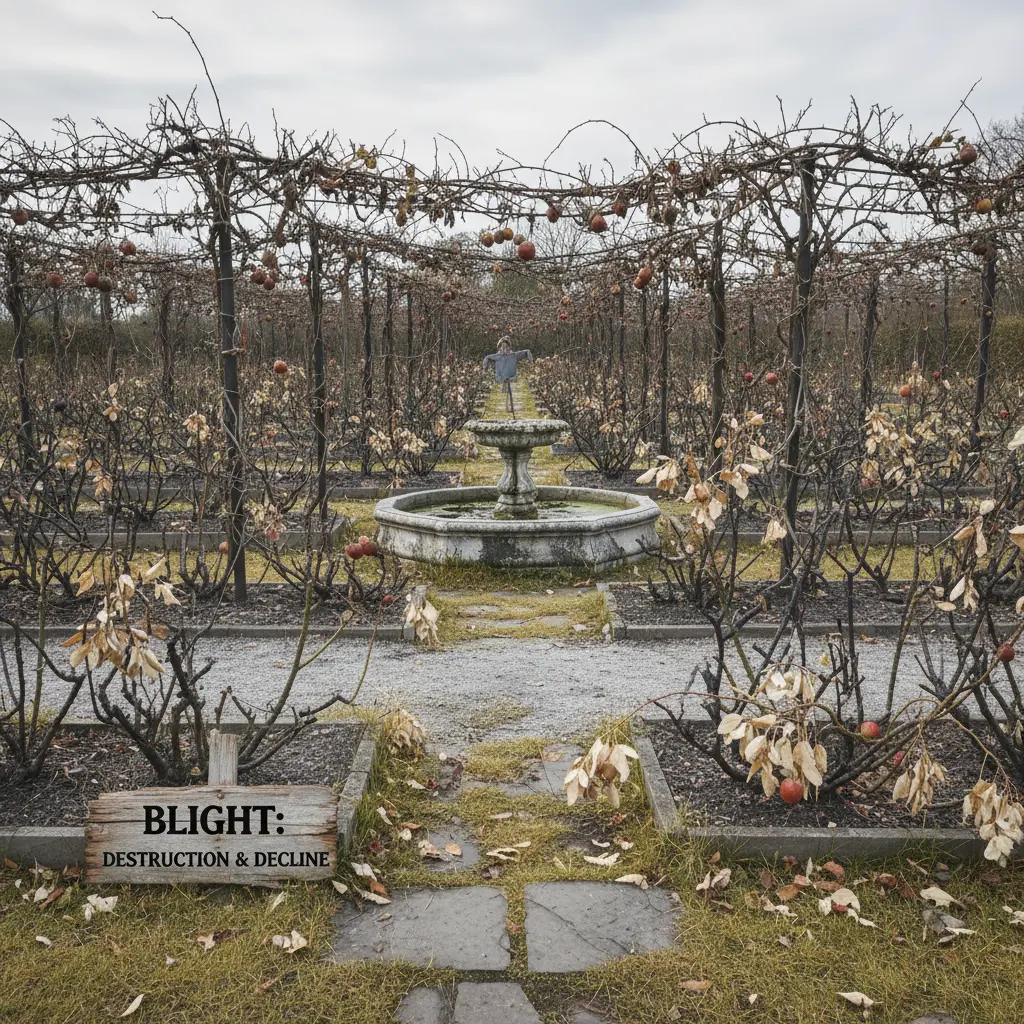
(a) blight (root); (b) Middle English blihht, from Old English blīht, of unknown origin; (c) Picture a once vibrant garden now covered in withered plants, representing loss and decay, helping to remember that 'blighted' signifies destruction and decline.
Note 1: These definitions and etymologies are not standard dictionary definitions, but extended explanations provided to help with memorization and understanding of the actual application of words. Through this background information, we strive to make words more vivid and easier to understand, and help you remember their meanings in real life.
Note 2: LexiTalk designs the learning flow around the linguistics principle of “Comprehensible Input.” When learners encounter material that is slightly above their level but still understandable from context, the brain naturally absorbs the language. That’s why we keep every word inside authentic contexts, using examples and associations to help you understand it and use it flexibly.
Read the FAQ explanation of Comprehensible InputBlight is a versatile term that can describe both plant disease and broader decay in living systems or communities. As a verb, to blight something means to harm or ruin its growth or prospects, often resulting in stunted crops or a damaged project. As a noun, it refers to a disease affecting plants, such as potato blight, or to any condition that causes decline, such as urban blight or blighting events. The word carries a sense of sudden, pervasive damage rather than isolated trouble, and the past participle blighted is commonly used in describing affected things.
In English, blight often carries a strong metaphorical sense of ruin that can apply to crops, cities, or ideas. Learners tend to over-generalize to every negative situation or confuse it with brightness because of the similar spelling. Use concrete examples first (crop disease) before moving to abstract uses (economic blight).
What does the word 'blighted' mean?
Identify the correct usage of 'blighted' in a sentence.
Which word is most similar to 'blighted'?
What is the opposite of 'blighted'?
Think of a real-life context where 'blighted' could be used.
Technology & Social Media
Listen NowDownload LexiTalk app for personalized learning experience
Download AppCookies
We use cookies for essential site functions, analytics, and ads. You can accept, reject, or manage preferences. Privacy Policy