brave - Master This Word
Master this word with our 5-step learning method – Learn English in English
Train English Through Brain Routes, Not Translation.
This page helps you stop memorizing isolated translations and start understanding a word through its shared mental image, native-style thinking, and practical training steps.
Master this word with our 5-step learning method – Learn English in English
Example sentences are the start of understanding. Don't rush to memorize. First feel how the word works in a sentence.
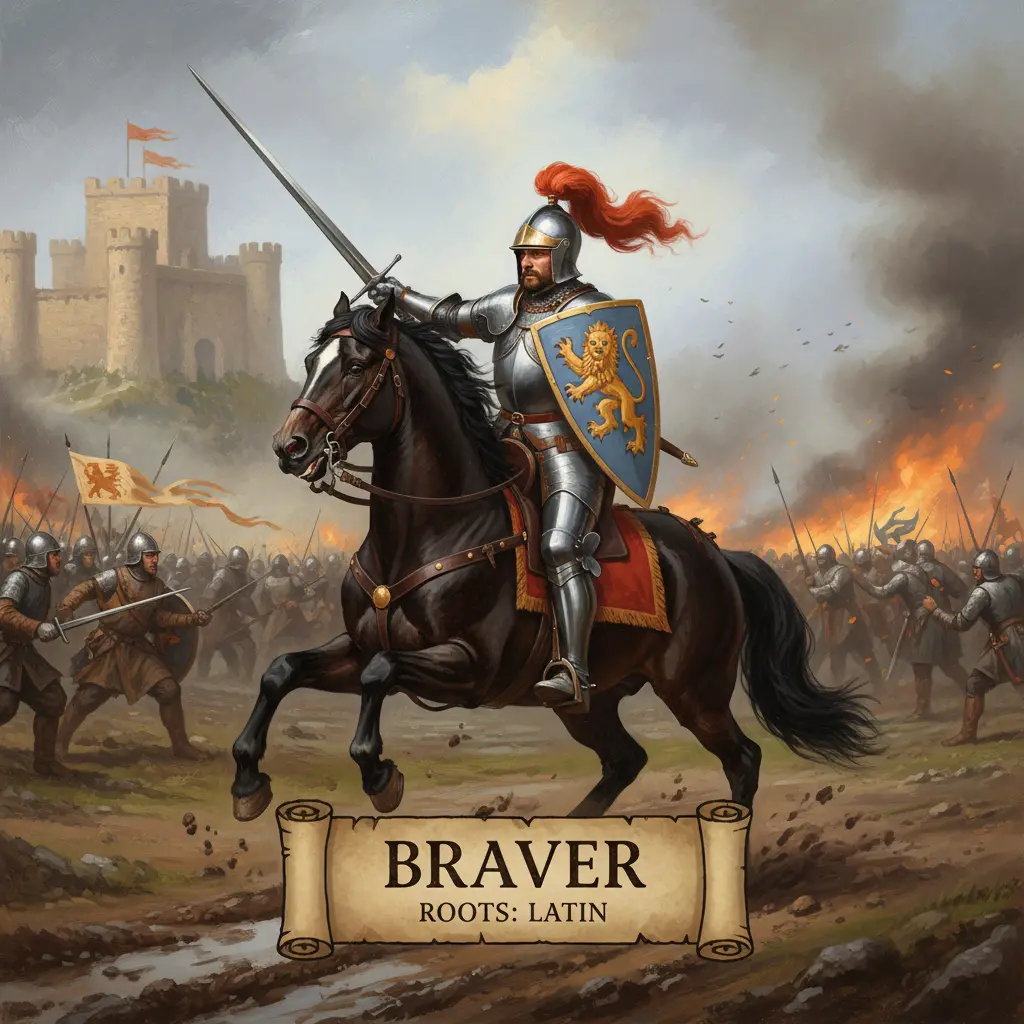
root: braver (from Old French) - ancient origin: Latin - vivid image: imagine a knight courageously charging into battle, sword raised high.
Note 1: These definitions and etymologies are not standard dictionary definitions, but extended explanations provided to help with memorization and understanding of the actual application of words. Through this background information, we strive to make words more vivid and easier to understand, and help you remember their meanings in real life.
Note 2: LexiTalk designs the learning flow around the linguistics principle of “Comprehensible Input.” When learners encounter material that is slightly above their level but still understandable from context, the brain naturally absorbs the language. That’s why we keep every word inside authentic contexts, using examples and associations to help you understand it and use it flexibly.
Read the FAQ explanation of Comprehensible InputI take a small step forward and push the doubts aside, moving toward what scares me. The room tightens around me as I adjust my grip on courage and breathe through the moment. Each choice feels like a turn I must make, a decision that steadies my hands and keeps my heart steady. When I speak or act, the air shifts and brave begins to feel real, a rhythm I can follow.
Brave describes a person who faces danger, difficulty, or the unknown with resolve. It covers actions that require courage, whether physically risking harm or standing up for others or for one's beliefs. The term often signals admiration when someone acts despite fear, yet it can also describe bold, risk-taking decisions in everyday life, such as trying a new career path, speaking out in a controversial situation, or pursuing a difficult goal. Etymology: root: braver (from Old French) - ancient origin: Latin. Picture a knight charging into battle with sword raised high, or a student continuing despite a setback, both examples of bravery in action.
English speakers often distinguish brave as morally commendable, not merely fearless; learners should notice that fear can be present and bravery is about choosing to act anyway.
What is the best definition of the word 'brave'?
Which sentence uses the word 'brave' correctly?
Which word is most similar in meaning to 'brave'?
Which word is the opposite of 'brave'?
Can you think of a real-life context where the word would be appropriate?
Download LexiTalk app for personalized learning experience
Download AppCookies
We use cookies for essential site functions, analytics, and ads. You can accept, reject, or manage preferences. Privacy Policy