breaking - Master This Word
Master this word with our 5-step learning method – Learn English in English
Train English Through Brain Routes, Not Translation.
This page helps you stop memorizing isolated translations and start understanding a word through its shared mental image, native-style thinking, and practical training steps.
Master this word with our 5-step learning method – Learn English in English
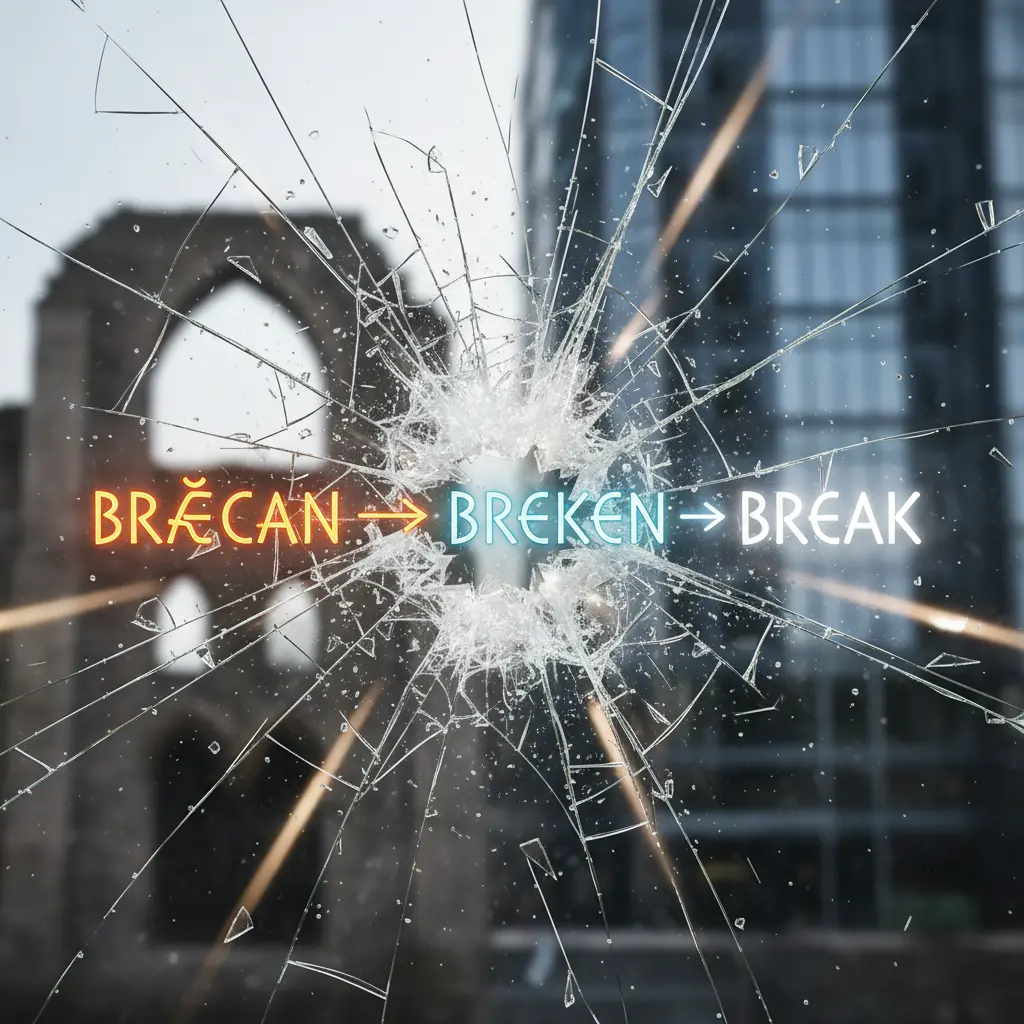
Example sentences are the start of understanding. Don't rush to memorize. First feel how the word works in a sentence.
break = break; Old English bræcan → Middle English breken → English. Imagine a glass shattering, pieces flying everywhere to recall the forceful separation.
Note 1: These definitions and etymologies are not standard dictionary definitions, but extended explanations provided to help with memorization and understanding of the actual application of words. Through this background information, we strive to make words more vivid and easier to understand, and help you remember their meanings in real life.
Note 2: LexiTalk designs the learning flow around the linguistics principle of “Comprehensible Input.” When learners encounter material that is slightly above their level but still understandable from context, the brain naturally absorbs the language. That’s why we keep every word inside authentic contexts, using examples and associations to help you understand it and use it flexibly.
Read the FAQ explanation of Comprehensible InputI grip the door handle and push, turning my wrist with intention. The latch gives and the room's quiet breaks into a murmur of voices. I hold my posture, adjust my grip, and decide how long to stay or go. That push, that break in the quiet, shows how we talk about interruption and change in real life.
Break as a verb covers physically separating something into pieces, stopping a process, and rendering something unusable. In everyday use, you might break a cookie, break a habit, or break a machine by forcing it to stop working. Learners often confuse break with destroy as a stronger verb, or confuse break with interrupt in contexts like 'break the news' (to announce), which uses break in a different sense. Visualize a glass shattering to recall the force needed to separate pieces, or imagine a circuit breaking to recall the stop-or-fail sense. The etymology links to Old English bræcan, reminding us that physical rupture is at the core.
English speakers often view break as a broad, flexible verb with both literal and figurative uses, but learners must distinguish physical rupture from interruptions and from phraseology like break a habit or break the news. Native speakers rely on context clues and collocations to pick the right sense, which can be tricky for learners who translate directly from their language.
What is the meaning of 'breaking'?
In which sentence is 'breaking' used correctly?
What is a synonym for 'breaking'?
What is an antonym for 'breaking'?
In what real-life context would you use the word 'breaking'?
Parenting & Education
Listen NowDownload LexiTalk app for personalized learning experience
Download AppCookies
We use cookies for essential site functions, analytics, and ads. You can accept, reject, or manage preferences. Privacy Policy