butter - Master This Word
Master this word with our 5-step learning method – Learn English in English
Train English Through Brain Routes, Not Translation.
This page helps you stop memorizing isolated translations and start understanding a word through its shared mental image, native-style thinking, and practical training steps.
Master this word with our 5-step learning method – Learn English in English
Example sentences are the start of understanding. Don't rush to memorize. First feel how the word works in a sentence.
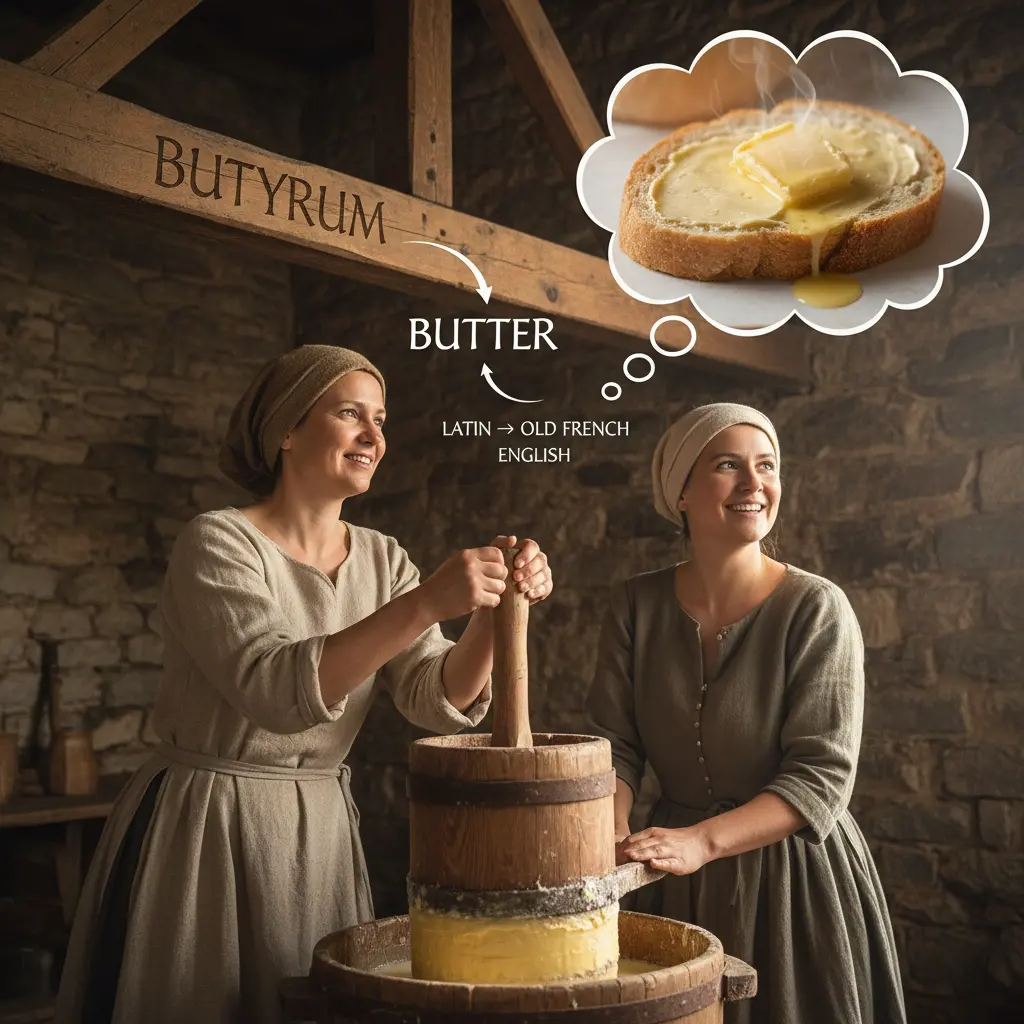
Root decomposition: butter = butyrum (Latin, meaning "butter"). Historical origin: Latin → Old French → English. Memory image: imagine farmers churning milk into creamy butter while envisioning the joy of spreading it on warm bread.
Note 1: These definitions and etymologies are not standard dictionary definitions, but extended explanations provided to help with memorization and understanding of the actual application of words. Through this background information, we strive to make words more vivid and easier to understand, and help you remember their meanings in real life.
Note 2: LexiTalk designs the learning flow around the linguistics principle of “Comprehensible Input.” When learners encounter material that is slightly above their level but still understandable from context, the brain naturally absorbs the language. That’s why we keep every word inside authentic contexts, using examples and associations to help you understand it and use it flexibly.
Read the FAQ explanation of Comprehensible InputFirst I move the cold butter from the box, feeling it resist and then loosen as my fingers warm it. I set it on a plate, then push a knife across its smooth surface, watching pale shine soften. The soft hiss as it meets the bread tells me I’m in control, adjusting the amount with tiny presses and letting the slice drink it in. The act of spreading makes the morning feel warmer and closer to toast and calm.
Butter is a dairy product made by churning cream until it solidifies into a rich, yellow fat with a soft, spreadable texture. In English, butter has several roles: it is enjoyed as a spread on bread, used for frying and enriching sauces, and as a verb meaning to apply a smooth coating of fat to baked goods or pans. Learners often confuse it with margarine or oleo, or mistakenly use ‘buttered’ in contexts that describe something not coated in a fat. In recipes you’ll hear ‘a knob of butter’ or ‘to butter the pan’—phrases that feel natural to native speakers. The word derives from butyrum in Latin, entering English via Old French.
Butter is a familiar food and a common cooking verb in English; learners often separate the noun from the verb too rigidly, forgetting that be or have used with butter can describe substances or actions. Also, English uses set phrases like a pat of butter that don’t translate literally into many other languages.
What is the meaning of the word 'butter'?
Which sentence uses the word 'butter' correctly?
Which word is most similar in meaning to 'butter'?
What is the opposite of the word 'butter'? (If there is no direct antonym, choose the word that best reflects the opposite context.)
Can you give an example of a real-life scenario using this word or its meaning?
Download LexiTalk app for personalized learning experience
Download AppCookies
We use cookies for essential site functions, analytics, and ads. You can accept, reject, or manage preferences. Privacy Policy