carbon - Master This Word
Master this word with our 5-step learning method – Learn English in English
Train English Through Brain Routes, Not Translation.
This page helps you stop memorizing isolated translations and start understanding a word through its shared mental image, native-style thinking, and practical training steps.
Master this word with our 5-step learning method – Learn English in English
Example sentences are the start of understanding. Don't rush to memorize. First feel how the word works in a sentence.
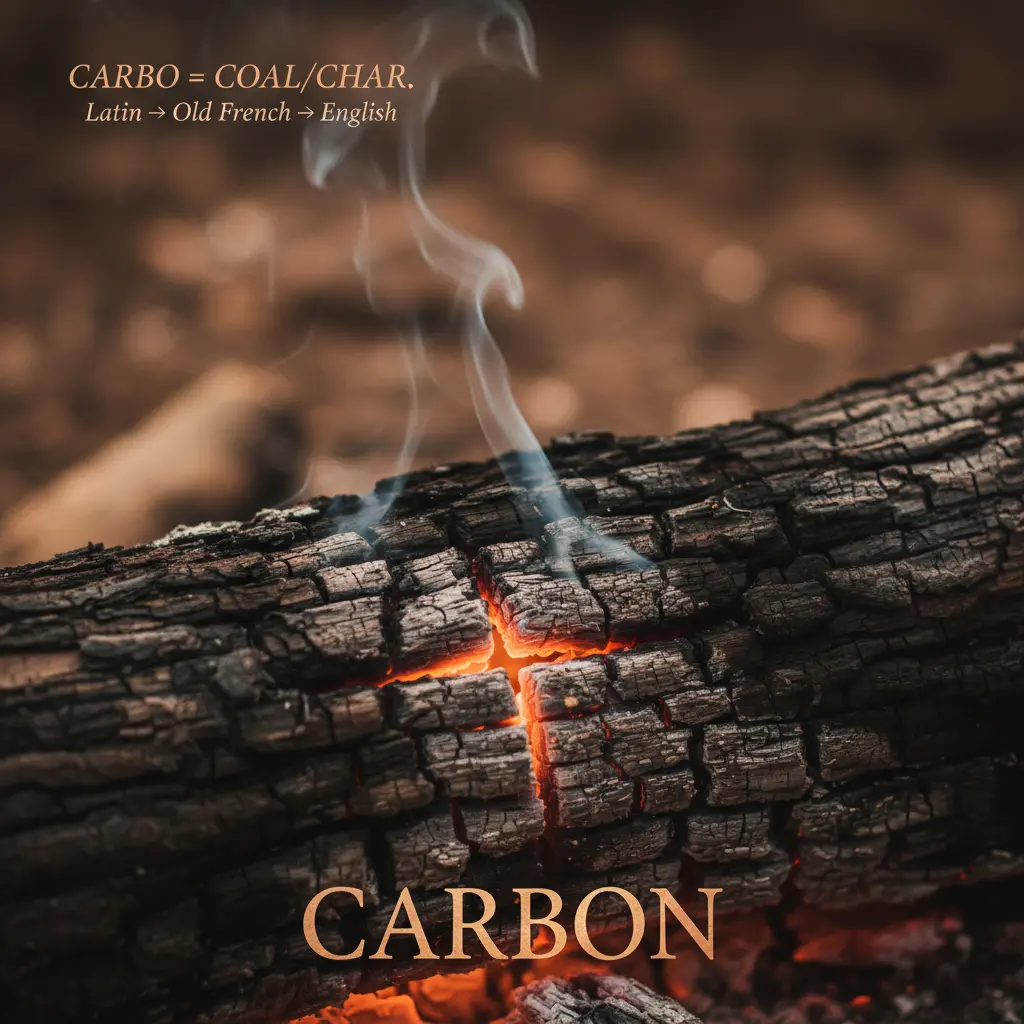
Root: carbo = coal/char. Historical origin: Latin → Old French → English. Memory image: Picture charred wood, as 'carbon' comes from the Latin word for charcoal, reminding us of the element's association with both fire and life.
Note 1: These definitions and etymologies are not standard dictionary definitions, but extended explanations provided to help with memorization and understanding of the actual application of words. Through this background information, we strive to make words more vivid and easier to understand, and help you remember their meanings in real life.
Note 2: LexiTalk designs the learning flow around the linguistics principle of “Comprehensible Input.” When learners encounter material that is slightly above their level but still understandable from context, the brain naturally absorbs the language. That’s why we keep every word inside authentic contexts, using examples and associations to help you understand it and use it flexibly.
Read the FAQ explanation of Comprehensible InputI grab a lump of charcoal and push it toward the grate, breath steady as the glow answers my touch. The flame shifts when I adjust the vent, and the heat climbs through my arms with a quiet buzz. I watch the ember settle and the room warm, a simple sense of control I can bring to any task. carbon threads through every leaf and the food we eat, and the idea settles in without a lecture.
Carbon is the chemical element with the symbol C, and it is a fundamental building block of life, making up most organic molecules found in living organisms. It appears in fossil fuels such as coal and oil, and in organic matter ranging from wood to living tissue. In everyday English you’ll meet carbon in science terms (carbon dating, carbon footprint) as well as in materials science (carbon nanotubes, carbon fiber). The word also appears in phrases that extend beyond chemistry, sometimes meaning a dye or carbon copy in printing history. Pronunciation stresses the first syllable: CAR-bon.
Learners often assume carbon refers only to CO2 or to charcoal. English usage covers both science terms and everyday materials, so focusing on contexts helps avoid false friends like 'carbon copy' vs 'carbon paper'.
What is the meaning of the word 'carbon'?
Which sentence uses the word 'carbon' correctly?
Which word is most similar to 'carbon'?
What is the opposite of 'carbon'?
Can you think of a real-life context for the word 'carbon'?
Download LexiTalk app for personalized learning experience
Download AppCookies
We use cookies for essential site functions, analytics, and ads. You can accept, reject, or manage preferences. Privacy Policy