cerebellum - Master This Word
Master this word with our 5-step learning method – Learn English in English
Train English Through Brain Routes, Not Translation.
This page helps you stop memorizing isolated translations and start understanding a word through its shared mental image, native-style thinking, and practical training steps.
Master this word with our 5-step learning method – Learn English in English
Example sentences are the start of understanding. Don't rush to memorize. First feel how the word works in a sentence.
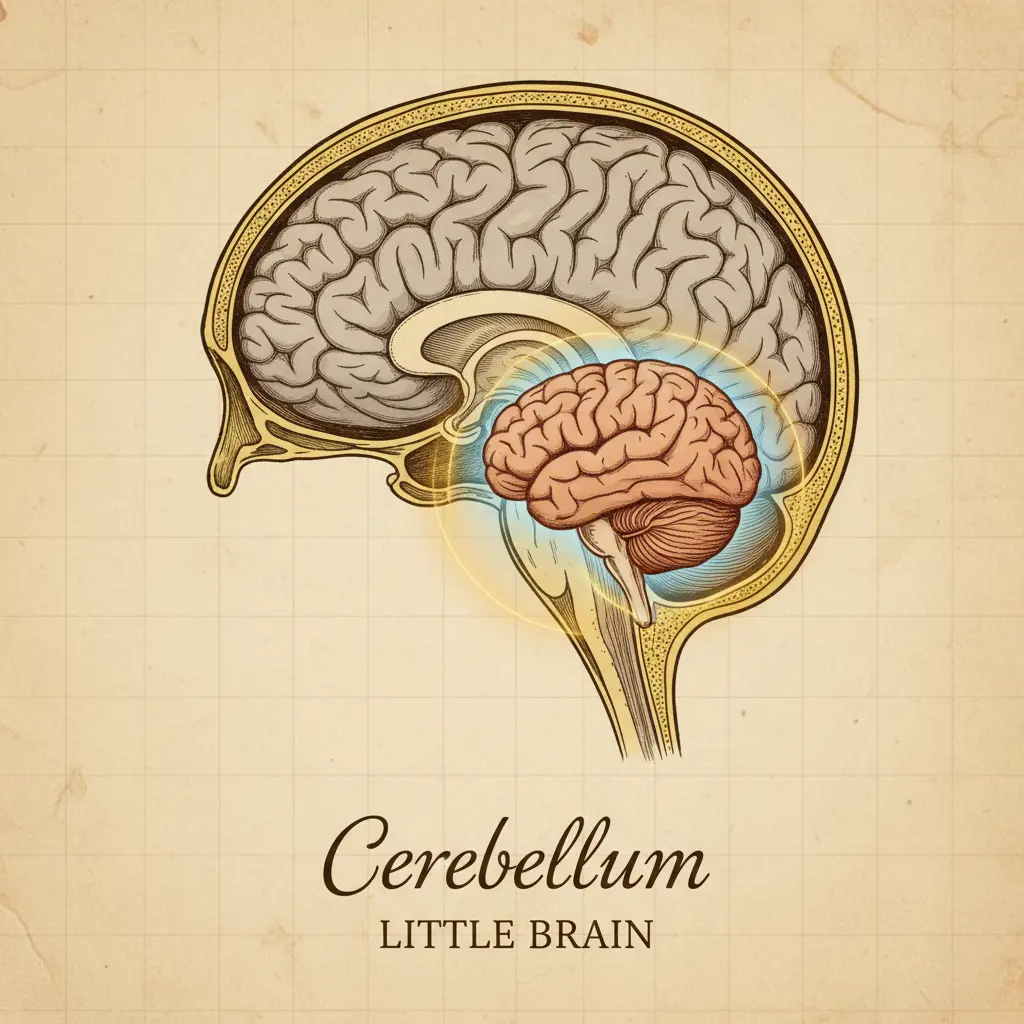
The word 'cerebellum' is derived from the Latin 'cerebellum', a diminutive of 'cerebrum', meaning 'little brain'. Imagining a small brain nestled at the back of the skull can help visualize its position and function.
Note 1: These definitions and etymologies are not standard dictionary definitions, but extended explanations provided to help with memorization and understanding of the actual application of words. Through this background information, we strive to make words more vivid and easier to understand, and help you remember their meanings in real life.
Note 2: LexiTalk designs the learning flow around the linguistics principle of “Comprehensible Input.” When learners encounter material that is slightly above their level but still understandable from context, the brain naturally absorbs the language. That’s why we keep every word inside authentic contexts, using examples and associations to help you understand it and use it flexibly.
Read the FAQ explanation of Comprehensible InputThe cerebellum is the small, yet powerful, brain region tucked at the back of the skull. It coordinates movement, balance, and posture by integrating signals from the eyes, inner ear, and muscles. It does not determine thoughts or memories, which belong to other brain areas. When the cerebellum is injured or develops abnormally, people may have an unsteady gait, tremor, or clumsy coordination, while memory and language are often preserved. For learners, connecting cerebellum to smooth performance—like riding a bicycle or keeping a steady stance—helps you remember its role and avoid confusing it with the cerebrum.
Explain to an English speaker: The cerebellum is a discrete, small brain region behind the brainstem responsible for coordination and balance. Learners often mix it up with the cerebrum or assume it handles memory; stress its anatomical role and its common adjective cerebellar.
What is the definition of 'cerebellum'?
Which of the following sentences correctly uses 'cerebellum'?
Which word is most similar to 'cerebellum'?
What is the opposite of 'cerebellum'?
Can you think of a real-life scenario where understanding the cerebellum would be important?
Download LexiTalk app for personalized learning experience
Download AppCookies
We use cookies for essential site functions, analytics, and ads. You can accept, reject, or manage preferences. Privacy Policy