
chemistry - Master This Word
Master this word with our 5-step learning method – Learn English in English
Train English Through Brain Routes, Not Translation.
This page helps you stop memorizing isolated translations and start understanding a word through its shared mental image, native-style thinking, and practical training steps.
Master this word with our 5-step learning method – Learn English in English
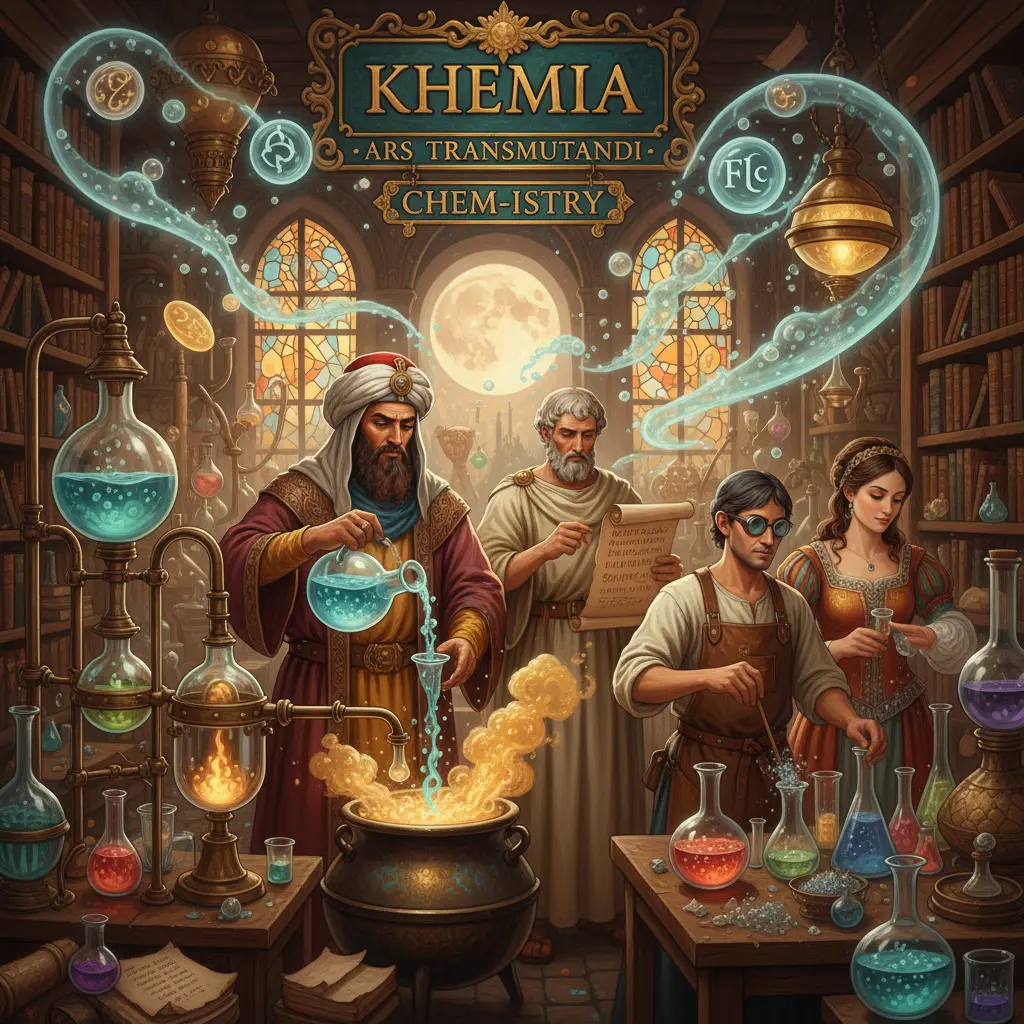
Example sentences are the start of understanding. Don't rush to memorize. First feel how the word works in a sentence.
Root decomposition: chem- (from 'khemia', meaning ‘the art of transmuting metals’) + -istry (related to 'art' or 'skill'). Historical origin: Greek → Arabic → Latin → English. Memory image: Imagine mixing different potions in a laboratory to create new elements, embodying the transformative aspect of chemistry.
Note 1: These definitions and etymologies are not standard dictionary definitions, but extended explanations provided to help with memorization and understanding of the actual application of words. Through this background information, we strive to make words more vivid and easier to understand, and help you remember their meanings in real life.
Note 2: LexiTalk designs the learning flow around the linguistics principle of “Comprehensible Input.” When learners encounter material that is slightly above their level but still understandable from context, the brain naturally absorbs the language. That’s why we keep every word inside authentic contexts, using examples and associations to help you understand it and use it flexibly.
Read the FAQ explanation of Comprehensible InputI set a small beaker on the bench, then I move it gently toward the flame and turn the knob a touch. The liquid changes in slow whispers, a shift I sense as heat and time push back and forth. I adjust my grip, I keep watching, and the reaction reveals itself in color and motion. That moment, chemistry feels like a conversation you have with the world—an idea, a test, a result, looping back to shape what you do next.
Chemistry is a science that studies what substances are made of, how their properties shape what they can do, and how they interact with one another. It covers everything from the tiny atoms and molecules to the big changes substances undergo in reactions. People also use the word chemistry metaphorically to describe the feel of a person-to-person connection or the smooth flow of cooperation within a team. Learners often mix up the science meaning with hobbyist ideas about potions, or misunderstand the interpersonal sense as mere mood rather than an observable dynamic. Understanding both uses helps you read science texts and talk about friendships with nuance.
In English, chemistry is commonly used for both the science and the vibe of human compatibility, so learners must notice when a sentence is scientific versus when it uses a metaphor. Typical mistakes include assuming chemistry always implies romance, or treating 'chemistry' as a separate field from all 'chemicals.' Understanding context helps learners pick the right sense and collocations.
What is the meaning of the word 'chemistry'?
In which of the following sentences is the word 'chemistry' used correctly?
Which of the following is a synonym for 'chemistry'?
What could be an antonym for 'chemistry'?
How is the concept of 'chemistry' applied in everyday life?
Download LexiTalk app for personalized learning experience
Download AppCookies
We use cookies for essential site functions, analytics, and ads. You can accept, reject, or manage preferences. Privacy Policy