
cluster - Master This Word
Master this word with our 5-step learning method – Learn English in English
Train English Through Brain Routes, Not Translation.
This page helps you stop memorizing isolated translations and start understanding a word through its shared mental image, native-style thinking, and practical training steps.
Master this word with our 5-step learning method – Learn English in English
Example sentences are the start of understanding. Don't rush to memorize. First feel how the word works in a sentence.
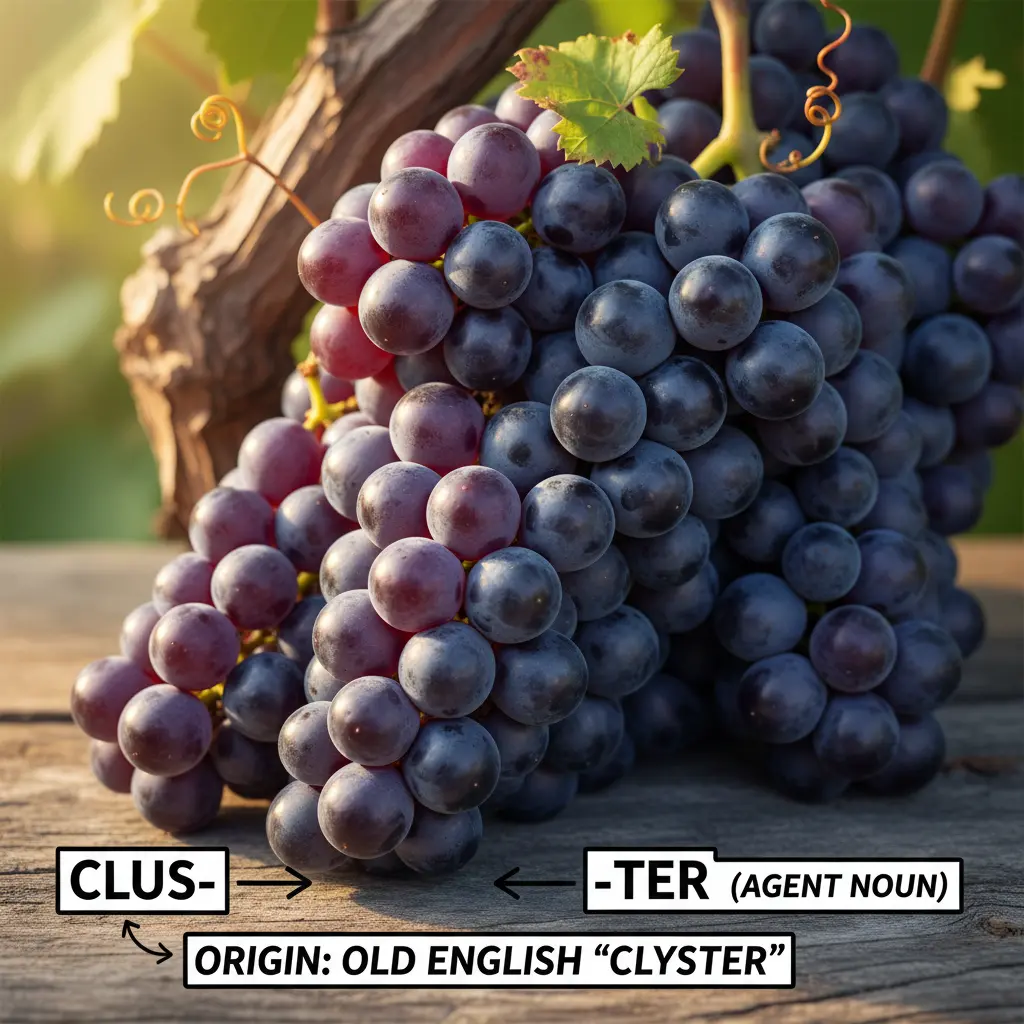
cluster = clus- (to close) + -ter (agent noun suffix). Origin: Old English 'clyster', likely influenced by Old French. Memory image: imagine a bunch of grapes closely packed together, each bulb representing a 'close' relationship.
Note 1: These definitions and etymologies are not standard dictionary definitions, but extended explanations provided to help with memorization and understanding of the actual application of words. Through this background information, we strive to make words more vivid and easier to understand, and help you remember their meanings in real life.
Note 2: LexiTalk designs the learning flow around the linguistics principle of “Comprehensible Input.” When learners encounter material that is slightly above their level but still understandable from context, the brain naturally absorbs the language. That’s why we keep every word inside authentic contexts, using examples and associations to help you understand it and use it flexibly.
Read the FAQ explanation of Comprehensible InputHands reach for a pile on the table and I pull out a handful of items. I move them around, pushing some apart and nudging others closer. I adjust the spacing, change the order, and set each piece where it begins to feel right, keeping an eye on how similar they look or relate. The more I shift the pieces, the more a single cluster forms, a quiet sense that they belong as a group.
Cluster is a versatile word for groups that belong together by type, proximity, or association. As a noun, it refers to a group of things of the same kind, a collection of items that are similar or related, or a cluster of stars, grapes, or ideas. As a verb, to cluster means to come together in a group or to form clusters, often because of shared properties, common purpose, or geographic proximity. You’ll hear phrases like a cluster of houses, a cluster of data points, or people clustering around a speaker. The idea evokes closeness; the memory image is a bunch of grapes packed tightly, each bulb representing a close connection. Etymology: from clus- close + -ter agent noun suffix; Old English clyster, influenced by Old French.
English tends to treat cluster as both a concrete group and a process of gathering; non-native speakers often over-generalize to any crowd or mis-use with non-related items.
What is the meaning of the word 'cluster'?
Which sentence below uses the word 'cluster' correctly?
Which word is most similar to 'cluster'?
What is the opposite of the word 'cluster'?
Can you give an example of a real-life scenario involving a group of items or objects close together?
Download LexiTalk app for personalized learning experience
Download AppCookies
We use cookies for essential site functions, analytics, and ads. You can accept, reject, or manage preferences. Privacy Policy