complexities - Master This Word
Master this word with our 5-step learning method – Learn English in English
Train English Through Brain Routes, Not Translation.
This page helps you stop memorizing isolated translations and start understanding a word through its shared mental image, native-style thinking, and practical training steps.
Master this word with our 5-step learning method – Learn English in English
Example sentences are the start of understanding. Don't rush to memorize. First feel how the word works in a sentence.
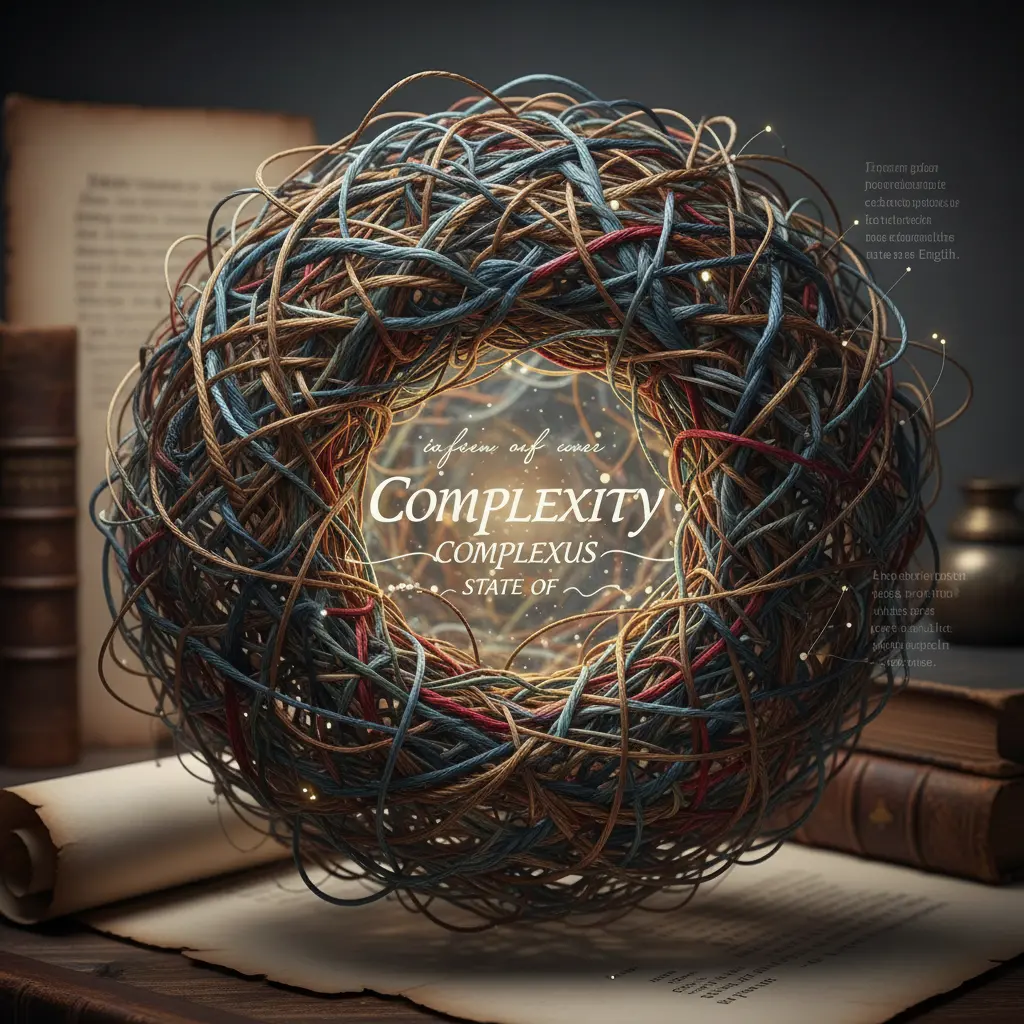
complexity = complex (from the Latin 'complexus' meaning 'folded together') + -ity (a suffix meaning 'state of'). Originated from Latin to Old French to English. Visualize a tangled web of threads, all intertwined, symbolizing the state of being complex.
Note 1: These definitions and etymologies are not standard dictionary definitions, but extended explanations provided to help with memorization and understanding of the actual application of words. Through this background information, we strive to make words more vivid and easier to understand, and help you remember their meanings in real life.
Note 2: LexiTalk designs the learning flow around the linguistics principle of “Comprehensible Input.” When learners encounter material that is slightly above their level but still understandable from context, the brain naturally absorbs the language. That’s why we keep every word inside authentic contexts, using examples and associations to help you understand it and use it flexibly.
Read the FAQ explanation of Comprehensible InputI grip the controls and start to move the dial. I shift here, I turn there, watching the pattern change and the pieces settle. The effort builds as I adjust and keep my focus, hoping to hold the line just a moment longer. Complexity reveals itself as a web of small decisions, each move revealing what matters most in the task.
Complexity is the quality of being composed of many interconnected parts. In everyday use, it describes systems, ideas, or problems that are not easily understood at a glance because their elements interact in multiple ways. The word emphasizes structure and relationships rather than simply 'hard' or 'difficult.' In science and business, you might measure complexity with counts of components, dependencies, or feedback loops, and you may speak of reducing complexity to make things clearer or more manageable. Learners should note that complexity often coexists with ambiguity: something can be complex yet not unknown, or simple on the surface that hides a web of connections.
English tends to separate complexity (structure and relationships) from difficulty (how hard something is to do). Learners often translate complexity as 'difficult' or assume more parts always mean more trouble, which can lead to overestimating issues or misusing 'complex' vs 'complicated'.
What does the word 'complexities' mean?
Select the sentence that uses 'complexities' correctly.
Which word is most similar to 'complexities'?
What is the opposite of 'complexities'?
Can you give an example of a real-life scenario involving 'complexities'?
English Learning Listening Content
Listen NowDownload LexiTalk app for personalized learning experience
Download AppCookies
We use cookies for essential site functions, analytics, and ads. You can accept, reject, or manage preferences. Privacy Policy