computers - Master This Word
Master this word with our 5-step learning method – Learn English in English
Train English Through Brain Routes, Not Translation.
This page helps you stop memorizing isolated translations and start understanding a word through its shared mental image, native-style thinking, and practical training steps.
Master this word with our 5-step learning method – Learn English in English
Example sentences are the start of understanding. Don't rush to memorize. First feel how the word works in a sentence.
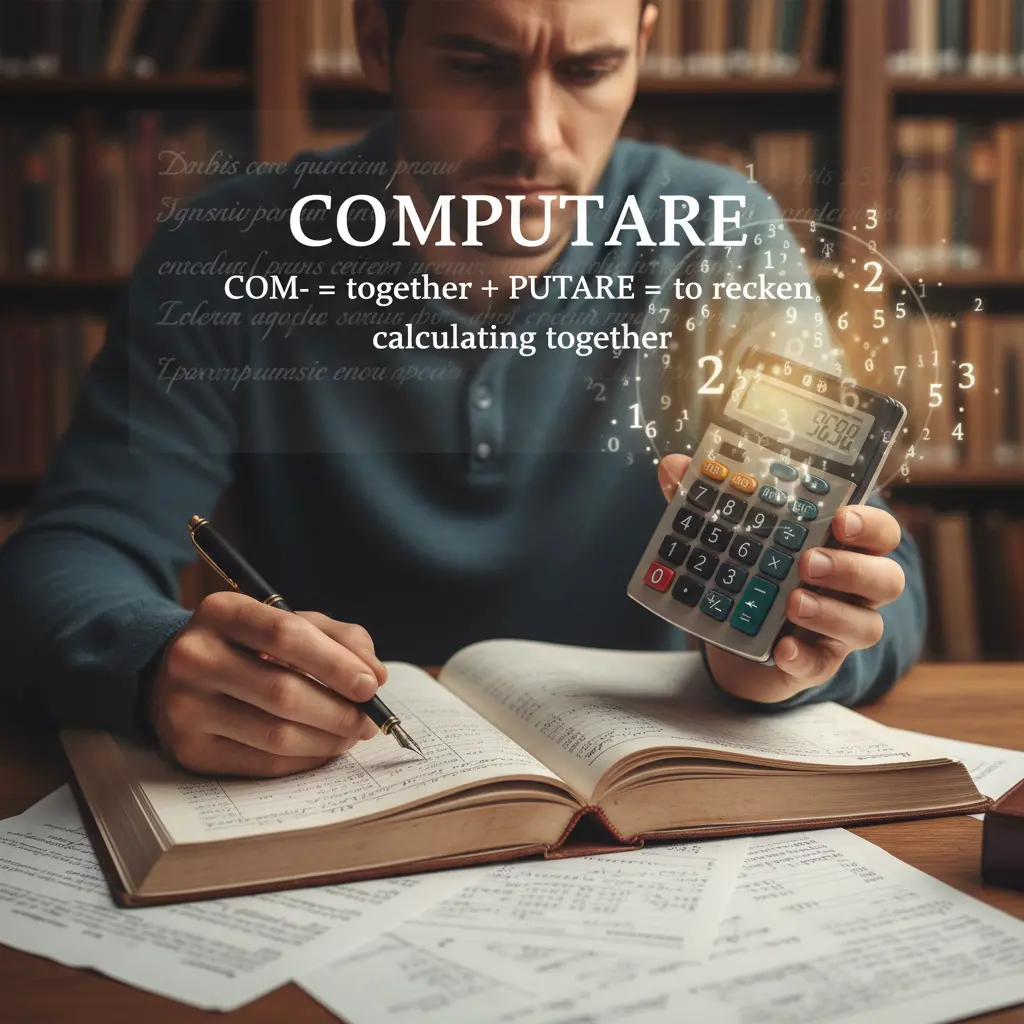
com- = together + putare = to reckon; from Latin 'computare' to 'calculating together'; visualize a person with a calculator gathering numbers to find a solution.
Note 1: These definitions and etymologies are not standard dictionary definitions, but extended explanations provided to help with memorization and understanding of the actual application of words. Through this background information, we strive to make words more vivid and easier to understand, and help you remember their meanings in real life.
Note 2: LexiTalk designs the learning flow around the linguistics principle of “Comprehensible Input.” When learners encounter material that is slightly above their level but still understandable from context, the brain naturally absorbs the language. That’s why we keep every word inside authentic contexts, using examples and associations to help you understand it and use it flexibly.
Read the FAQ explanation of Comprehensible InputI place my hands on the keyboard and push a key, and the screen lights up as the cursor moves. I adjust my chair, lean in a little, and feel the rhythm shift as I open a program and switch tasks. With each click I watch ideas take shape on the screen, the changes letting me shape the work. On a computer, I set things in motion, and the practice becomes a quiet test of focus, control, and choice.
English tends to treat computer as a broad, modern device for processing data, with usage spanning desktops, laptops, servers, and embedded systems. In speech, people often compare it with related terms like PC, laptop, and tablet, and in many contexts the word appears in fields like computer science and computing broadly. Learners frequently confuse computer with calculator or expect it to refer only to a desktop machine. The term is common in phrases that describe capabilities (computer hardware, computer skills) and abstract domains (computer architecture, computer programming). Understanding that computer covers hardware and software contexts helps learners choose the right collocations and articles.
English treats computer as a flexible, modern noun with hardware and software connotations; learners must note the distinction from calculators and the frequent pairing with circuitous phrases like computer science. Typical mistakes include using computer for tablets or phones and confusing PC with desktop.
English Learning Listening Content
Listen NowDownload LexiTalk app for personalized learning experience
Download AppCookies
We use cookies for essential site functions, analytics, and ads. You can accept, reject, or manage preferences. Privacy Policy