costume - Master This Word
Master this word with our 5-step learning method – Learn English in English
Train English Through Brain Routes, Not Translation.
This page helps you stop memorizing isolated translations and start understanding a word through its shared mental image, native-style thinking, and practical training steps.
Master this word with our 5-step learning method – Learn English in English
Example sentences are the start of understanding. Don't rush to memorize. First feel how the word works in a sentence.
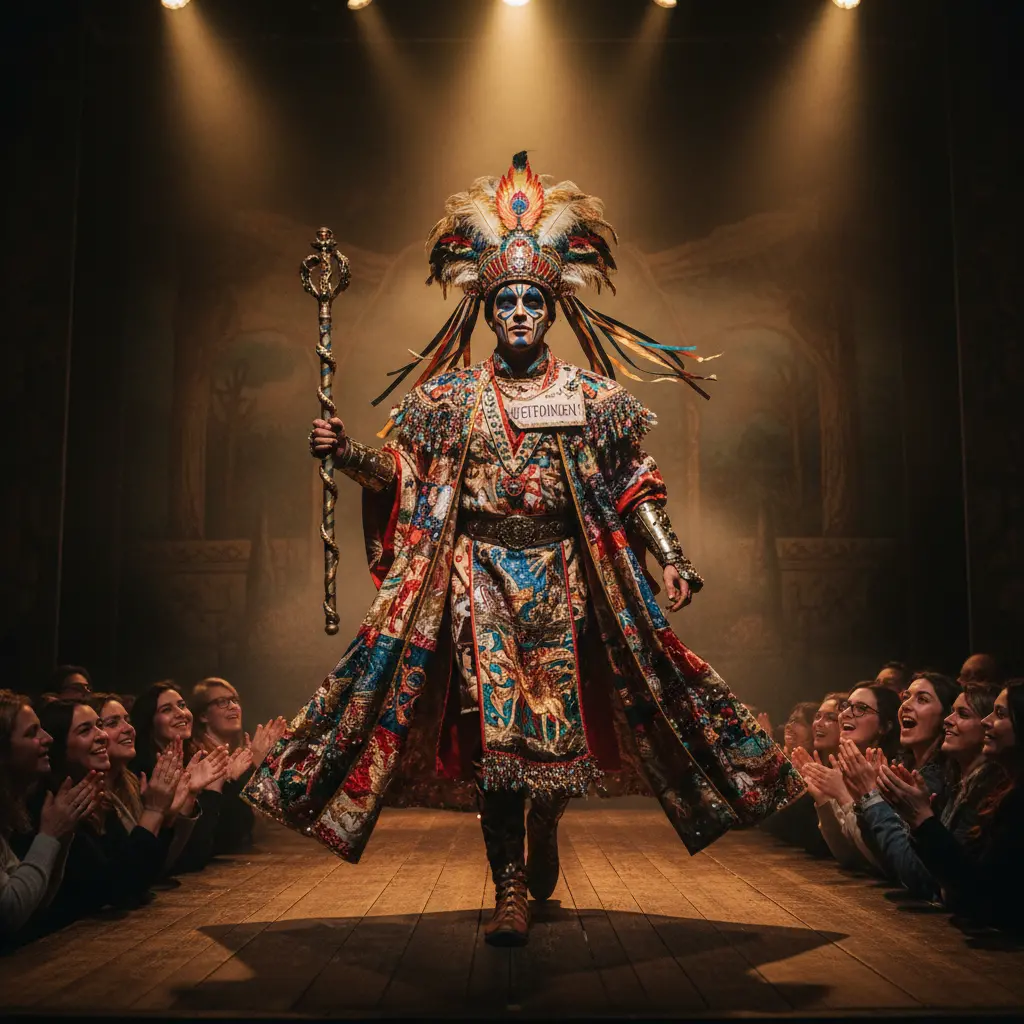
From the Latin 'consuetudinem' meaning 'costume, custom'. The French version 'costume' came into English in the 17th century. Imagine a performer stepping onto stage in vibrant, elaborate clothing that tells a story, capturing the audience's attention.
Note 1: These definitions and etymologies are not standard dictionary definitions, but extended explanations provided to help with memorization and understanding of the actual application of words. Through this background information, we strive to make words more vivid and easier to understand, and help you remember their meanings in real life.
Note 2: LexiTalk designs the learning flow around the linguistics principle of “Comprehensible Input.” When learners encounter material that is slightly above their level but still understandable from context, the brain naturally absorbs the language. That’s why we keep every word inside authentic contexts, using examples and associations to help you understand it and use it flexibly.
Read the FAQ explanation of Comprehensible InputI reach for a plain fabric, pull it over my shoulders, and move my hands to smooth the wrinkles. I pull the sleeves and adjust the seams, setting aside a small mask as the outfit shifts on me. The rush of trying it on—fitting here, tucking there—feels like a tiny performance, a turn from everyday to something else. This costume isn't just clothes; it carries a moment, a scene I’m preparing to step into.
Costume refers to clothing worn to convey a role or identity. In theater and film, a costume helps tell the story and reveal a character's status, era, and personality. Outside performance, a costume is any outfit chosen for a special occasion—parties, festivals, or Halloween—where the wearer adopts a theme or character. Costumes can be historical, cultural, or fantastical, drawing on period dress or generic outfits designed to evoke a particular vibe. The word originates from ideas of custom and tailored attire, with roots in Latin and French, and in English today it can describe both the actor's wardrobe and a playful disguise we wear for fun.
In English, costume often covers both the idea of a theatrical outfit and any themed attire, which can blur with everyday clothing for learners. Learners frequently mix up 'costume' with 'clothes' or say 'dress' for all special outfits, missing the sense of role or character.
What does the word 'costume' mean?
Which sentence uses the word 'costume' correctly?
What is a synonym for 'costume'?
What is an antonym for 'costume'?
In what real-life situation would you typically see someone wearing a costume?
Download LexiTalk app for personalized learning experience
Download AppCookies
We use cookies for essential site functions, analytics, and ads. You can accept, reject, or manage preferences. Privacy Policy