creative - Master This Word
Master this word with our 5-step learning method – Learn English in English
Train English Through Brain Routes, Not Translation.
This page helps you stop memorizing isolated translations and start understanding a word through its shared mental image, native-style thinking, and practical training steps.
Master this word with our 5-step learning method – Learn English in English
Example sentences are the start of understanding. Don't rush to memorize. First feel how the word works in a sentence.
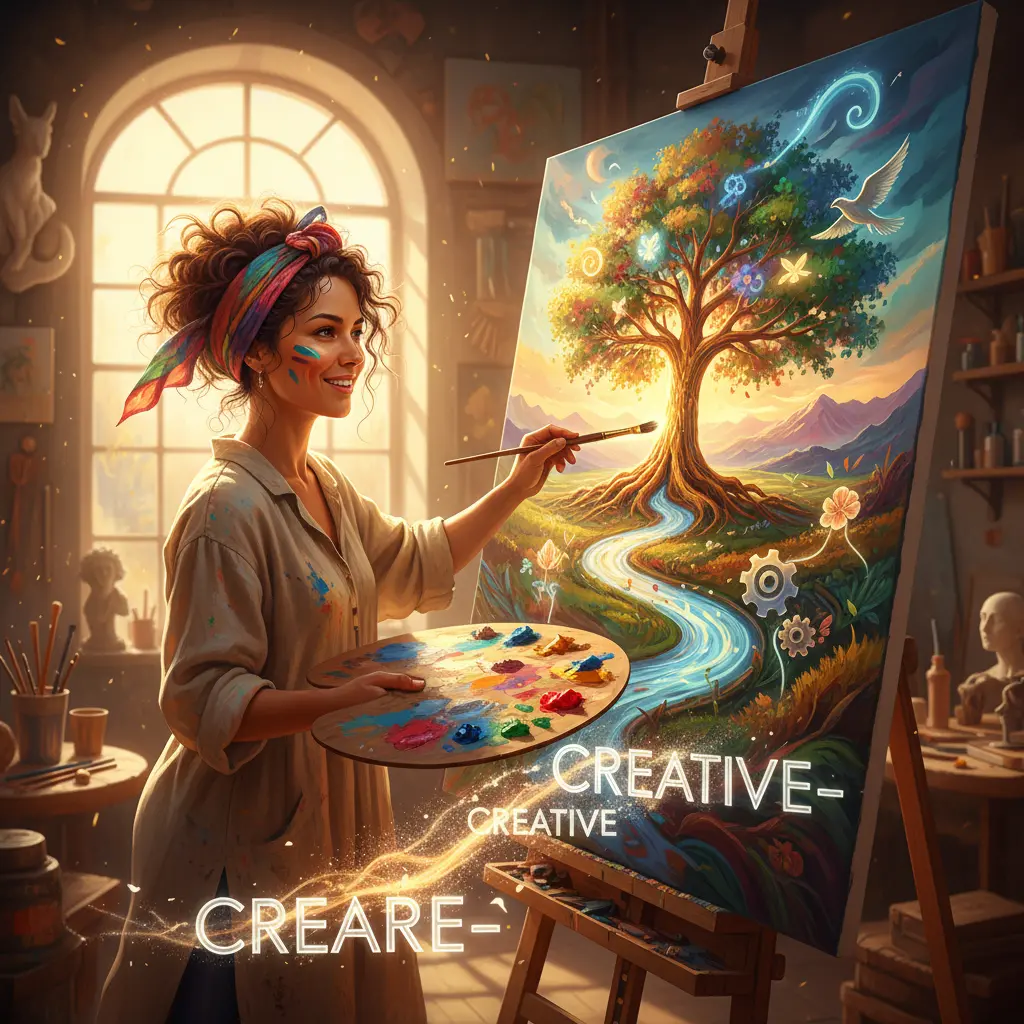
The term 'creative' is derived from the root 'creat-', meaning 'to create', with the suffix '-ive', denoting an adjective. It originates from Latin 'creare' meaning 'to produce, make', through Old French into English. Picture a vivid artist with a palette, passionately creating a masterpiece, which helps remind you of the act of bringing something into existence.
Note 1: These definitions and etymologies are not standard dictionary definitions, but extended explanations provided to help with memorization and understanding of the actual application of words. Through this background information, we strive to make words more vivid and easier to understand, and help you remember their meanings in real life.
Note 2: LexiTalk designs the learning flow around the linguistics principle of “Comprehensible Input.” When learners encounter material that is slightly above their level but still understandable from context, the brain naturally absorbs the language. That’s why we keep every word inside authentic contexts, using examples and associations to help you understand it and use it flexibly.
Read the FAQ explanation of Comprehensible InputFirst I place a blank page on the desk and move the pencil across it, nudging ideas into a line. I shift images in my mind, then change a shape, adjust the space, and hold my breath to decide where to set it. The push of the pencil and the turn of the page make a new idea take shape, slowly and with care. What emerges is not a rule but a living sense of something creative ready to be shown, told, or used.
Creative describes a capacity to produce new ideas, objects, or methods, not merely beauty or ornament. It can refer to a person who often imagines original solutions, a process that yields novel results, or a work that shows originality. In everyday English, creative is used with nouns like thinking, idea, solution, industry, and process, and with contexts from art to technology. The word also covers a mindset—being open to experimentation and risk. Distinct from "created" or "creativity" (the noun), creative emphasizes ongoing inventiveness. Remember the base idea of creation remains central: to bring something new into existence through imagination and skill.
In English, creative is broad and can describe people, processes, or products that show originality, not just art. Learners often limit it to the arts or confuse it with being flashy rather than effective.
What does the word 'creative' mean?
In which of the following sentences is 'creative' used correctly?
Which word is similar to 'creative'?
Which word is the opposite of 'creative'?
In what real-life context would someone need to be creative?
Download LexiTalk app for personalized learning experience
Download AppCookies
We use cookies for essential site functions, analytics, and ads. You can accept, reject, or manage preferences. Privacy Policy