cultures - Master This Word
Master this word with our 5-step learning method – Learn English in English
Train English Through Brain Routes, Not Translation.
This page helps you stop memorizing isolated translations and start understanding a word through its shared mental image, native-style thinking, and practical training steps.
Master this word with our 5-step learning method – Learn English in English
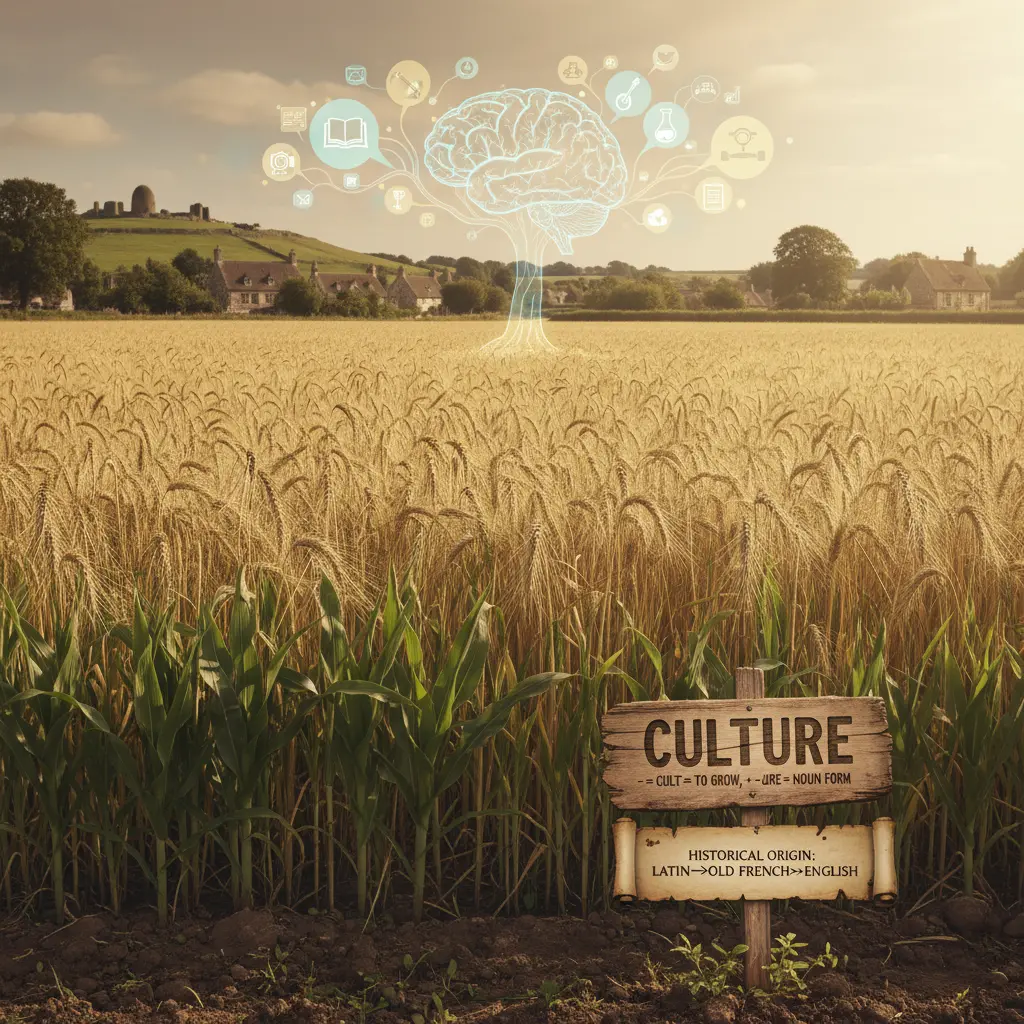
Example sentences are the start of understanding. Don't rush to memorize. First feel how the word works in a sentence.
culture = cult- = to grow, + -ure = noun form. Historical origin: Latin→Old French→English. Memory image: Picture a field of crops growing abundantly, representing the nurturing of ideas and habits.
Note 1: These definitions and etymologies are not standard dictionary definitions, but extended explanations provided to help with memorization and understanding of the actual application of words. Through this background information, we strive to make words more vivid and easier to understand, and help you remember their meanings in real life.
Note 2: LexiTalk designs the learning flow around the linguistics principle of “Comprehensible Input.” When learners encounter material that is slightly above their level but still understandable from context, the brain naturally absorbs the language. That’s why we keep every word inside authentic contexts, using examples and associations to help you understand it and use it flexibly.
Read the FAQ explanation of Comprehensible InputI push open the door and step into a crowded street, the day buzzing with voices. People move to their own rhythms, and I tune my steps to theirs, a small effort to fit in. I adjust my posture, hold back my questions, and keep listening to the tiny rituals in meals, greetings, and jokes. Through this slow noticing, culture feels like the living thread that keeps a community together, shaping what we share and how we welcome one another.
Culture is a broad concept that covers how people think, behave, and create together. In everyday use, it refers to the ideas, customs, and social behavior of a particular people or society, and to the arts and other manifestations of human intellectual achievement regarded collectively. It also exists as a technical term in science, describing the cultivation of bacteria, tissue cells, etc., in an artificial medium containing nutrients. Because culture spans social life, arts, and science, learners should pay attention to context to choose the right sense and collocations. English often uses culture with phrases like popular culture, high culture, and workplace culture. A helpful memory image is a field of crops representing nurturing ideas and habits.
Culture in English often spans many domains at once, so learners must parse context carefully. They may assume culture only means arts or only means civilization, missing the social and scientific senses. Mistakes include mixing cultural terms with behavioral norms from one group when discussing global topics, or confusing 'culture' with 'cultivation' in everyday talk.
What is the meaning of the word 'cultures'?
Which sentence uses 'cultures' correctly?
Which word is most similar to 'cultures'?
What is the opposite of 'cultures'?
Can you think of a real-life context where different ways of life interact?
Download LexiTalk app for personalized learning experience
Download AppCookies
We use cookies for essential site functions, analytics, and ads. You can accept, reject, or manage preferences. Privacy Policy