
cuneiform - Master This Word
Master this word with our 5-step learning method – Learn English in English
Train English Through Brain Routes, Not Translation.
This page helps you stop memorizing isolated translations and start understanding a word through its shared mental image, native-style thinking, and practical training steps.
Master this word with our 5-step learning method – Learn English in English
Example sentences are the start of understanding. Don't rush to memorize. First feel how the word works in a sentence.
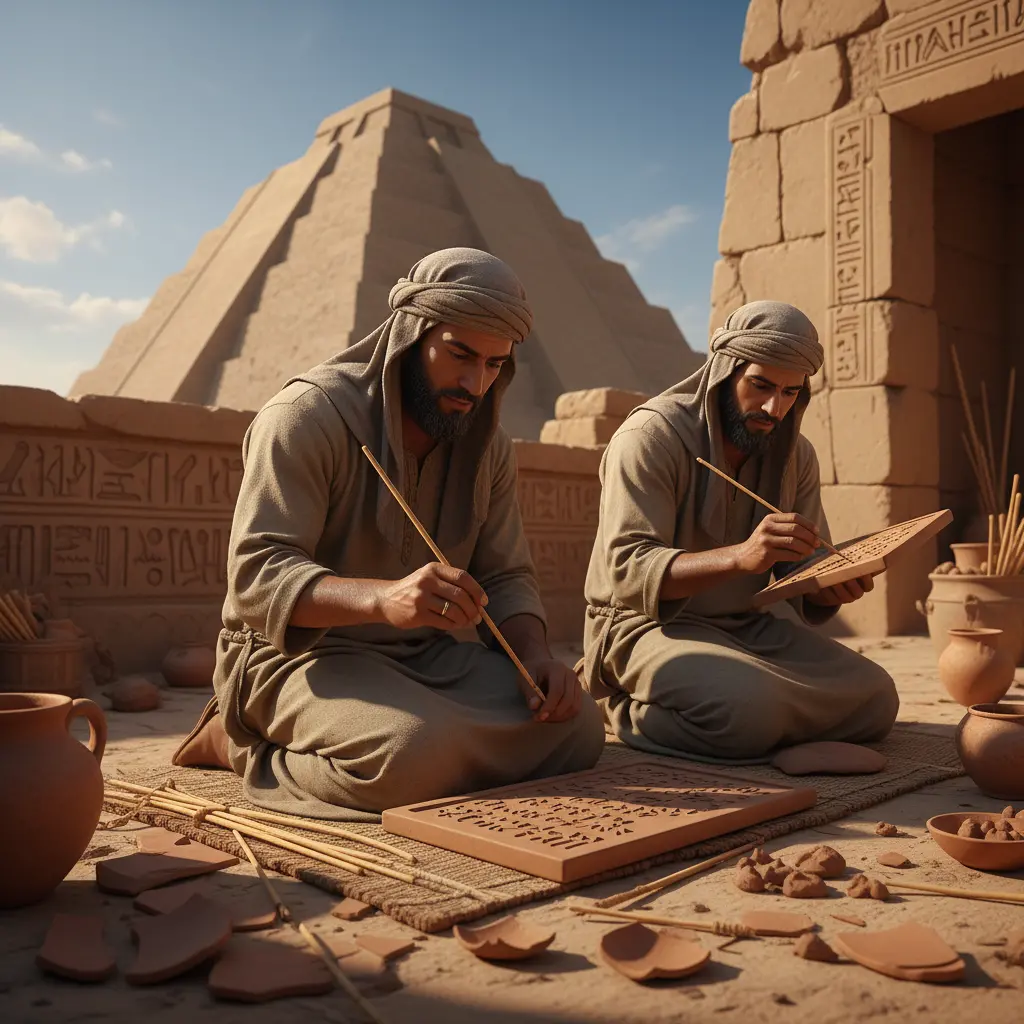
From Latin 'cuneus' meaning 'wedge' + 'form'. Originally referred to the wedge-shaped characters of the writing system. Imagine ancient scribes pressing a wedge into clay tablets to preserve their records, leaving a lasting mark of civilization.
Note 1: These definitions and etymologies are not standard dictionary definitions, but extended explanations provided to help with memorization and understanding of the actual application of words. Through this background information, we strive to make words more vivid and easier to understand, and help you remember their meanings in real life.
Note 2: LexiTalk designs the learning flow around the linguistics principle of “Comprehensible Input.” When learners encounter material that is slightly above their level but still understandable from context, the brain naturally absorbs the language. That’s why we keep every word inside authentic contexts, using examples and associations to help you understand it and use it flexibly.
Read the FAQ explanation of Comprehensible InputCuneiform is an ancient writing system that uses wedge-shaped signs pressed into clay. Emerging in Mesopotamia around 3500 BCE, it began with Sumerian record-keeping on damp clay tablets and evolved through Akkadian, Assyrian, and Babylonian administrations. The signs were formed by a reed stylus making strokes that create triangular and wedge-like impressions, building complex words and ideas from combinations of signs. Over millennia, cuneiform adapted to several languages and served for laws, literature, religion, and daily commerce. Today it remains a cornerstone for understanding ancient Near Eastern history, economy, and culture, giving archaeologists a window into governance, ritual, and daily life.
English speakers often frame cuneiform as a ‘script’ long before they picture its unit signs; learners may think of it as a language itself, confusing it with ancient Mesopotamian languages. Emphasize that it is a script with many signs used to write multiple languages.
What does the word 'cuneiform' mean?
Which sentence correctly uses the word 'cuneiform'?
Which word is most similar to 'cuneiform'?
What is the opposite of 'cuneiform'?
Can you think of a real-life scenario where 'cuneiform' would be relevant?
Download LexiTalk app for personalized learning experience
Download AppCookies
We use cookies for essential site functions, analytics, and ads. You can accept, reject, or manage preferences. Privacy Policy