customs - Master This Word
Master this word with our 5-step learning method – Learn English in English
Train English Through Brain Routes, Not Translation.
This page helps you stop memorizing isolated translations and start understanding a word through its shared mental image, native-style thinking, and practical training steps.
Master this word with our 5-step learning method – Learn English in English
Example sentences are the start of understanding. Don't rush to memorize. First feel how the word works in a sentence.
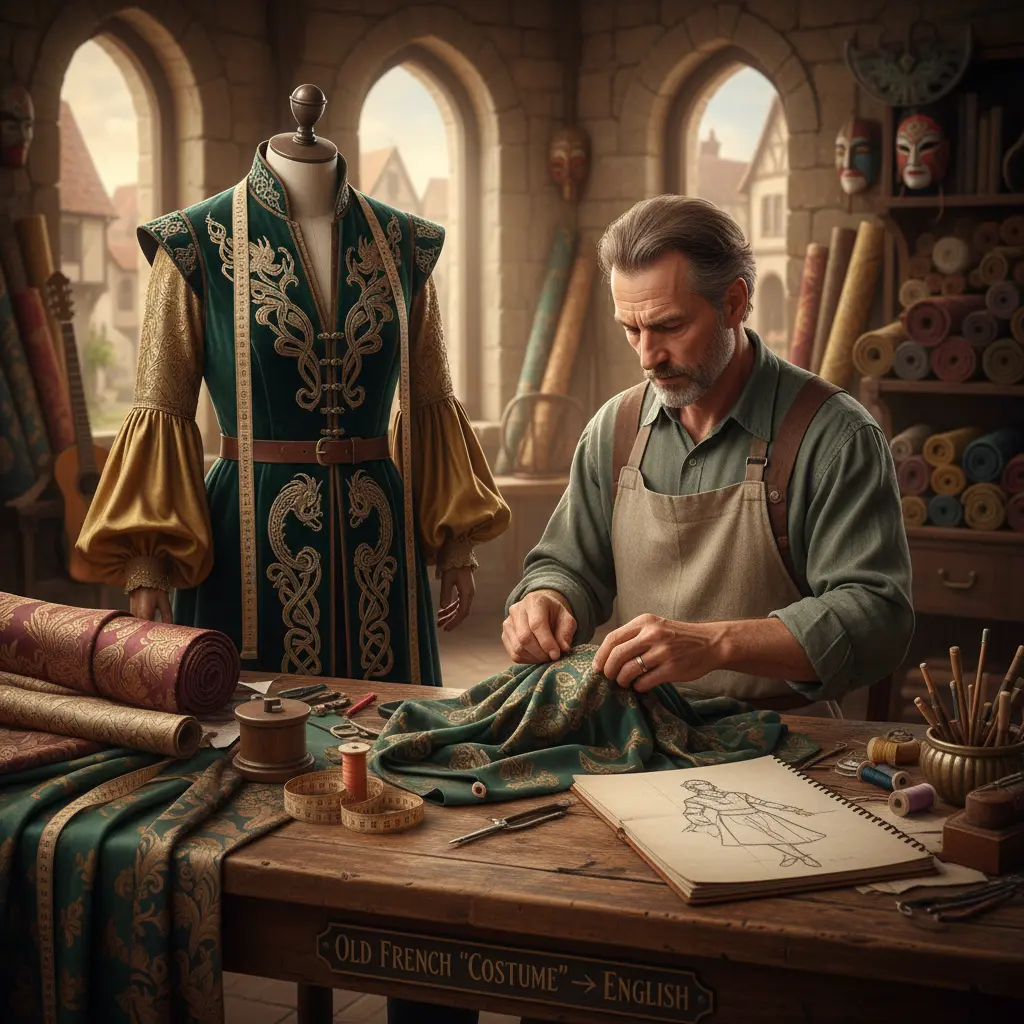
custom = costum + -um (Latin) → Old French 'costume' → English. Imagine a tailor crafting a unique outfit tailored to one person, reflecting individual style and tradition.
Note 1: These definitions and etymologies are not standard dictionary definitions, but extended explanations provided to help with memorization and understanding of the actual application of words. Through this background information, we strive to make words more vivid and easier to understand, and help you remember their meanings in real life.
Note 2: LexiTalk designs the learning flow around the linguistics principle of “Comprehensible Input.” When learners encounter material that is slightly above their level but still understandable from context, the brain naturally absorbs the language. That’s why we keep every word inside authentic contexts, using examples and associations to help you understand it and use it flexibly.
Read the FAQ explanation of Comprehensible InputFirst I hold the fabric in both hands and move the edge along the line of the garment. I push and pull, then adjust the seam until it feels right, a tiny shift of preference on the skin. The moment I sense it fits, a quiet decision settles in, something like a custom that's mine. What I will actually wear or show is born here, in the way I set, keep, or change the fit.
Custom has two main meanings in English: a traditional practice or belief that is passed down within a community, and an adjective describing something made to order or tailored to a particular person. The noun sense often collocates with words like tradition, ritual, or culture, so you can talk about local customs or wedding customs. The adjective sense combines with nouns such as made, tailored, or designer to mean personalised. A common learner pitfall is mixing up custom with customs or with customer, or assuming custom always means unusual or strange rather than specifically crafted for one person.
In English, custom covers both tradition and personalization, so learners must spot the noun vs adjective use and avoid conflating with customs or customer.
What does the word 'customs' mean?
Which of the following sentences uses the word 'customs' correctly?
Which word is most similar to 'customs'?
What is the opposite of 'customs'?
Can you think of a real-life context where 'customs' is relevant?
English Learning Listening Content
Listen NowDownload LexiTalk app for personalized learning experience
Download AppCookies
We use cookies for essential site functions, analytics, and ads. You can accept, reject, or manage preferences. Privacy Policy