
dabble - Master This Word
Master this word with our 5-step learning method – Learn English in English
Train English Through Brain Routes, Not Translation.
This page helps you stop memorizing isolated translations and start understanding a word through its shared mental image, native-style thinking, and practical training steps.
Master this word with our 5-step learning method – Learn English in English
Example sentences are the start of understanding. Don't rush to memorize. First feel how the word works in a sentence.
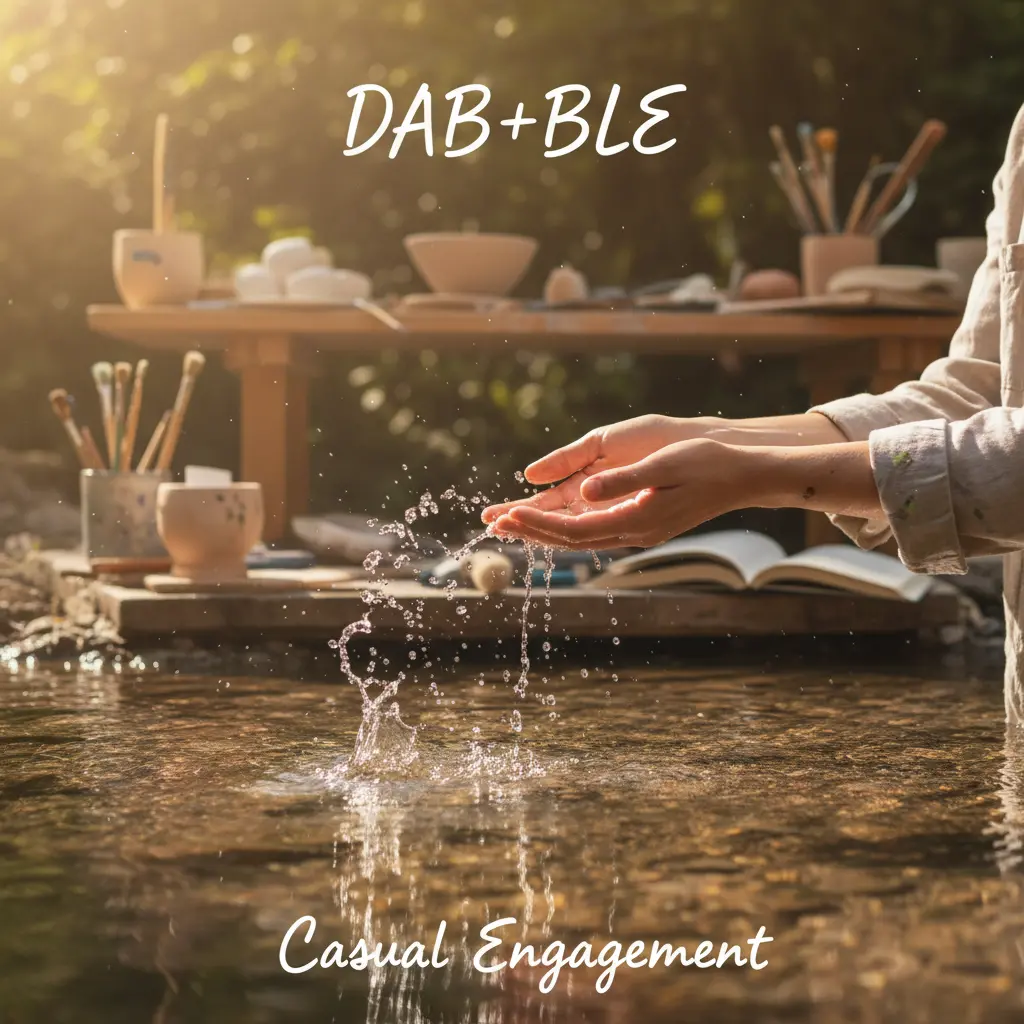
Root decomposition: 'dab' + '-le'. Historical origin: from Middle English 'dabelen', possibly of Low German or Dutch origin. Memory image: Picture someone lightly splashing water with their hands, symbolizing their casual engagement in a hobby or interest.
Note 1: These definitions and etymologies are not standard dictionary definitions, but extended explanations provided to help with memorization and understanding of the actual application of words. Through this background information, we strive to make words more vivid and easier to understand, and help you remember their meanings in real life.
Note 2: LexiTalk designs the learning flow around the linguistics principle of “Comprehensible Input.” When learners encounter material that is slightly above their level but still understandable from context, the brain naturally absorbs the language. That’s why we keep every word inside authentic contexts, using examples and associations to help you understand it and use it flexibly.
Read the FAQ explanation of Comprehensible InputDabble means to engage in an activity in a casual or superficial way, not fully committing to it. It suggests sampling or trying something without serious intent, often in hobbies or new interests. A dabble could be painting for a weekend, learning a few chords, or testing a sport without training regularly. The root idea is light involvement rather than expertise. Etymology points to Middle English dabelen, possibly from Low German or Dutch origins; the memory image is hands splashing water lightly, signaling effortless participation. In usage, contrast dabble with practice, specialize, or pursue seriously; dabbling is about breadth, while commitment pushes into depth.
Learners of English often picture dabble as a passive hobby rather than a mindset of light experimentation across many activities. They may overextend it to mean always jumping into new skills, or misuse it in formal contexts.
What does the word 'dabble' mean?
Which of the following sentences uses 'dabble' correctly?
Which word is most similar to 'dabble'?
What is the opposite of 'dabble'?
Can you give an example of a real-life scenario where someone might dabble in a hobby?
Download LexiTalk app for personalized learning experience
Download AppCookies
We use cookies for essential site functions, analytics, and ads. You can accept, reject, or manage preferences. Privacy Policy