
decibels - Master This Word
Master this word with our 5-step learning method – Learn English in English
Train English Through Brain Routes, Not Translation.
This page helps you stop memorizing isolated translations and start understanding a word through its shared mental image, native-style thinking, and practical training steps.
Master this word with our 5-step learning method – Learn English in English
Example sentences are the start of understanding. Don't rush to memorize. First feel how the word works in a sentence.
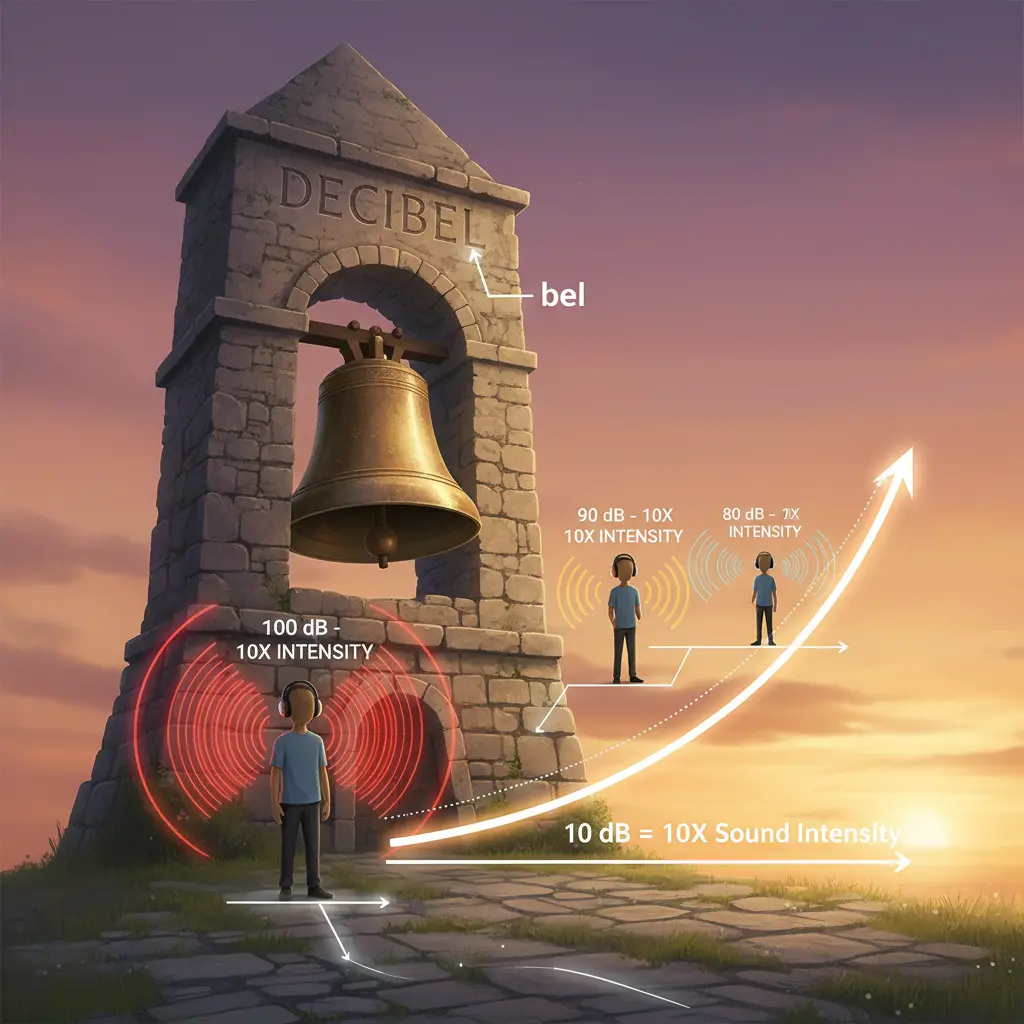
Root decomposition: 'deci-' (ten) + 'bel' (Bell) from Alexander Graham Bell. Historical origin: Latin → English. Memory image: Imagine standing next to a Bell tower and hearing how sound intensity varies as you move closer or further away. The 'ten' in deci- reminds you that every increase of 10 decibels means a tenfold increase in sound intensity.
Note 1: These definitions and etymologies are not standard dictionary definitions, but extended explanations provided to help with memorization and understanding of the actual application of words. Through this background information, we strive to make words more vivid and easier to understand, and help you remember their meanings in real life.
Note 2: LexiTalk designs the learning flow around the linguistics principle of “Comprehensible Input.” When learners encounter material that is slightly above their level but still understandable from context, the brain naturally absorbs the language. That’s why we keep every word inside authentic contexts, using examples and associations to help you understand it and use it flexibly.
Read the FAQ explanation of Comprehensible InputDecibel is the unit used to express sound intensity on a logarithmic scale. It does not measure raw energy by itself, but compares a value to a reference level, typically the threshold of hearing. Because the scale is logarithmic, a 10 dB increase is roughly ten times more intense, while smaller changes like 3 dB can be noticeable but are not a simple 3x jump. In everyday life, people use decibels to describe noise levels in environments, from whisper around 20 dB to normal conversation near 60 dB, a busy street over 70-90 dB, or a rock concert above 100 dB. The term comes from deci- (one tenth) and bel, named after Bell. A handy cue: every 10 dB step roughly multiplies intensity.
Explain to an English speaker learning English: emphasize the pronunciation and spelling of decibel, the distinction between deci- and bel, and how dB is used with different references (SPL, A-weighting) in discussion of loudness.
Download LexiTalk app for personalized learning experience
Download AppCookies
We use cookies for essential site functions, analytics, and ads. You can accept, reject, or manage preferences. Privacy Policy