
democracy - Master This Word
Master this word with our 5-step learning method – Learn English in English
Train English Through Brain Routes, Not Translation.
This page helps you stop memorizing isolated translations and start understanding a word through its shared mental image, native-style thinking, and practical training steps.
Master this word with our 5-step learning method – Learn English in English
Example sentences are the start of understanding. Don't rush to memorize. First feel how the word works in a sentence.
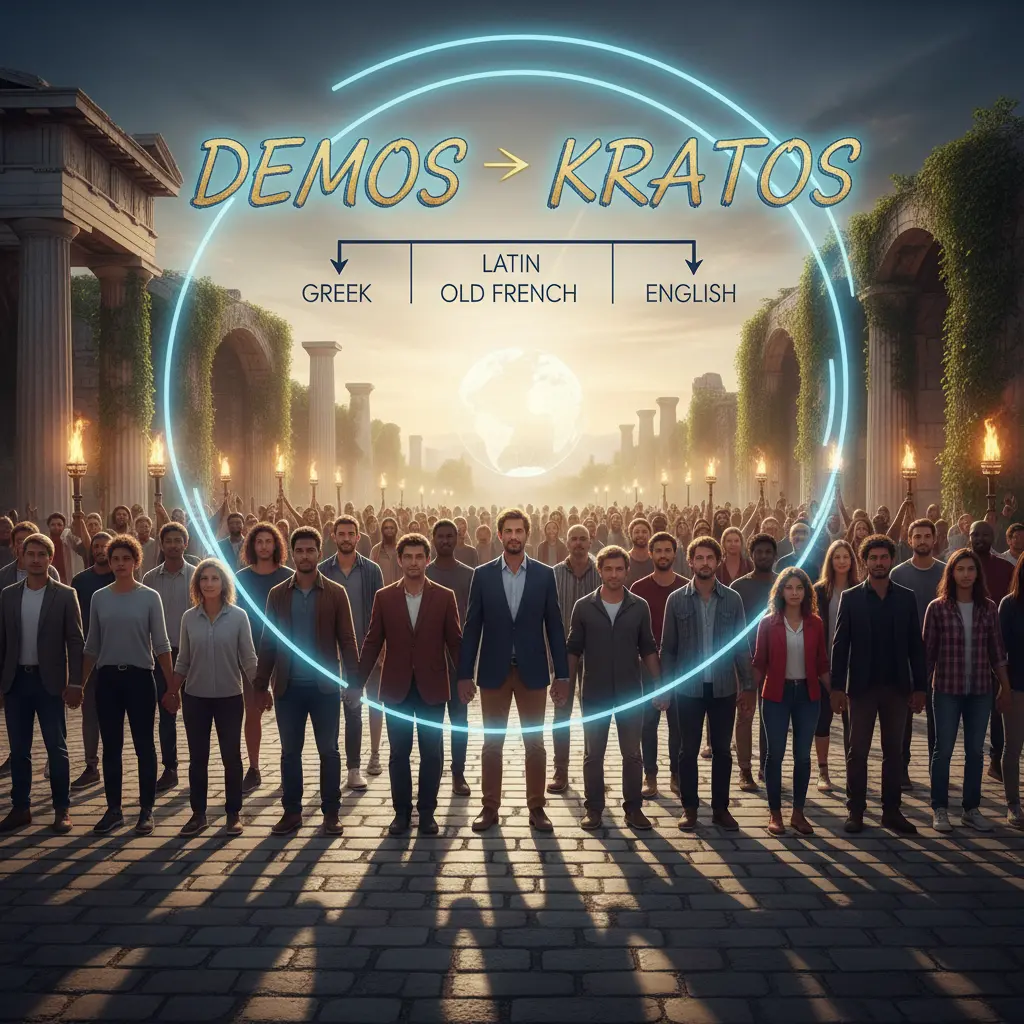
From 'demos' (people) + 'kratos' (power/rule). Origin: Greek → Latin → Old French → English. Imagine a diverse group of people standing together, each holding hands to represent unity in their shared power.
Note 1: These definitions and etymologies are not standard dictionary definitions, but extended explanations provided to help with memorization and understanding of the actual application of words. Through this background information, we strive to make words more vivid and easier to understand, and help you remember their meanings in real life.
Note 2: LexiTalk designs the learning flow around the linguistics principle of “Comprehensible Input.” When learners encounter material that is slightly above their level but still understandable from context, the brain naturally absorbs the language. That’s why we keep every word inside authentic contexts, using examples and associations to help you understand it and use it flexibly.
Read the FAQ explanation of Comprehensible InputFirst I hold the ballot, move my hand, and place my choice in the box. As voices fill the room, I push through hesitation and listen, watching ideas shift. I adjust my stance, trying to keep fairness in sight as different views rise. By the end, it feels like everyone is part of the decision, and I let that shared moment settle in me.
Democracy is a system of government in which the people have the final say in public decisions. It rests on the idea that all citizens are equal before the law and deserve fair representation. In practice, most democracies rely on regularly held elections, accountable leaders, an independent judiciary, and protections for minority rights. Democracy also hinges on open debate, free press, and peaceful transfer of power. The term comes from Greek demos, people, and kratos, power or rule. Learners should notice the noun democracy, the adjective democratic, and the noun form democratize, plus the contrast with direct versus representative democracy.
Explain to an English speaker (meta, keep short)
What is the meaning of the word 'democracy'?
In what context is the word 'democracy' commonly used?
Which word is similar to 'democracy'?
What is the opposite of 'democracy'?
In what situation would understanding 'democracy' be important?
Download LexiTalk app for personalized learning experience
Download AppCookies
We use cookies for essential site functions, analytics, and ads. You can accept, reject, or manage preferences. Privacy Policy