disabilities - Master This Word
Master this word with our 5-step learning method – Learn English in English
Train English Through Brain Routes, Not Translation.
This page helps you stop memorizing isolated translations and start understanding a word through its shared mental image, native-style thinking, and practical training steps.
Master this word with our 5-step learning method – Learn English in English
Example sentences are the start of understanding. Don't rush to memorize. First feel how the word works in a sentence.
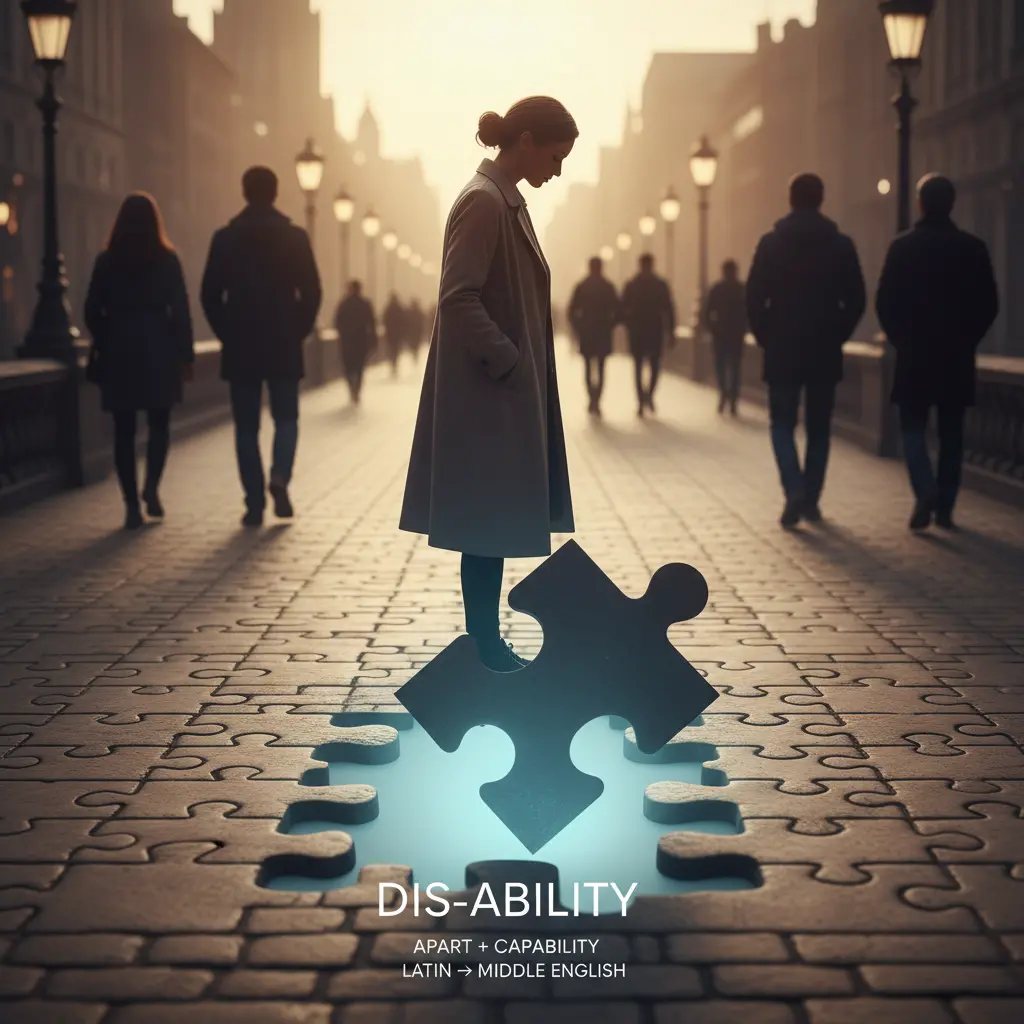
dis- = apart, ability = capability; Origin: Latin → Middle English; Imagine a person who feels 'apart' from others due to a limiting condition, visualizing a puzzle piece that doesn't fit.
Note 1: These definitions and etymologies are not standard dictionary definitions, but extended explanations provided to help with memorization and understanding of the actual application of words. Through this background information, we strive to make words more vivid and easier to understand, and help you remember their meanings in real life.
Note 2: LexiTalk designs the learning flow around the linguistics principle of “Comprehensible Input.” When learners encounter material that is slightly above their level but still understandable from context, the brain naturally absorbs the language. That’s why we keep every word inside authentic contexts, using examples and associations to help you understand it and use it flexibly.
Read the FAQ explanation of Comprehensible InputI place my hand on the door and push, feet planted, body tensing. The door barely moves; I shift my stance, adjust my grip, and keep trying. A step is blocked by a narrow doorway, so I turn a bit, move my body and change my plan, keeping the goal in sight. That moment makes the word disability feel like a lived pattern you navigate, a push and pull of ability in daily life.
Disability is a broad term that describes a physical, sensory, cognitive, or mental condition that limits a person’s movements, senses, or daily activities. It can be visible, like a mobility impairment, or invisible, like a learning difference or mental health condition. The word is not simply about lack; it can also reflect the way societies, environments, and policies fail to accommodate people who have different abilities. Disability can affect employment, education, transportation, and social participation, but with accessible design, inclusive attitudes, and supportive services, people with disabilities can lead independent, meaningful lives. Language matters because respectful usage avoids stigma and focuses on person-first or choice-based phrasing.
English speakers often map disability to a spectrum of conditions and advocate for rights; learners should focus on social inclusion and neutral phrasing.
Download LexiTalk app for personalized learning experience
Download AppCookies
We use cookies for essential site functions, analytics, and ads. You can accept, reject, or manage preferences. Privacy Policy