
disclosure - Master This Word
Master this word with our 5-step learning method – Learn English in English
Train English Through Brain Routes, Not Translation.
This page helps you stop memorizing isolated translations and start understanding a word through its shared mental image, native-style thinking, and practical training steps.
Master this word with our 5-step learning method – Learn English in English
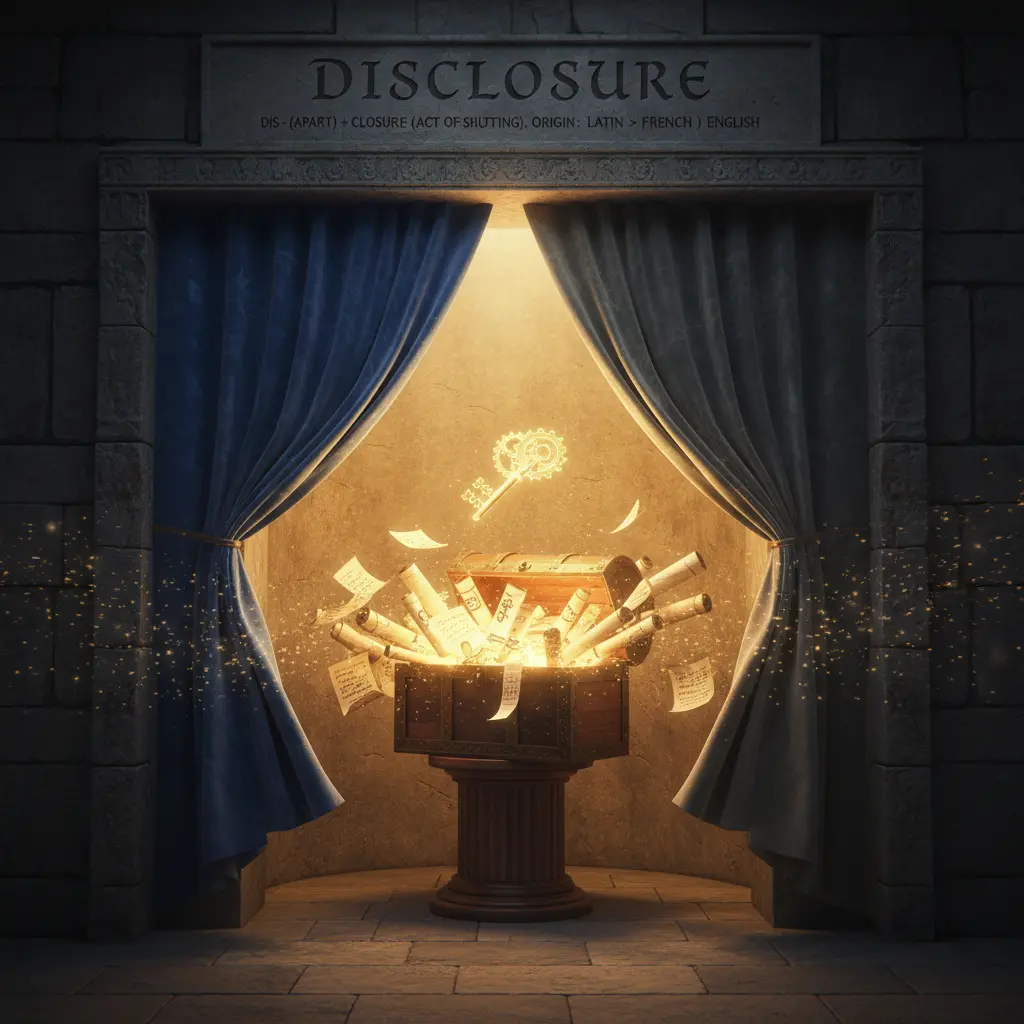
Example sentences are the start of understanding. Don't rush to memorize. First feel how the word works in a sentence.
disclosure = dis- (apart) + closure (the act of shutting). Origin: Latin > Old French > English. Imagine pulling back a curtain to reveal what's behind it, like pulling back a closed door to show a hidden treasure.
Note 1: These definitions and etymologies are not standard dictionary definitions, but extended explanations provided to help with memorization and understanding of the actual application of words. Through this background information, we strive to make words more vivid and easier to understand, and help you remember their meanings in real life.
Note 2: LexiTalk designs the learning flow around the linguistics principle of “Comprehensible Input.” When learners encounter material that is slightly above their level but still understandable from context, the brain naturally absorbs the language. That’s why we keep every word inside authentic contexts, using examples and associations to help you understand it and use it flexibly.
Read the FAQ explanation of Comprehensible InputI lean forward, and my eyes shift to a locked drawer as I reach out to pull it open. A moment later, the lid pops and a slip of paper catches the light, warming my skin with the idea of honesty. My grip tightens, then loosens as I adjust my stance and decide whether to pass it on. In that tiny act of letting the truth out, the room changes, and meaning settles not as a rule but as a choice we make in our own stories.
Disclosure is the act of making information known that was previously private or hidden. In business and finance, it refers to regulated disclosures such as annual reports, material events, and risk factors that must be shared with investors. In journalism and law, disclosure can mean revealing sources or conflicts of interest. The noun covers both the act itself and the state of being revealed. Etymology traces to dis- apart and closure the act of shutting, originally Latin through Old French into English; imagine pulling back a curtain or opening a shutter to show what was concealed. Proper use centers on clarity, transparency, and timeliness, not sensationalism.
Explain to an English speaker: English often treats disclosure as a formal, regulatory term used in business, law, and journalism; learners may mix it with informal declarations or confuse the verb form with the noun; focus on noun usage and common collocations.
What is the meaning of 'disclosure'?
In which sentence is 'disclosure' used correctly?
What is a synonym for 'disclosure'?
What is an antonym for 'disclosure'?
How is 'disclosure' relevant in a real-life context?
Download LexiTalk app for personalized learning experience
Download AppCookies
We use cookies for essential site functions, analytics, and ads. You can accept, reject, or manage preferences. Privacy Policy