dislikes - Master This Word
Master this word with our 5-step learning method – Learn English in English
Train English Through Brain Routes, Not Translation.
This page helps you stop memorizing isolated translations and start understanding a word through its shared mental image, native-style thinking, and practical training steps.
Master this word with our 5-step learning method – Learn English in English
Example sentences are the start of understanding. Don't rush to memorize. First feel how the word works in a sentence.
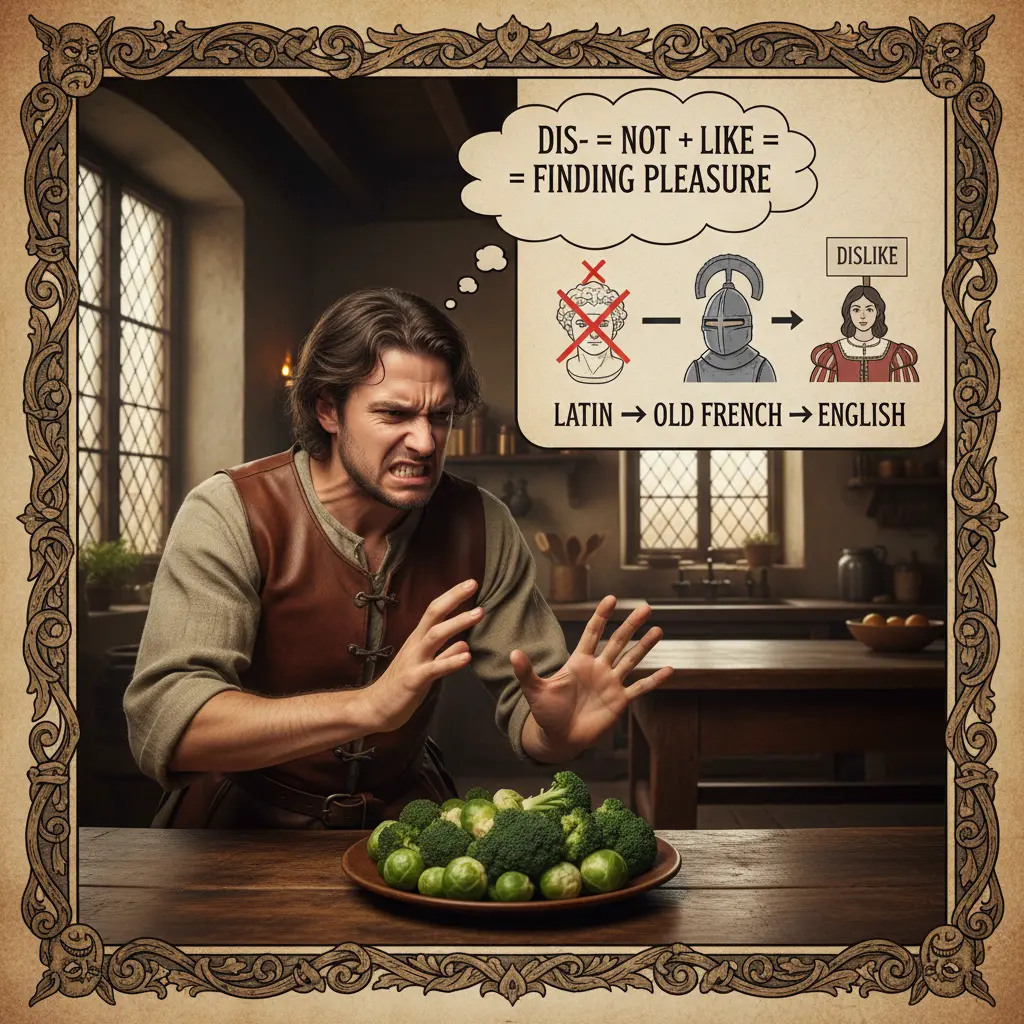
dis- = not + like = to find pleasure in something. Historical origin: Latin → Old French → English. Memory image: Imagine someone grimacing at a food they dislike, pushing it away, which symbolizes the refusal of pleasure.
Note 1: These definitions and etymologies are not standard dictionary definitions, but extended explanations provided to help with memorization and understanding of the actual application of words. Through this background information, we strive to make words more vivid and easier to understand, and help you remember their meanings in real life.
Note 2: LexiTalk designs the learning flow around the linguistics principle of “Comprehensible Input.” When learners encounter material that is slightly above their level but still understandable from context, the brain naturally absorbs the language. That’s why we keep every word inside authentic contexts, using examples and associations to help you understand it and use it flexibly.
Read the FAQ explanation of Comprehensible InputI push the plate away, my fingers slowing as the aroma hits me. It shifts on the table and a tight pull of doubt rises in my chest, making me want to turn my head. I adjust my chair, hold back a sigh, and set the dish at the edge so I won’t reach for more. That stubborn moment lingers, and I realize I dislike this flavor, not because it is unfamiliar, but because it sinks into my memory as unappealing.
Dislike is a common English verb meaning to not like something, and as a noun it can refer to a feeling of not liking something or a general absence of appeal. It is formed with the negative prefix dis- attached to like, echoing the opposite of pleasure. Its etymology traces from Latin into Old French and then English, with the modern sense reinforced by everyday speech. A memory image helps: imagine someone grimacing at a food they dislike and pushing the plate away, a clear sign of refusing pleasure. In everyday conversation, you might say, I dislike spinach, or I have a strong dislike for loud noises, which is milder than 'hate' but stronger than 'don’t like'.
English often separates dislike from hate, using it as a milder, versatile option in speaking and writing; learners tend to overemphasize negativity or translate directly from their L1 as 'not like' in every context.
Download LexiTalk app for personalized learning experience
Download AppCookies
We use cookies for essential site functions, analytics, and ads. You can accept, reject, or manage preferences. Privacy Policy