draws - Master This Word
Master this word with our 5-step learning method – Learn English in English
Train English Through Brain Routes, Not Translation.
This page helps you stop memorizing isolated translations and start understanding a word through its shared mental image, native-style thinking, and practical training steps.
Master this word with our 5-step learning method – Learn English in English
Example sentences are the start of understanding. Don't rush to memorize. First feel how the word works in a sentence.
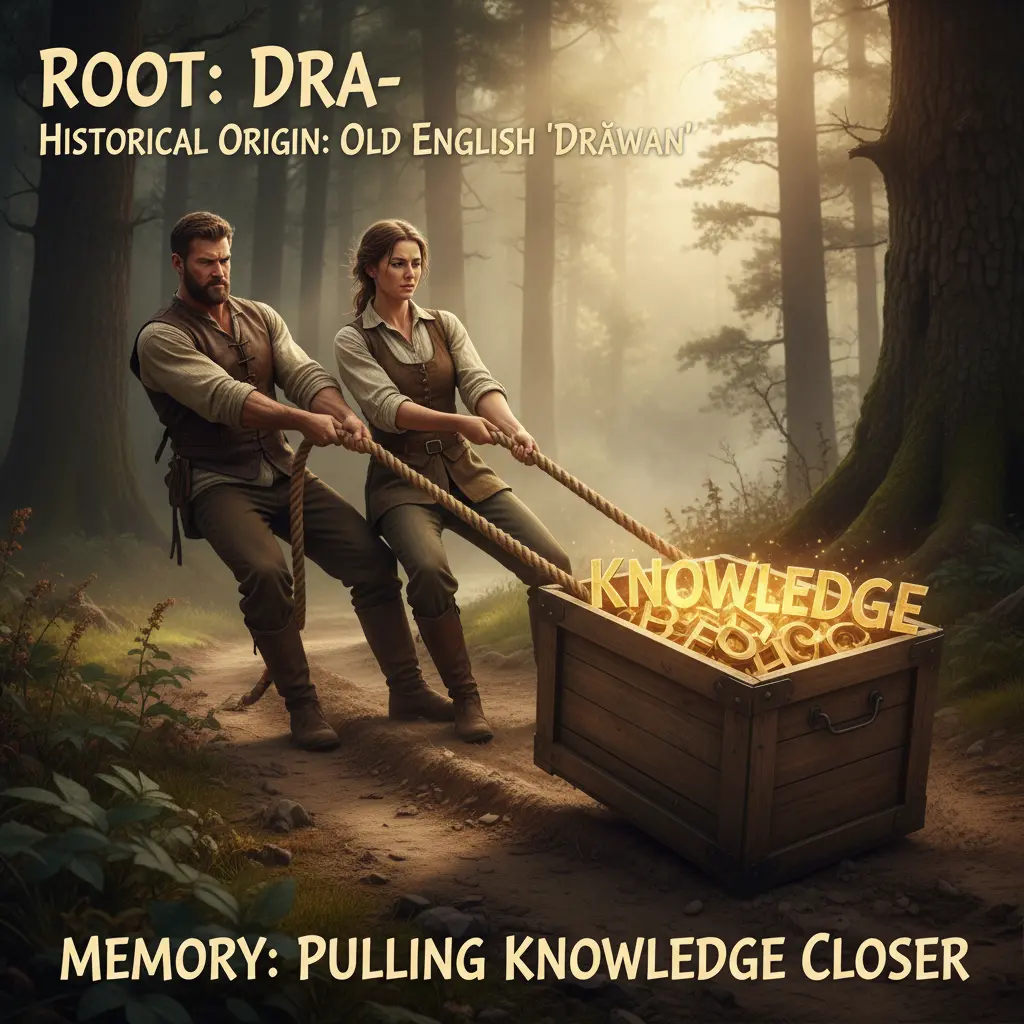
Root: dra- = to pull. Historical origin: Old English 'drāwan', related to Old Norse 'draga'. Memory image: Picture yourself pulling a rope, drawing something closer to you.
Note 1: These definitions and etymologies are not standard dictionary definitions, but extended explanations provided to help with memorization and understanding of the actual application of words. Through this background information, we strive to make words more vivid and easier to understand, and help you remember their meanings in real life.
Note 2: LexiTalk designs the learning flow around the linguistics principle of “Comprehensible Input.” When learners encounter material that is slightly above their level but still understandable from context, the brain naturally absorbs the language. That’s why we keep every word inside authentic contexts, using examples and associations to help you understand it and use it flexibly.
Read the FAQ explanation of Comprehensible InputI pick up a pencil and my hand move in small, careful circles. I push and pull the line, watching the sketch change as the shading grows. I hold my breath a moment, adjust my grip, and set my eyes on the moment I want to show. The act of drawing pulls you into the scene, and the image itself keeps your gaze there.
Draw is a versatile verb with three core areas of meaning: to make a picture with lines on a surface, to pull something toward oneself, and to attract or engage interest. In use, you can say draw a picture, draw near, or draw attention. The verb also appears in phrases like draw a conclusion or draw a crowd, which extend its sense of bringing something into focus or gathering response. Its irregular forms are drew (past) and drawn (past participle). Etymology traces to Old English drāwan meaning to pull, related to Old Norse draga. Learners often confuse the pull sense with the art sense or mix up the idioms, especially when a metaphorical sense is involved.
English speakers often unit three senses under one verb, so learners may mix art with action or with attraction. The challenge is recognizing fixed collocations and idioms, and remembering irregular past forms drew/drawn.
What is the meaning of 'draws'?
Choose the correctly used sentence with 'draws'.
Which word is most similar to 'draws'?
What is the opposite of 'draws'?
Can you think of a real-life scenario involving drawing?
Download LexiTalk app for personalized learning experience
Download AppCookies
We use cookies for essential site functions, analytics, and ads. You can accept, reject, or manage preferences. Privacy Policy