dream - Master This Word
Master this word with our 5-step learning method – Learn English in English
Train English Through Brain Routes, Not Translation.
This page helps you stop memorizing isolated translations and start understanding a word through its shared mental image, native-style thinking, and practical training steps.
Master this word with our 5-step learning method – Learn English in English
Example sentences are the start of understanding. Don't rush to memorize. First feel how the word works in a sentence.
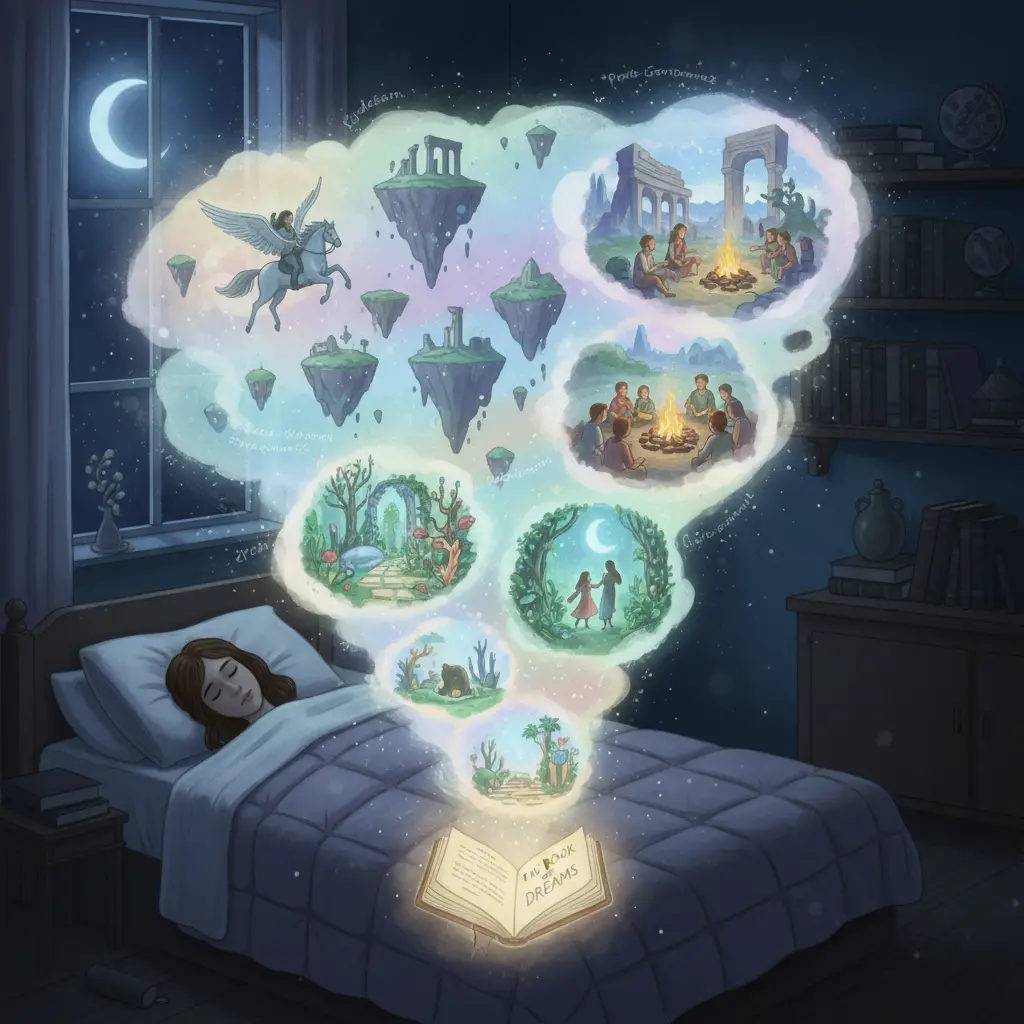
dream = *drēam (Old English) is derived from Proto-Germanic *draumaz meaning 'to build an image or story in the mind'. Imagine a peaceful nighttime scene where you see fleeting visions and storytelling unfolds as you sleep.
Note 1: These definitions and etymologies are not standard dictionary definitions, but extended explanations provided to help with memorization and understanding of the actual application of words. Through this background information, we strive to make words more vivid and easier to understand, and help you remember their meanings in real life.
Note 2: LexiTalk designs the learning flow around the linguistics principle of “Comprehensible Input.” When learners encounter material that is slightly above their level but still understandable from context, the brain naturally absorbs the language. That’s why we keep every word inside authentic contexts, using examples and associations to help you understand it and use it flexibly.
Read the FAQ explanation of Comprehensible InputI pull the blanket up, settle into the dark, and close my eyes. Images drift and shift in my mind, like thoughts turning on soft hinges. I push and pull to hold onto a thread of the scene, adjusting its pace as it glides. By morning, the feeling of that tucked-away dream lingers, nudging my day with a quiet aim.
Dream is a versatile word in English. It describes the series of thoughts, images, or emotions that occur during sleep, but it also signals hopes, goals, or inspirations we carry for our future. As a noun, we speak of a dream as something we want to achieve or a nightly vision; as a verb, dream can mean simply to sleep and experience dreams, or to imagine or hope for something, for example I dream of becoming a writer. Learners often mix dream up with wish or hope, and forget to use prepositions like about, of, or for.
English clearly separates sleep dreams from aspirational dreams and uses specific prepositions to convey meaning, which can be confusing for learners who try to translate directly from their native language.
What does the word 'dream' mean?
Which sentence uses the word 'dream' correctly?
Which word is most similar to 'dream'?
What is the opposite of 'dream'?
Can you think of a real-life context related to 'dream'?
Download LexiTalk app for personalized learning experience
Download AppCookies
We use cookies for essential site functions, analytics, and ads. You can accept, reject, or manage preferences. Privacy Policy