effrontery - Master This Word
Master this word with our 5-step learning method – Learn English in English
Train English Through Brain Routes, Not Translation.
This page helps you stop memorizing isolated translations and start understanding a word through its shared mental image, native-style thinking, and practical training steps.
Master this word with our 5-step learning method – Learn English in English
Example sentences are the start of understanding. Don't rush to memorize. First feel how the word works in a sentence.
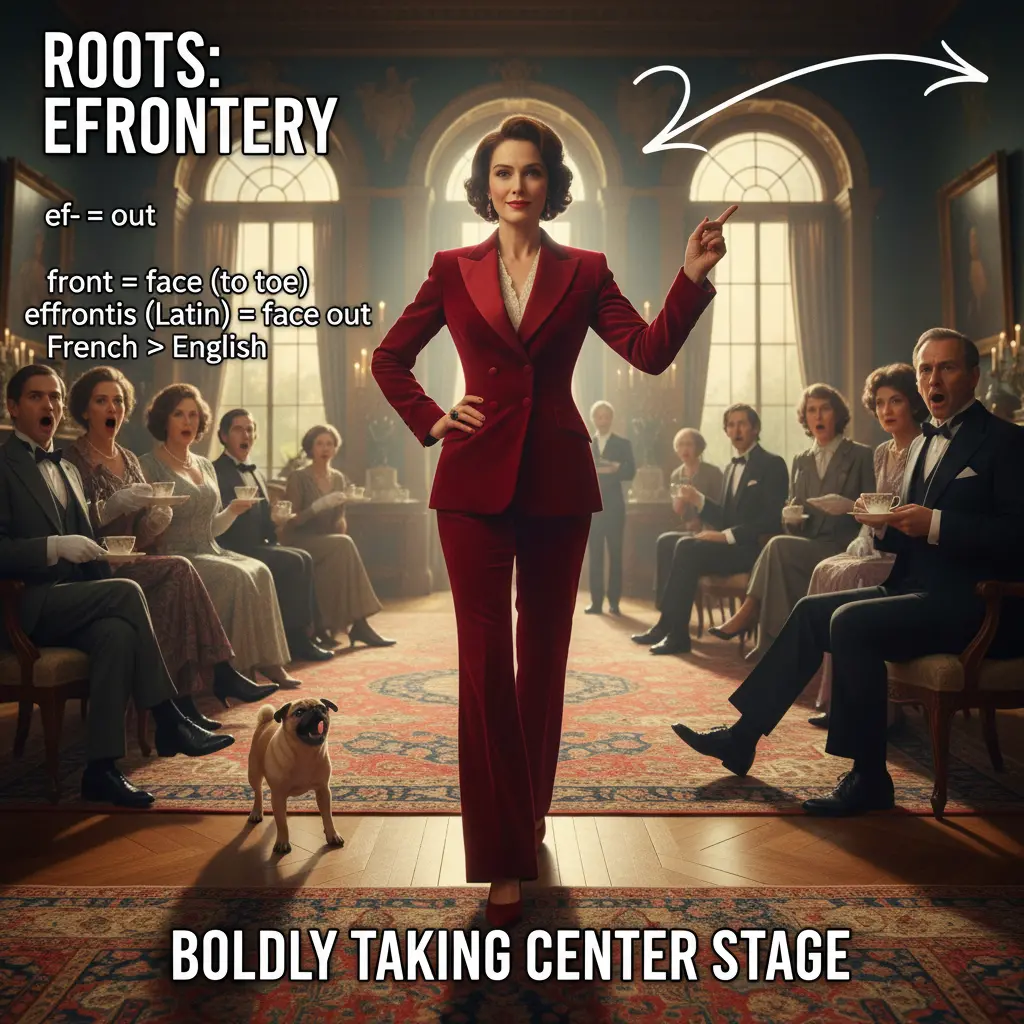
Root decomposition: 'ef-' = out + 'front' = fore (to face). Historical origin: from Latin 'effrontis', meaning 'face out', through French to English. Memory image: envision someone stepping boldly forward into a room, confidently taking center stage without care for decorum.
Note 1: These definitions and etymologies are not standard dictionary definitions, but extended explanations provided to help with memorization and understanding of the actual application of words. Through this background information, we strive to make words more vivid and easier to understand, and help you remember their meanings in real life.
Note 2: LexiTalk designs the learning flow around the linguistics principle of “Comprehensible Input.” When learners encounter material that is slightly above their level but still understandable from context, the brain naturally absorbs the language. That’s why we keep every word inside authentic contexts, using examples and associations to help you understand it and use it flexibly.
Read the FAQ explanation of Comprehensible InputEffrontery is a noun that means shameless boldness or audacity, often paired with insolence or disrespect. It describes actions that flagrantly ignore social norms or decorum. The word carries a strong negative edge, suggesting that someone is brazen enough to face you, speak up, or behave as if rules do not apply to them. Etymologically it comes from Latin effrontis, "face out," passing into English via French. In usage, you might accuse a coworker of effrontery for interrupting a meeting to demand a raise, or describe a public figure's brazen remark as effrontery. The term is formal and can be satirical, but it typically signals disapproval and moral judgment of rude conduct.
In English, effrontery strongly signals moral disapproval and a breach of etiquette; learners often confuse it with simple boldness or audacity, which can be neutral or positive in some contexts.
What is the meaning of the word 'effrontery'?
Which of the following sentences uses 'effrontery' correctly?
What is a synonym for 'effrontery'?
In what situation would 'effrontery' be appropriate?
How would you use 'effrontery' in a real-life context?
Download LexiTalk app for personalized learning experience
Download AppCookies
We use cookies for essential site functions, analytics, and ads. You can accept, reject, or manage preferences. Privacy Policy