eggs - Master This Word
Master this word with our 5-step learning method – Learn English in English
Train English Through Brain Routes, Not Translation.
This page helps you stop memorizing isolated translations and start understanding a word through its shared mental image, native-style thinking, and practical training steps.
Master this word with our 5-step learning method – Learn English in English
Example sentences are the start of understanding. Don't rush to memorize. First feel how the word works in a sentence.
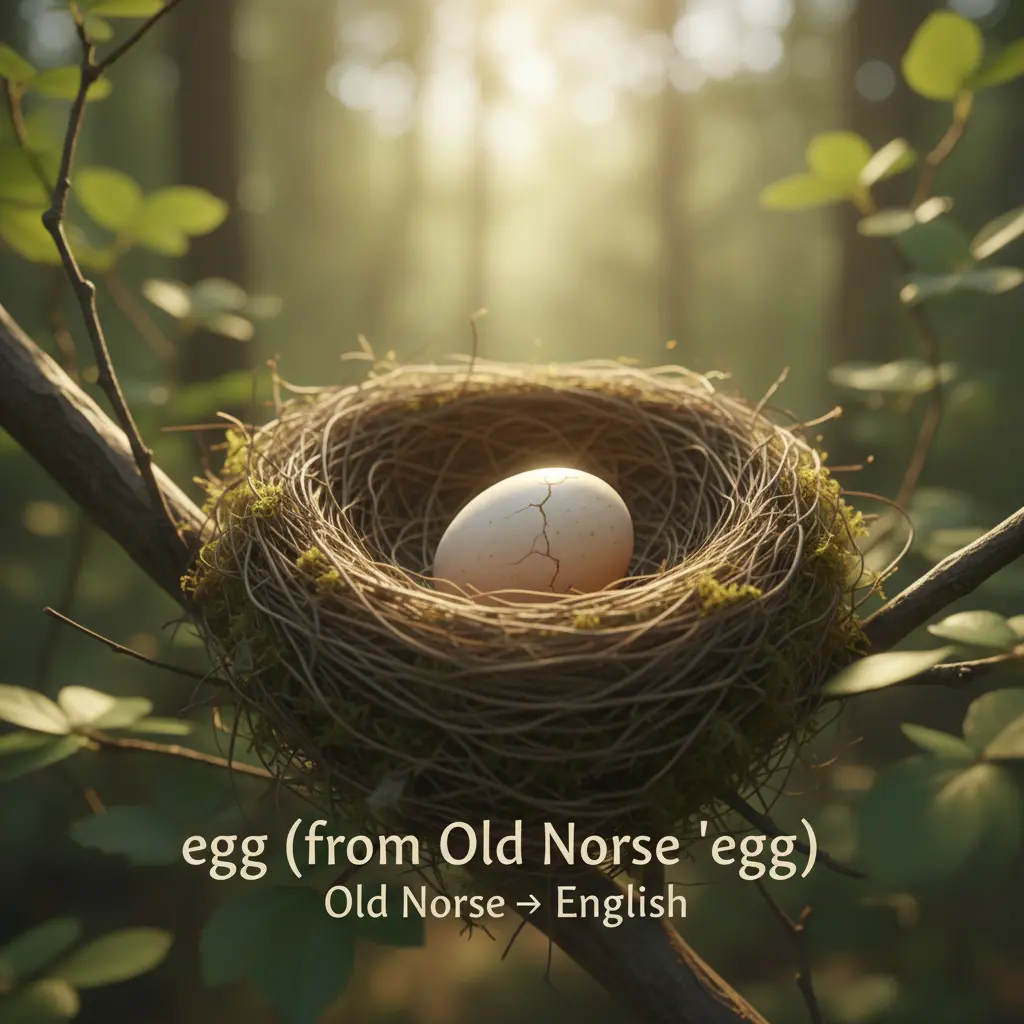
Root decomposition: egg (from Old Norse 'egg'). Historical origin: Old Norse → English. Memory image: Imagine a fragile egg lying in a nest, representing new life and potential.
Note 1: These definitions and etymologies are not standard dictionary definitions, but extended explanations provided to help with memorization and understanding of the actual application of words. Through this background information, we strive to make words more vivid and easier to understand, and help you remember their meanings in real life.
Note 2: LexiTalk designs the learning flow around the linguistics principle of “Comprehensible Input.” When learners encounter material that is slightly above their level but still understandable from context, the brain naturally absorbs the language. That’s why we keep every word inside authentic contexts, using examples and associations to help you understand it and use it flexibly.
Read the FAQ explanation of Comprehensible InputI nudge the fridge door and move my hand toward the egg carton. I grip one egg with a careful touch, adjust my grip, and pull it free. In my palm it sits, a small fragile world I have to keep steady. I tilt it gently, set the egg on the counter, and feel the warm weight reminding me why we handle them with care.
Egg is a versatile noun in English with three main senses. First, it refers to the oval object laid by female birds and other animals, which may contain a developing embryo if fertilized. Second, it denotes the edible product produced by birds, especially chicken eggs, which are central in cooking, baking, and nutrition around the world. Third, egg is used metaphorically to describe something fragile or delicate that can break easily, as in discussions about plans or trust. Understanding the difference between raw eggs, cooked eggs, and figurative uses helps you speak clearly and avoid awkward mistakes.
In English, egg is a multi-sense word used for biology, food, and metaphor. Learners often default to the food meaning when they meet the term, or misinterpret idioms literally. Pay attention to context to pick the correct sense.
Download LexiTalk app for personalized learning experience
Download AppCookies
We use cookies for essential site functions, analytics, and ads. You can accept, reject, or manage preferences. Privacy Policy