elderly - Master This Word
Master this word with our 5-step learning method – Learn English in English
Train English Through Brain Routes, Not Translation.
This page helps you stop memorizing isolated translations and start understanding a word through its shared mental image, native-style thinking, and practical training steps.
Master this word with our 5-step learning method – Learn English in English
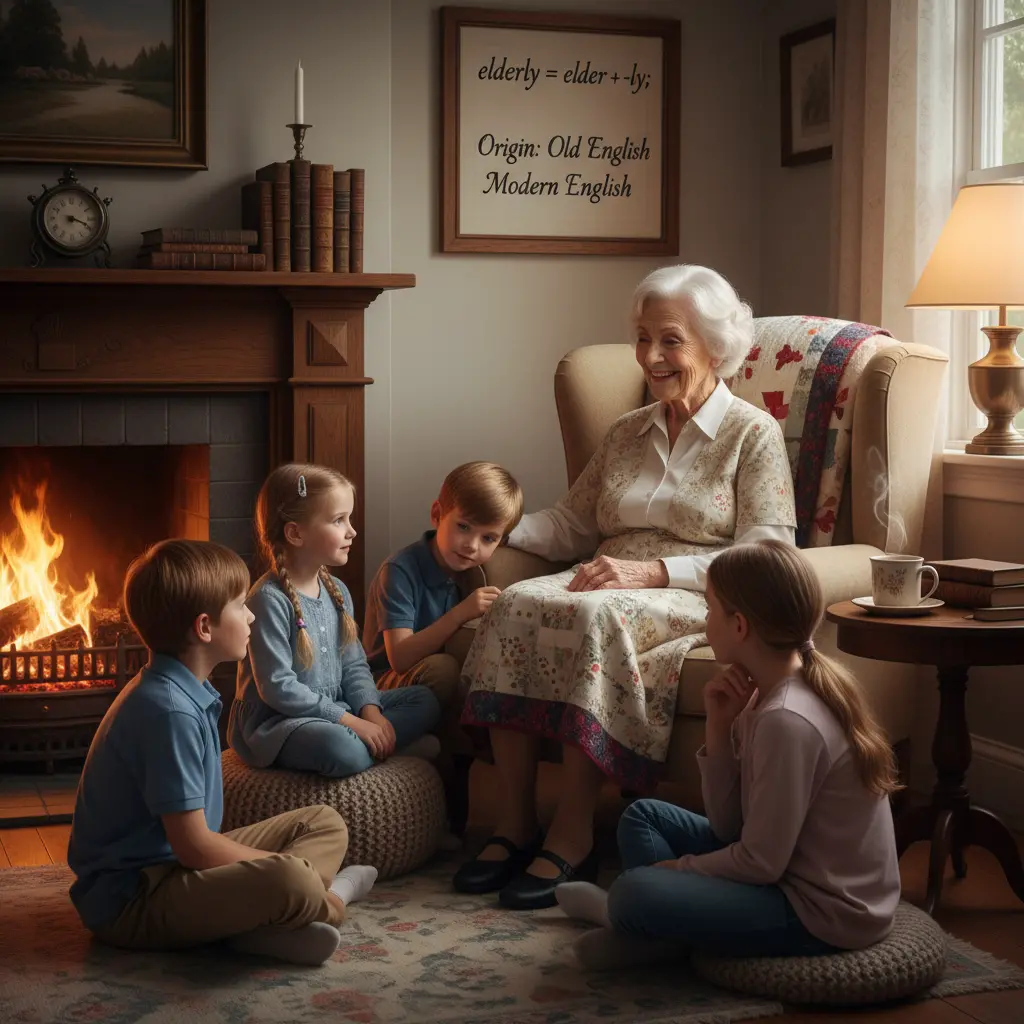
Example sentences are the start of understanding. Don't rush to memorize. First feel how the word works in a sentence.
elderly = elder + -ly; Origin: Old English -> Middle English -> Modern English. Image: Picture a wise, smiling older person sharing stories with grandchildren, representing the warmth and experience of age.
Note 1: These definitions and etymologies are not standard dictionary definitions, but extended explanations provided to help with memorization and understanding of the actual application of words. Through this background information, we strive to make words more vivid and easier to understand, and help you remember their meanings in real life.
Note 2: LexiTalk designs the learning flow around the linguistics principle of “Comprehensible Input.” When learners encounter material that is slightly above their level but still understandable from context, the brain naturally absorbs the language. That’s why we keep every word inside authentic contexts, using examples and associations to help you understand it and use it flexibly.
Read the FAQ explanation of Comprehensible InputI shift my weight and push open a chair, watching it settle under me. I picture someone described as elderly and feel the pace of the room slow as I adjust my own voice. This small, careful change makes me aware of the right tone, like choosing words that show respect without overthinking. In everyday talk, I practice using elderly naturally, letting the meaning emerge from how I act and speak.
elderly is an adjective used to describe people who are older, particularly those past middle age. It is most naturally placed before a noun, as in elderly relatives, elderly neighbors, or elderly care services, though you can also encounter the noun phrase 'the elderly' in formal writing. The term conveys age without implying illness or frailty, but in some contexts it can feel clinical or paternalistic, so many writers prefer 'older' or 'older adults' in casual or respectful speech. When teaching, emphasize that the word refers to age, not judgment, and avoid stereotyping. In multilingual contexts, learners should pay attention to formality, tone, and cultural expectations around aging.
Explain to an English speaker (meta, keep short): In English, elderly is a respectful, formal attribute for age; learners often overfit it as a blanket polite term or worry it sounds clinical. Focus on context and tone: casual conversation prefers older/older adults, while writing may use the elderly. Watch collocations with care and avoid implying helplessness.
What is the meaning of the word 'elderly'?
In which of the following sentences is 'elderly' used correctly?
Which word is the most similar to 'elderly'?
What is the opposite of 'elderly'?
In what scenario would you use the word 'elderly'?
Download LexiTalk app for personalized learning experience
Download AppCookies
We use cookies for essential site functions, analytics, and ads. You can accept, reject, or manage preferences. Privacy Policy