
electrolytes - Master This Word
Master this word with our 5-step learning method – Learn English in English
Train English Through Brain Routes, Not Translation.
This page helps you stop memorizing isolated translations and start understanding a word through its shared mental image, native-style thinking, and practical training steps.
Master this word with our 5-step learning method – Learn English in English
Example sentences are the start of understanding. Don't rush to memorize. First feel how the word works in a sentence.
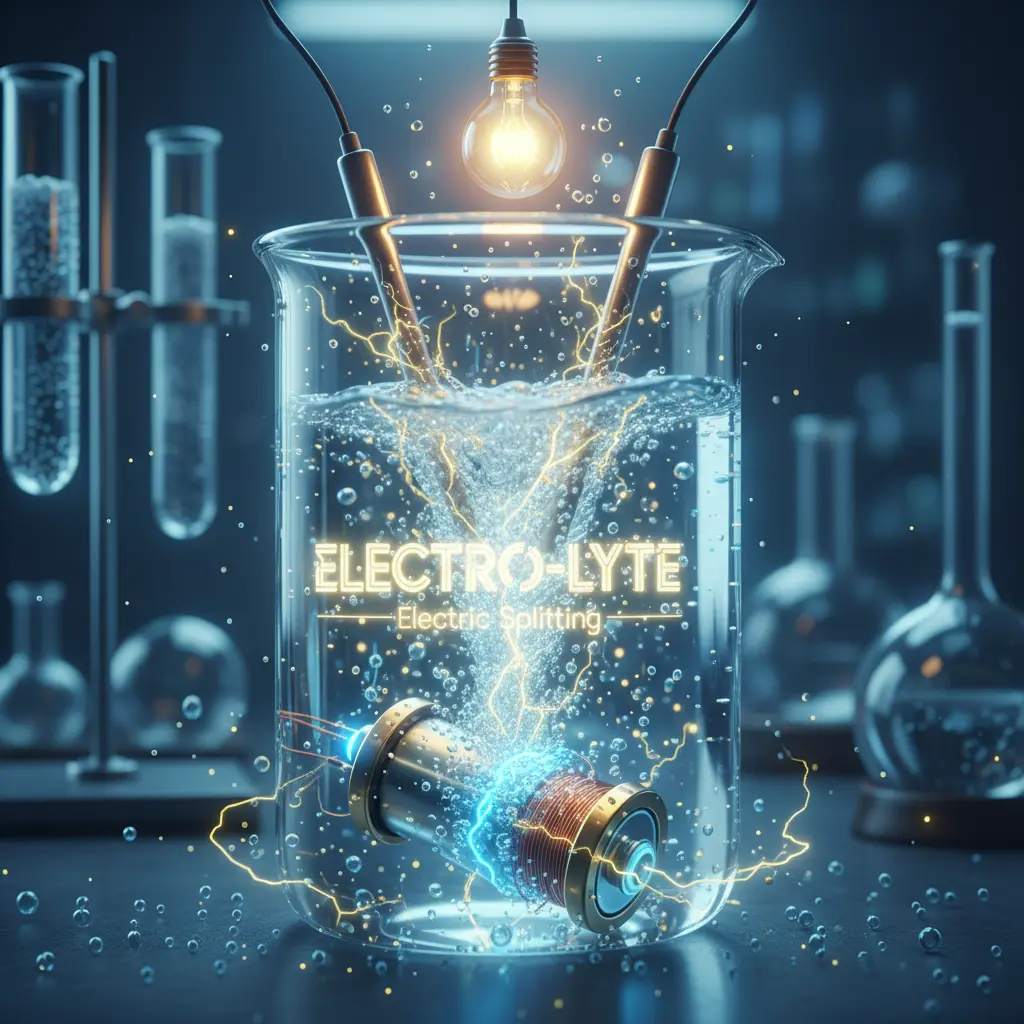
(electro- + -lyte) - 'Electro' refers to electric, and '-lyte' comes from ‘lysis’ meaning splitting or dissolving. Originated from Greek, passed through Latin and Old French to English. Imagine a buzzing battery dissolving in water, releasing tiny charged particles that can light up a bulb.
Note 1: These definitions and etymologies are not standard dictionary definitions, but extended explanations provided to help with memorization and understanding of the actual application of words. Through this background information, we strive to make words more vivid and easier to understand, and help you remember their meanings in real life.
Note 2: LexiTalk designs the learning flow around the linguistics principle of “Comprehensible Input.” When learners encounter material that is slightly above their level but still understandable from context, the brain naturally absorbs the language. That’s why we keep every word inside authentic contexts, using examples and associations to help you understand it and use it flexibly.
Read the FAQ explanation of Comprehensible InputAn electrolyte is a substance that produces ions when dissolved in a solvent, such as water, enabling an electric current to pass through the solution. In chemistry, a solution with ions is an electrolyte, while a non-electrolyte does not ionize. In biology and medicine, electrolytes like sodium, potassium, calcium, and chloride help regulate nerve impulses, muscle contractions, hydration, and pH balance. You might encounter electrolytes in sports drinks to replace minerals lost through sweat, or in intravenous fluids during illness. The word comes from electro- (electric) and -lyte (from lysis, to split). Understanding electrolytes helps you read lab results and discuss hydration and cellular function clearly.
English speakers often anchor electrolyte to sports drinks or lab contexts; learners may wrongly equate it with electricity itself or assume all electrolytes energize. Emphasize ionization rather than power.
Download LexiTalk app for personalized learning experience
Download AppCookies
We use cookies for essential site functions, analytics, and ads. You can accept, reject, or manage preferences. Privacy Policy