
elegies - Master This Word
Master this word with our 5-step learning method – Learn English in English
Train English Through Brain Routes, Not Translation.
This page helps you stop memorizing isolated translations and start understanding a word through its shared mental image, native-style thinking, and practical training steps.
Master this word with our 5-step learning method – Learn English in English
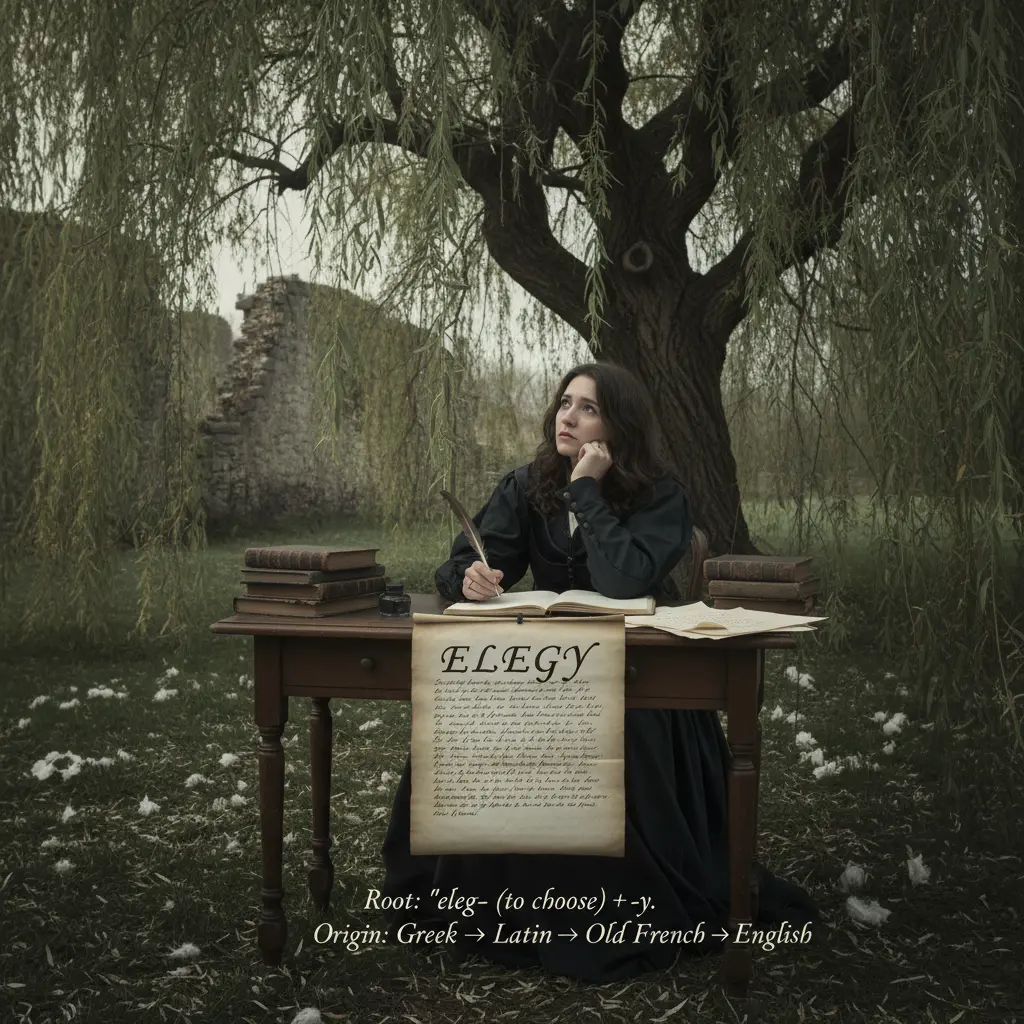
Example sentences are the start of understanding. Don't rush to memorize. First feel how the word works in a sentence.
Root: 'eleg-' (to choose) + '-y' (suffix forming nouns). Origin: Greek → Latin → Old French → English. Memory Image: Imagine a poet choosing words carefully, longing for the lost as they pen an elegy beneath a weeping willow.
Note 1: These definitions and etymologies are not standard dictionary definitions, but extended explanations provided to help with memorization and understanding of the actual application of words. Through this background information, we strive to make words more vivid and easier to understand, and help you remember their meanings in real life.
Note 2: LexiTalk designs the learning flow around the linguistics principle of “Comprehensible Input.” When learners encounter material that is slightly above their level but still understandable from context, the brain naturally absorbs the language. That’s why we keep every word inside authentic contexts, using examples and associations to help you understand it and use it flexibly.
Read the FAQ explanation of Comprehensible InputAn elegy is a reflective, often mournful poem written to honor someone who has died, though it can also appear as a sorrowful song or a broader literary work expressing mourning. In English, it usually follows a measured, somber tone and may include memories of the departed, a meditation on loss, and consolation offered to the living. While some elegies resemble laments, others move toward consolation or acceptance, and many famous examples light the path between grief and tribute. The word has ancient roots, but today it also appears in music and modern poetry, where the mood remains serious, respectful, and elegiac.
English speakers often see elegy as a literary, measured form that sits between lament and tribute; learners may confuse it with general mourning or a song, and might miss its specific literary framing and historical usage.
Download LexiTalk app for personalized learning experience
Download AppCookies
We use cookies for essential site functions, analytics, and ads. You can accept, reject, or manage preferences. Privacy Policy