essentially - Master This Word
Master this word with our 5-step learning method – Learn English in English
Train English Through Brain Routes, Not Translation.
This page helps you stop memorizing isolated translations and start understanding a word through its shared mental image, native-style thinking, and practical training steps.
Master this word with our 5-step learning method – Learn English in English
Example sentences are the start of understanding. Don't rush to memorize. First feel how the word works in a sentence.
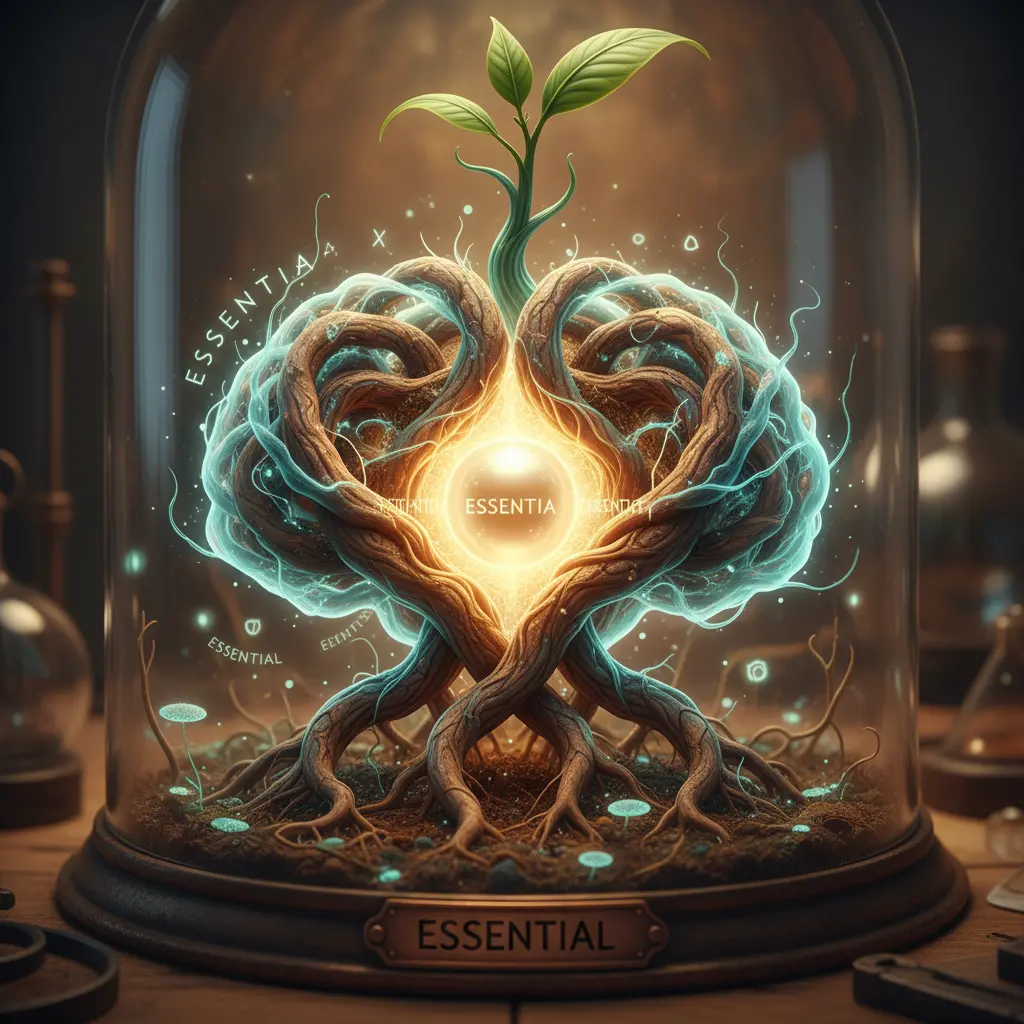
Root: 'essent' (to be) + '-ial' (related to). Origin: Latin 'essentia' → Old French 'essentiel' → English. Memory image: Imagine the essential part of a plant, like the roots, that are crucial for its survival.
Note 1: These definitions and etymologies are not standard dictionary definitions, but extended explanations provided to help with memorization and understanding of the actual application of words. Through this background information, we strive to make words more vivid and easier to understand, and help you remember their meanings in real life.
Note 2: LexiTalk designs the learning flow around the linguistics principle of “Comprehensible Input.” When learners encounter material that is slightly above their level but still understandable from context, the brain naturally absorbs the language. That’s why we keep every word inside authentic contexts, using examples and associations to help you understand it and use it flexibly.
Read the FAQ explanation of Comprehensible InputFirst I grip the kettle's handle and turn it to wake the steam. The steam moves in small curls, and I adjust my wrist to keep the pour smooth. I lift, tilt, and pour, watching the rhythm settle as the flow becomes easy. That steady, quiet move is the essential part I rely on when the task is done, keeping the whole thing in place.
Essential is used to mark something that is absolutely necessary or of central importance. It can refer to a practical requirement a core tool, a fundamental nature the essential character of the group, or a basic quality that cannot be removed the essential truth about the situation. It often collocates with for, to, or in phrases like essential for life, essential to understand, or an essential part of something. Learners sometimes confuse essential with necessary or important; essential is stronger or more formal, and it can imply a core or intrinsic aspect rather than a temporary need. In many contexts you can swap with fundamental, core, or indispensable depending on nuance.
Essential often conveys core, intrinsic importance beyond mere usefulness; think core components and core values rather than temporary needs. Learners may substitute essential with necessary in casual speech or misplace it with important, weakening formality or nuance.
What is the meaning of 'essentially'?
Which sentence uses 'essentially' correctly?
Which word is most similar to 'essentially'?
What is the opposite of 'essentially'?
Can you give an example of a real-life scenario of 'essentially'?
Download LexiTalk app for personalized learning experience
Download AppCookies
We use cookies for essential site functions, analytics, and ads. You can accept, reject, or manage preferences. Privacy Policy