
ethnic - Master This Word
Master this word with our 5-step learning method – Learn English in English
Train English Through Brain Routes, Not Translation.
This page helps you stop memorizing isolated translations and start understanding a word through its shared mental image, native-style thinking, and practical training steps.
Master this word with our 5-step learning method – Learn English in English
Example sentences are the start of understanding. Don't rush to memorize. First feel how the word works in a sentence.
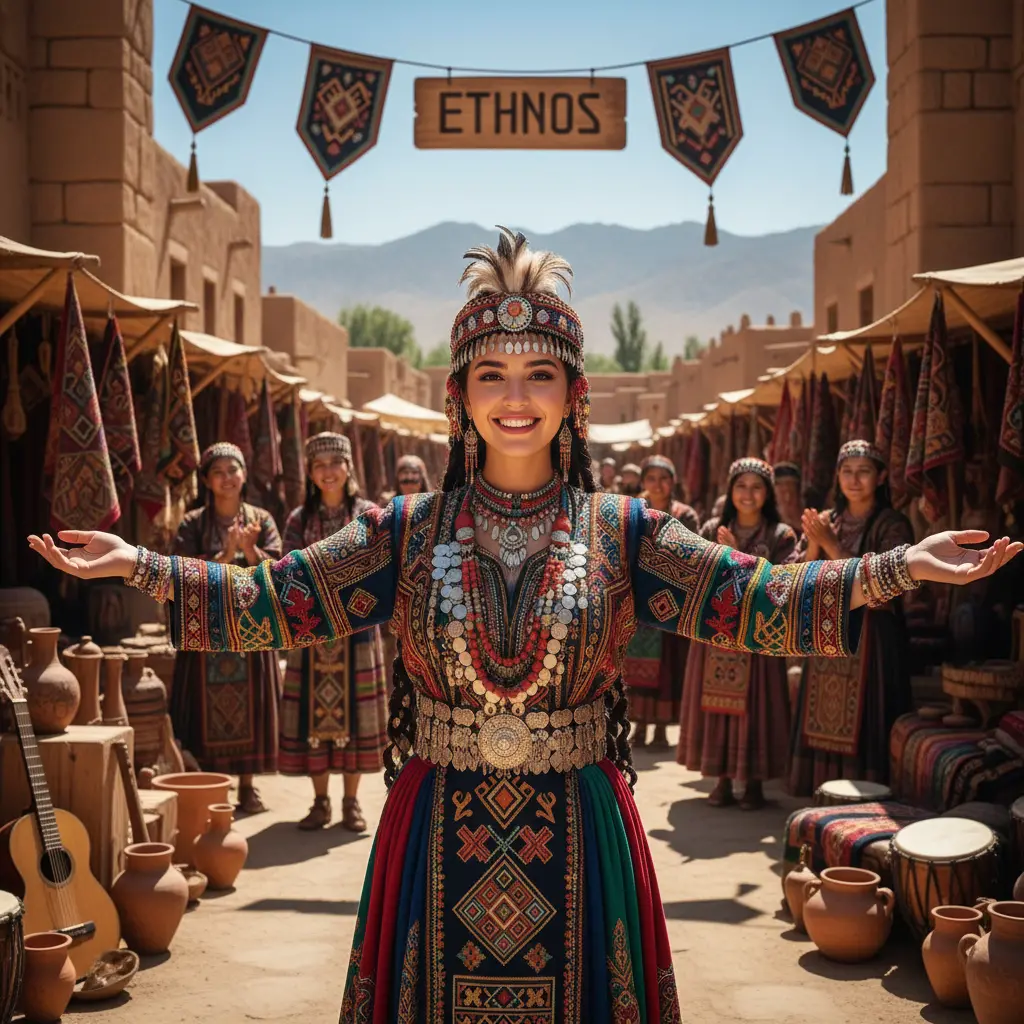
ethnic = ethnos (Greek) + -ic (suffix indicating relation). Origin: Greek → Latin → Old French → English. Imagine someone showing their cultural roots proudly, wearing traditional attire that showcases their heritage.
Note 1: These definitions and etymologies are not standard dictionary definitions, but extended explanations provided to help with memorization and understanding of the actual application of words. Through this background information, we strive to make words more vivid and easier to understand, and help you remember their meanings in real life.
Note 2: LexiTalk designs the learning flow around the linguistics principle of “Comprehensible Input.” When learners encounter material that is slightly above their level but still understandable from context, the brain naturally absorbs the language. That’s why we keep every word inside authentic contexts, using examples and associations to help you understand it and use it flexibly.
Read the FAQ explanation of Comprehensible InputI straighten up and pull a photo album toward me, tracing the pattern on a sleeve with my finger. I tilt the light and watch the colors bloom, as if a village or a country steps into the room. I shift my tongue in my mouth, testing a label that fits what I am seeing without forcing it. The moment settles, and the word ethnic lands as a tag for a culture or heritage you notice in what people share and keep.
Ethnic describes things related to a particular culture or group with shared heritage, language, traditions, or ancestry. It is commonly used when talking about identity, communities, and cultural markers such as dress, food, or music. For example, you might hear about an ethnic minority or an ethnic festival. The term emphasizes culture rather than nationality and is distinct from race, which refers to inherited physical traits. In everyday use, ethnic is often descriptive and neutral, but it can carry political weight in discussions about immigration, diversity, and policy. The etymology comes from the Greek ethnos meaning people or nation, plus the suffix -ic, giving the sense of relating to a group. Use it to describe cultural attributes, not individual characteristics.
Ethnic centers on culture and group identity rather than biology or nationality. Learners often assume it means race or skin color, so they might misapply it to individuals or think it refers to all people of a country. In everyday speech, use with care to avoid stereotypes and overgeneralizations.
What is the meaning of the word 'ethnic'?
In which context is the word 'ethnic' commonly used?
Which word is most similar to 'ethnic'?
What is the opposite of 'ethnic'?
How would you use the word 'ethnic' in a real-life conversation?
Download LexiTalk app for personalized learning experience
Download AppCookies
We use cookies for essential site functions, analytics, and ads. You can accept, reject, or manage preferences. Privacy Policy