etiquette - Master This Word
Master this word with our 5-step learning method – Learn English in English
Train English Through Brain Routes, Not Translation.
This page helps you stop memorizing isolated translations and start understanding a word through its shared mental image, native-style thinking, and practical training steps.
Master this word with our 5-step learning method – Learn English in English
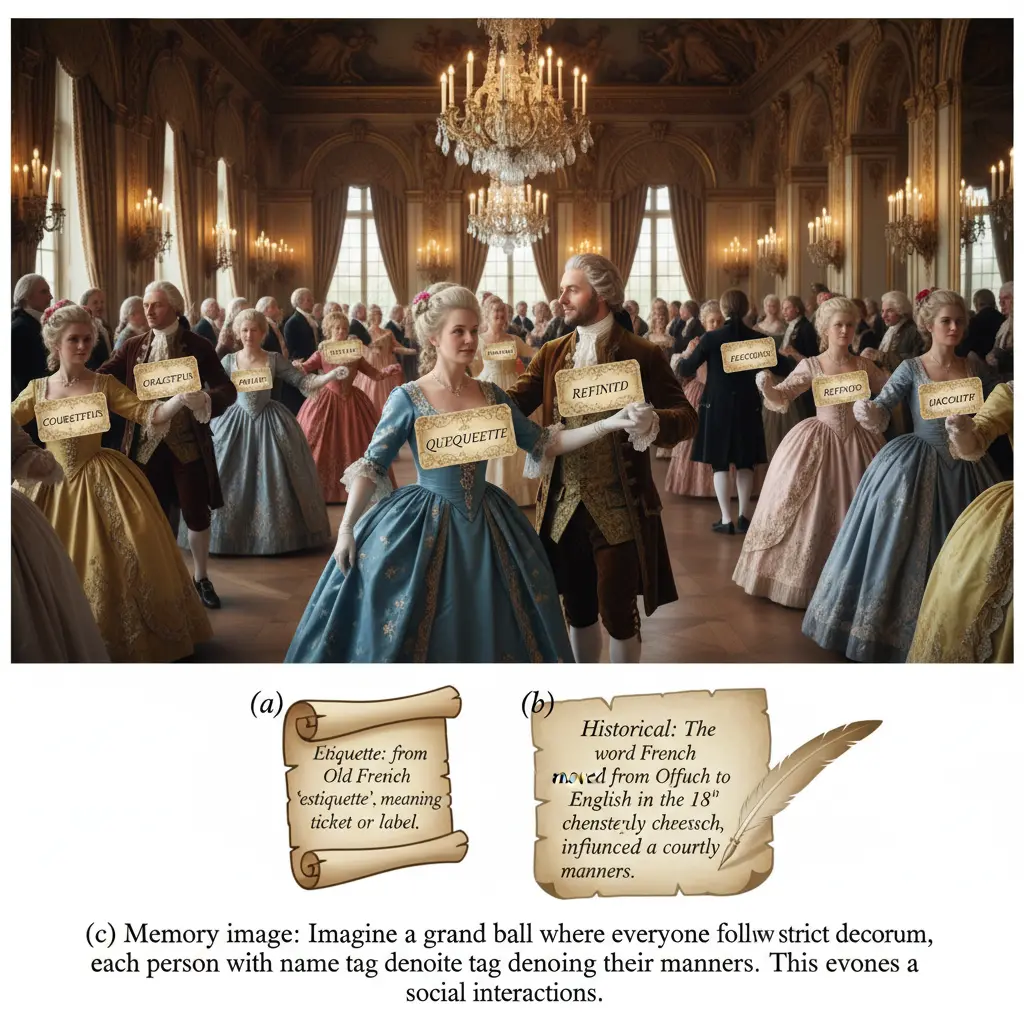
Example sentences are the start of understanding. Don't rush to memorize. First feel how the word works in a sentence.
(a) Etiquette: from Old French 'estiquette', meaning a ticket or label; (b) Historical: The word moved from Old French to English in the 18th century, influenced by courtly manners; (c) Memory image: Imagine a grand ball where everyone follows strict rules of decorum, each person with a name tag denoting their manners. This evokes a sense of refined social interactions.
Note 1: These definitions and etymologies are not standard dictionary definitions, but extended explanations provided to help with memorization and understanding of the actual application of words. Through this background information, we strive to make words more vivid and easier to understand, and help you remember their meanings in real life.
Note 2: LexiTalk designs the learning flow around the linguistics principle of “Comprehensible Input.” When learners encounter material that is slightly above their level but still understandable from context, the brain naturally absorbs the language. That’s why we keep every word inside authentic contexts, using examples and associations to help you understand it and use it flexibly.
Read the FAQ explanation of Comprehensible InputEtiquette is the widely shared system of rules and expectations that guide polite behavior in social settings. It includes saying please and thank you, listening attentively, respecting personal space, and following norms for introductions, dining, and conversation. Etiquette varies by culture and context, from formal courtly manners to everyday courteous gestures, yet the underlying idea is the same: to show consideration for others and to help social interactions feel smooth and respectful. Learning etiquette involves observing local customs, asking when unsure, and adapting quickly in new situations such as business meetings, family gatherings, or public events. Good etiquette can strengthen relationships, reduce miscommunication, and signal professionalism and good character.
Etiquette in English reflects a broad, shared social skill set with explicit politeness cues; learners often overfocus on phrases and miss situational norms like dining sequence or workplace etiquette.
What is the definition of 'etiquette'?
Which sentence uses 'etiquette' correctly?
Which word is most similar to 'etiquette'?
What is the opposite of 'etiquette'?
Can you think of a real-life scenario where proper behavior is important?
Download LexiTalk app for personalized learning experience
Download AppCookies
We use cookies for essential site functions, analytics, and ads. You can accept, reject, or manage preferences. Privacy Policy