excuses - Master This Word
Master this word with our 5-step learning method – Learn English in English
Train English Through Brain Routes, Not Translation.
This page helps you stop memorizing isolated translations and start understanding a word through its shared mental image, native-style thinking, and practical training steps.
Master this word with our 5-step learning method – Learn English in English
Example sentences are the start of understanding. Don't rush to memorize. First feel how the word works in a sentence.
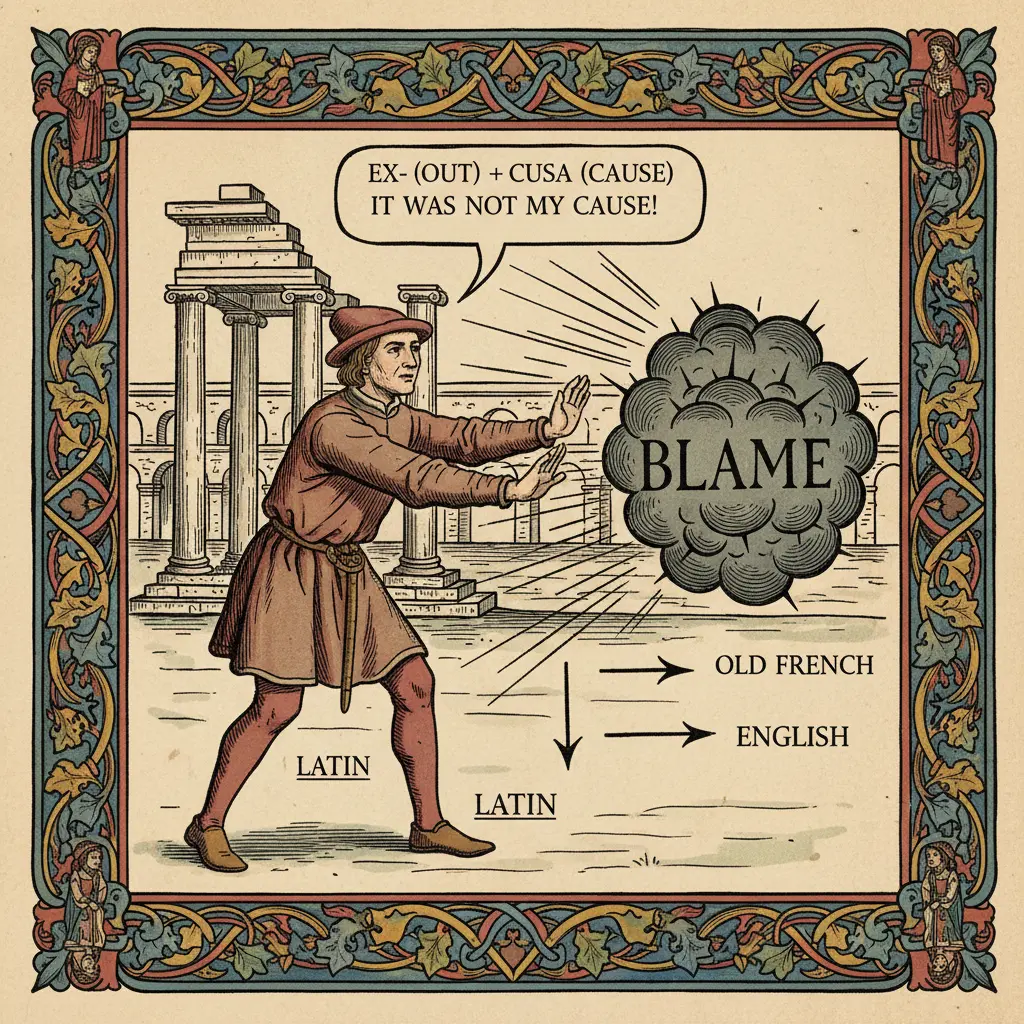
ex- = out + cusa = cause; from Latin → Old French → English. Imagine a person pushing away blame by saying, 'It was not my cause!', waving their hands dismissively.
Note 1: These definitions and etymologies are not standard dictionary definitions, but extended explanations provided to help with memorization and understanding of the actual application of words. Through this background information, we strive to make words more vivid and easier to understand, and help you remember their meanings in real life.
Note 2: LexiTalk designs the learning flow around the linguistics principle of “Comprehensible Input.” When learners encounter material that is slightly above their level but still understandable from context, the brain naturally absorbs the language. That’s why we keep every word inside authentic contexts, using examples and associations to help you understand it and use it flexibly.
Read the FAQ explanation of Comprehensible InputI grip the door handle, push it open, and shift my weight to slip through. A quick bump from someone makes me pause, and I decide to speak up. I murmur 'excuse' in a calm voice, feeling the effort of keeping the moment smooth. That small word acts like a bridge, turning a stumble into a polite moment and guiding how I handle it next time.
Excuse is a versatile word in English that can function as a noun or a verb. As a noun, it means a reason given to justify a fault or a desire to avoid blame; as a verb, it can mean to forgive or overlook someone’s mistake (excuse me as a polite interruption). The word often carries nuance: a sincere explanation vs a flimsy excuse meant to dodge responsibility. Native speakers distinguish between a legitimate justification and an attempt to excuse bad behavior. In daily speech, you’ll hear phrases like 'make an excuse', 'offer an excuse', and 'excuse me' for polite interruptions. Etymology traces back to ex- (out) and cusa (cause).
In English, 'excuse' covers both a justification and a polite interrupting phrase, which can confuse learners about when to use it. Native speakers judge whether a justification is legitimate or a flimsy attempt to dodge responsibility.
Download LexiTalk app for personalized learning experience
Download AppCookies
We use cookies for essential site functions, analytics, and ads. You can accept, reject, or manage preferences. Privacy Policy