expressed - Master This Word
Master this word with our 5-step learning method – Learn English in English
Train English Through Brain Routes, Not Translation.
This page helps you stop memorizing isolated translations and start understanding a word through its shared mental image, native-style thinking, and practical training steps.
Master this word with our 5-step learning method – Learn English in English
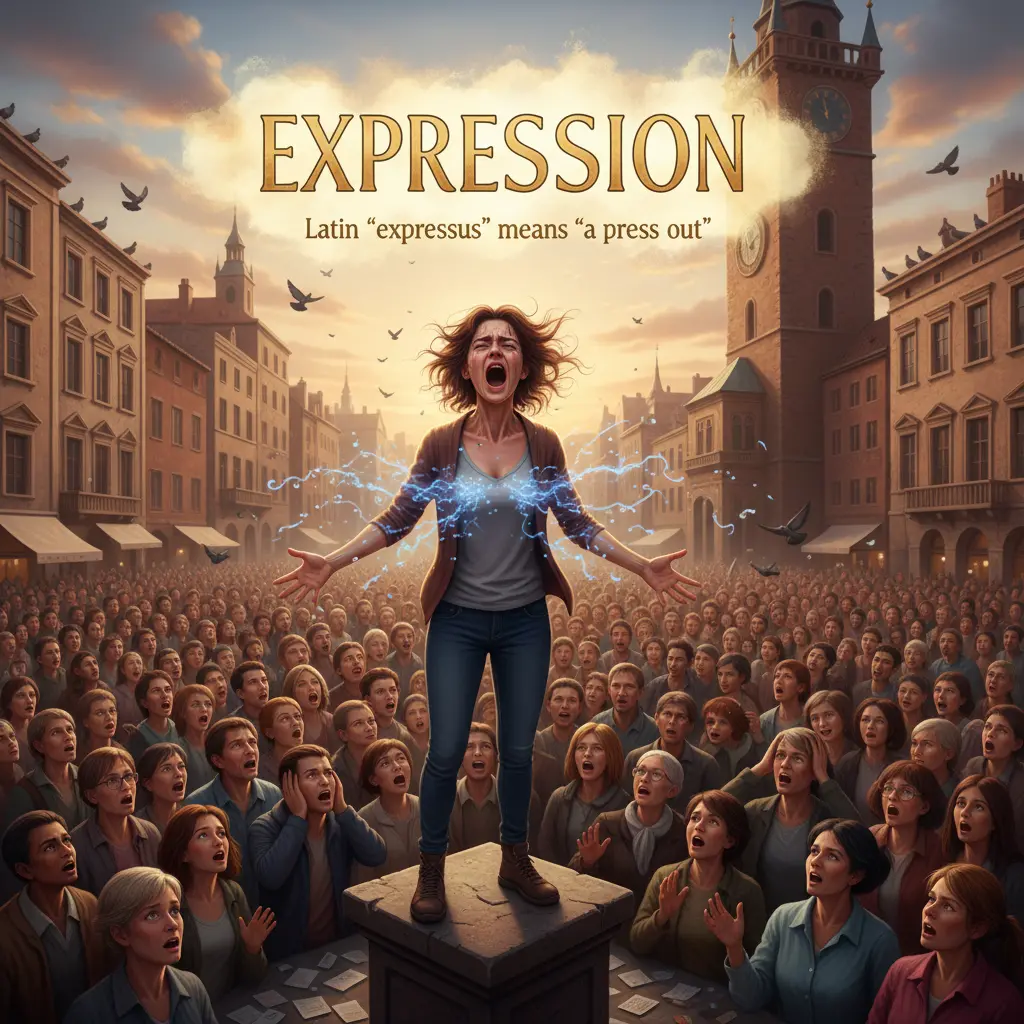
Example sentences are the start of understanding. Don't rush to memorize. First feel how the word works in a sentence.
ex- = out + press = to push; Latin 'expressus' means 'to press out'. Imagine someone pushing their feelings out into the open, perhaps by shouting them into a crowd.
Note 1: These definitions and etymologies are not standard dictionary definitions, but extended explanations provided to help with memorization and understanding of the actual application of words. Through this background information, we strive to make words more vivid and easier to understand, and help you remember their meanings in real life.
Note 2: LexiTalk designs the learning flow around the linguistics principle of “Comprehensible Input.” When learners encounter material that is slightly above their level but still understandable from context, the brain naturally absorbs the language. That’s why we keep every word inside authentic contexts, using examples and associations to help you understand it and use it flexibly.
Read the FAQ explanation of Comprehensible InputBreath in, then move your lips to start a line of sound. You adjust the rhythm as you push the idea forward, shaping it until it feels clear. As the words leave, the room changes—an invisible wave that others can catch. You keep guiding the moment, turning a private thought into something someone else can hear.
Express is a versatile verb meaning to convey a thought or feeling, to state something clearly, or to communicate a message to others. It covers daily actions like expressing gratitude, concern, or an opinion. The idea is to make something interior become visible or understood. Etymologically, it comes from ex- 'out' and press 'to push', as if feelings are pushed out into the open. In use, you express yourself through words, tone, and body language, and you often need a direct object: express a view, express concern, express disappointment. Learners should note that expressed nouns are 'expression' or 'expressions' and avoid confusing with nouns or adjectives like 'expressive'.
English tends to bundle internal thoughts and external expressions with clear object usage; learners often over- or under-use direct objects and confuse noun forms like expression with the verb express.
Download LexiTalk app for personalized learning experience
Download AppCookies
We use cookies for essential site functions, analytics, and ads. You can accept, reject, or manage preferences. Privacy Policy