
farce - Master This Word
Master this word with our 5-step learning method – Learn English in English
Train English Through Brain Routes, Not Translation.
This page helps you stop memorizing isolated translations and start understanding a word through its shared mental image, native-style thinking, and practical training steps.
Master this word with our 5-step learning method – Learn English in English
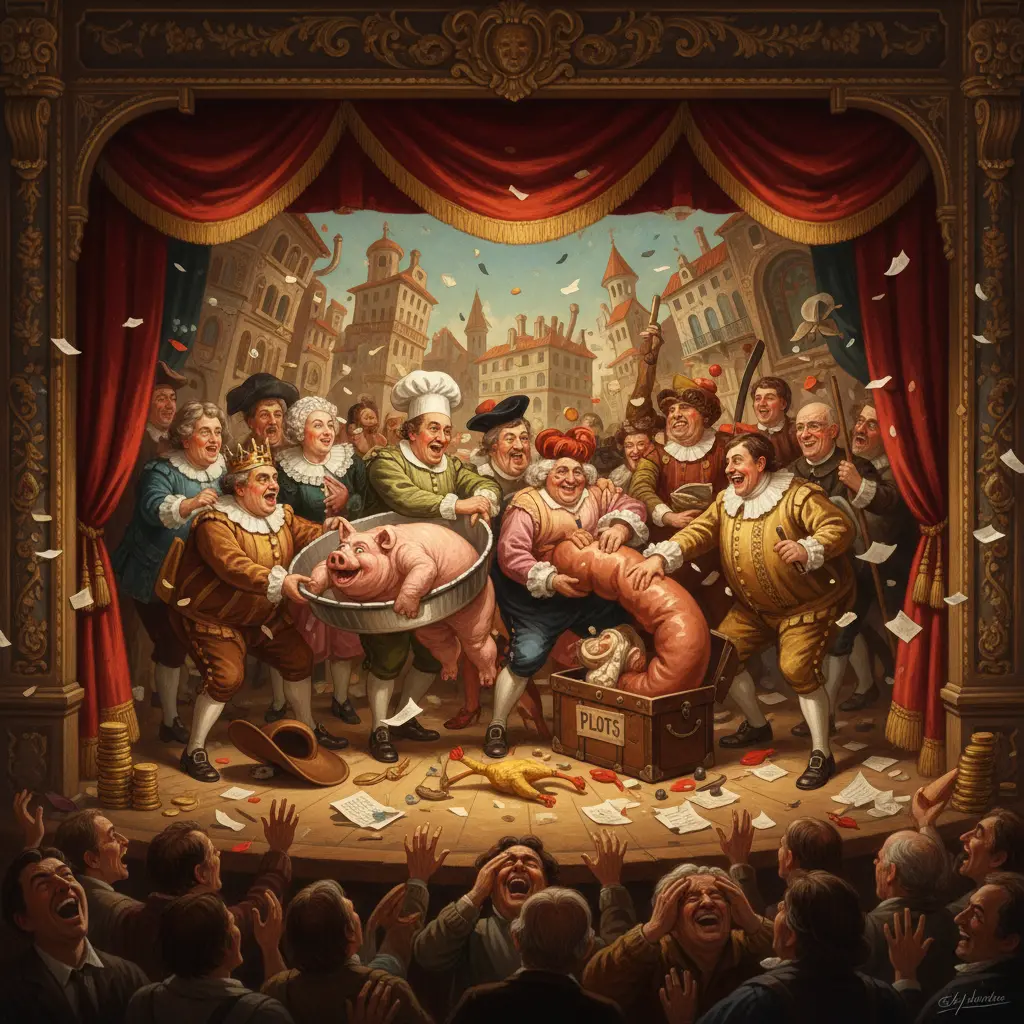
Example sentences are the start of understanding. Don't rush to memorize. First feel how the word works in a sentence.
Farce consists of the root 'facere' (to do) from Latin, which implies action or performance. This evolved through Old French 'farce', signifying a stuffed dish or comic performance, to English. Imagine a stage where actors stuff themselves with exaggerated characters and ridiculous scenes, creating a breathtaking, comic spectacle.
Note 1: These definitions and etymologies are not standard dictionary definitions, but extended explanations provided to help with memorization and understanding of the actual application of words. Through this background information, we strive to make words more vivid and easier to understand, and help you remember their meanings in real life.
Note 2: LexiTalk designs the learning flow around the linguistics principle of “Comprehensible Input.” When learners encounter material that is slightly above their level but still understandable from context, the brain naturally absorbs the language. That’s why we keep every word inside authentic contexts, using examples and associations to help you understand it and use it flexibly.
Read the FAQ explanation of Comprehensible InputFarce is a form of comedy that amplifies silliness and improbable events until they seem almost unreal. In English, a farce thrives on rapid-fire misunderstandings, door-slamming entrances, physical gags, and characters whose schemes unravel in the most ridiculous ways. It aims to provoke laughter through sheer escalating absurdity rather than commentary on real life. Farce can still reveal truths about social behavior by exaggerating it, but its primary job is entertainment through momentum, improbable coincidence, and clever disguises. Beginners often confuse farce with slapstick or satire; while slapstick depends on physical antics and satire on critique, farce hinges on plot twists and the illusion that reality itself has gone wrong.
Farce is often seen as light, chaotic humor in English; learners should note the emphasis on plot momentum and character exaggeration, not random silliness. Mistakes include using farce to describe any funny incident or treating it as a synonym for satire.
What is the meaning of the word 'farce'?
Which sentence correctly uses the word 'farce'?
Which word is most similar to 'farce'?
What is the opposite of 'farce'?
Can you think of a real-life context where a situation was a farce?
Download LexiTalk app for personalized learning experience
Download AppCookies
We use cookies for essential site functions, analytics, and ads. You can accept, reject, or manage preferences. Privacy Policy