
feminist - Master This Word
Master this word with our 5-step learning method – Learn English in English
Train English Through Brain Routes, Not Translation.
This page helps you stop memorizing isolated translations and start understanding a word through its shared mental image, native-style thinking, and practical training steps.
Master this word with our 5-step learning method – Learn English in English
Example sentences are the start of understanding. Don't rush to memorize. First feel how the word works in a sentence.
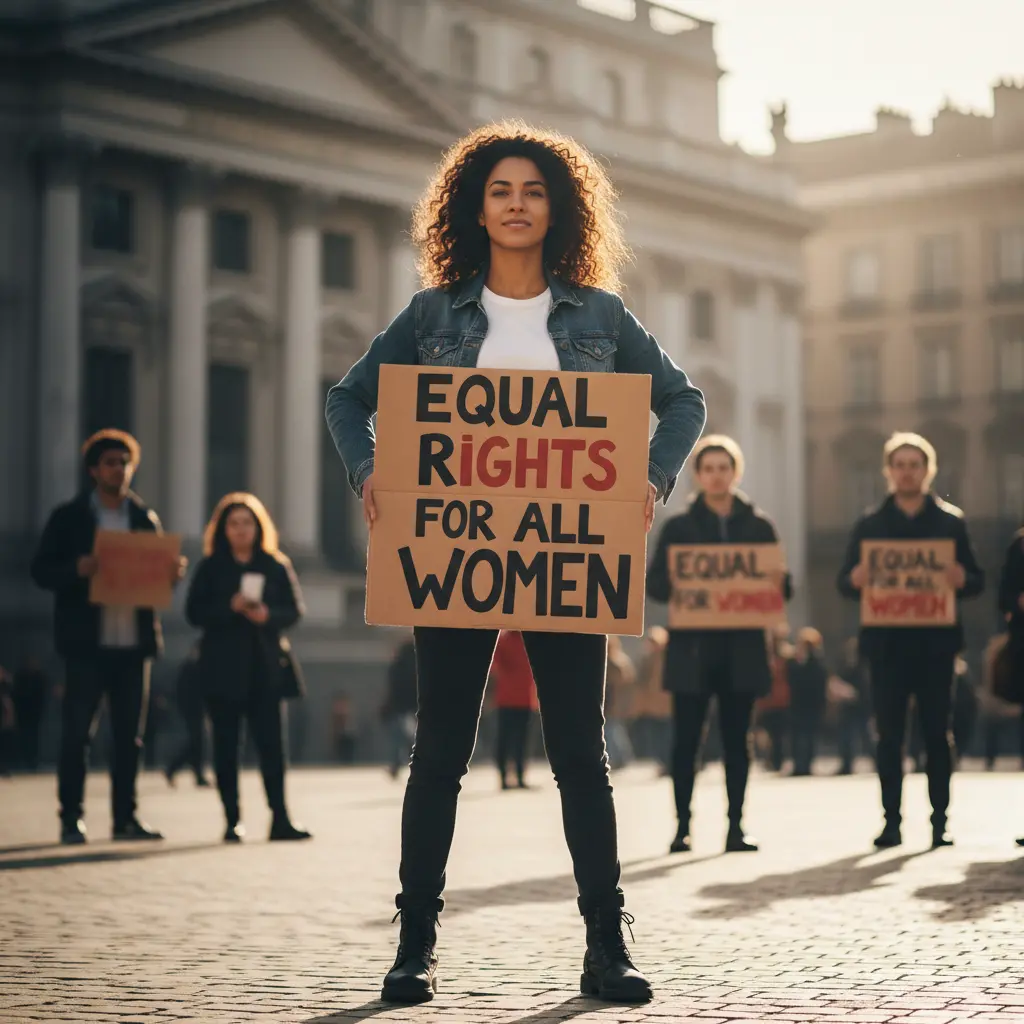
femi- = women, -ist = one who practices or believes in. Origin: Latin 'femina' → French 'féministe' → English. Imagine a woman standing strong with a sign that says 'Equal Rights for All Women' to represent her belief in equality.
Note 1: These definitions and etymologies are not standard dictionary definitions, but extended explanations provided to help with memorization and understanding of the actual application of words. Through this background information, we strive to make words more vivid and easier to understand, and help you remember their meanings in real life.
Note 2: LexiTalk designs the learning flow around the linguistics principle of “Comprehensible Input.” When learners encounter material that is slightly above their level but still understandable from context, the brain naturally absorbs the language. That’s why we keep every word inside authentic contexts, using examples and associations to help you understand it and use it flexibly.
Read the FAQ explanation of Comprehensible InputShift through a crowded room, hand on a flyer about equal pay. I watch a coworker push for a raise for women, and the word feminist starts to feel real—like a label worn by someone who keeps speaking up. I adjust my stance, letting the term unfold in the moment as a sign of ongoing struggle and care. By the end, I place the word where I can hear it in conversations, and I know it is about action, voice, and fairness in real life.
A feminist is someone who advocates for women's rights and gender equality. The label covers a wide range of people, from scholars and educators to activists and everyday supporters who push for fair pay, safe work environments, reproductive rights, and inclusive politics. In many places the term carries historical associations with various waves of activism, yet today it often signifies a commitment to equal opportunity rather than a fixed political stance. Learners should note the difference between feminism as a movement, feminist as a person, and feminist ideas or theories. Pay attention to collocations like feminist movement, feminist theory, or feminist policy, and how tone can shift with context.
For English speakers, feminism is often discussed as both a movement and a spectrum of beliefs. Learners should notice how 'feminist' can refer to a person, an idea, or a supporter of a policy, and how tone changes with context (academic vs. activist vs. everyday conversation).
What is the meaning of the word 'feminist'?
In which sentence is the word 'feminist' used correctly?
Which of the following is a synonym for 'feminist'?
In which situation would the word 'feminist' be most appropriate?
Can you provide a real-life scenario where being a feminist is important?
Download LexiTalk app for personalized learning experience
Download AppCookies
We use cookies for essential site functions, analytics, and ads. You can accept, reject, or manage preferences. Privacy Policy